
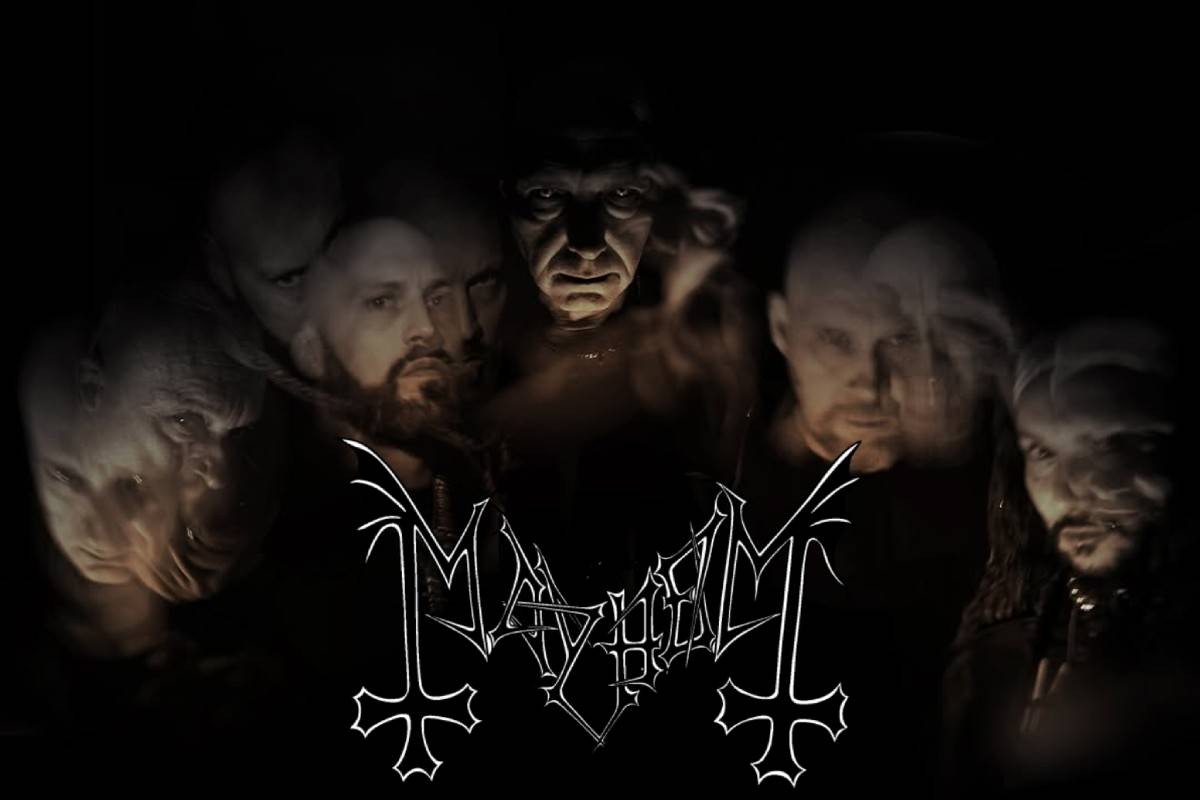
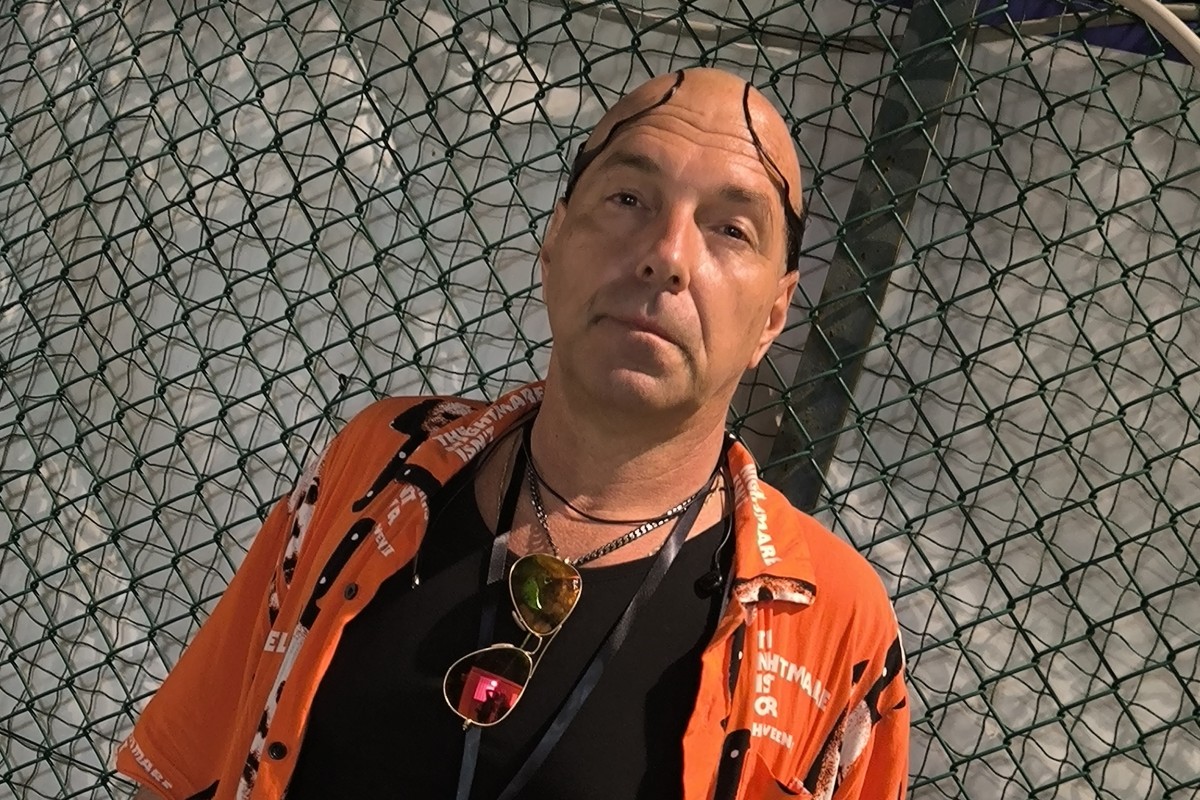
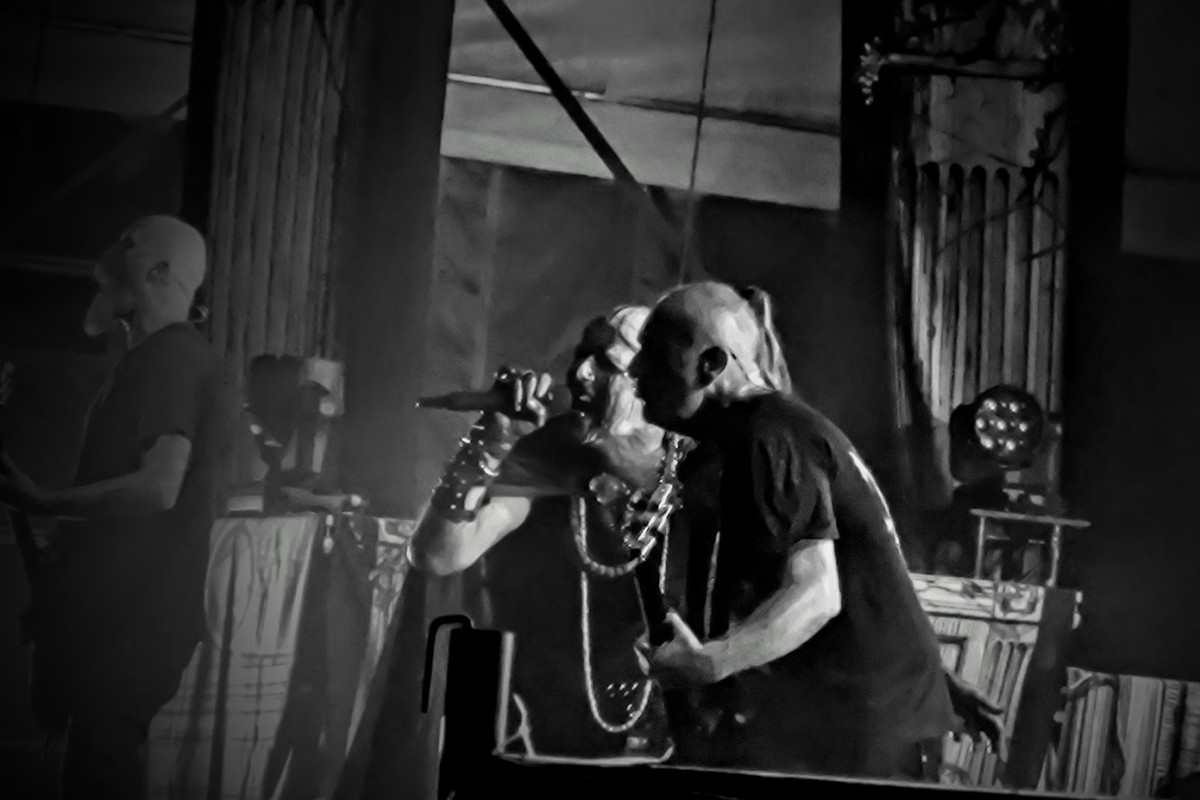
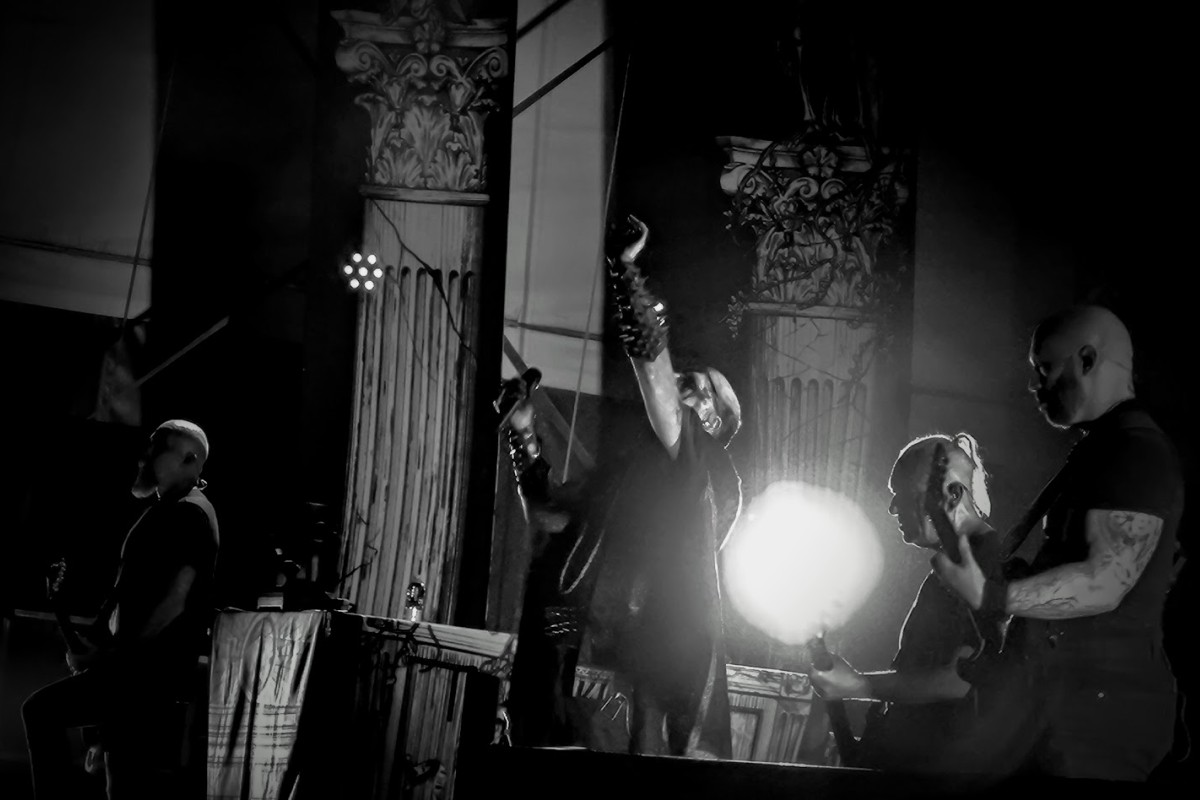
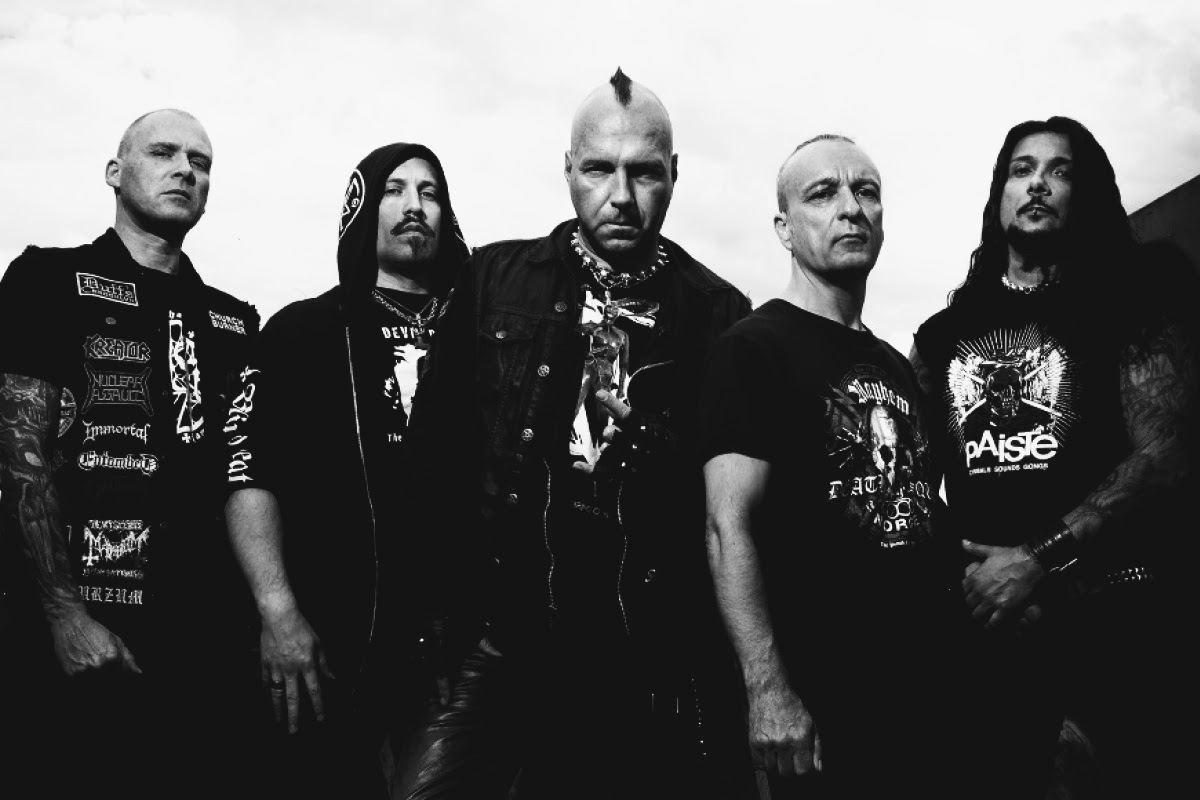
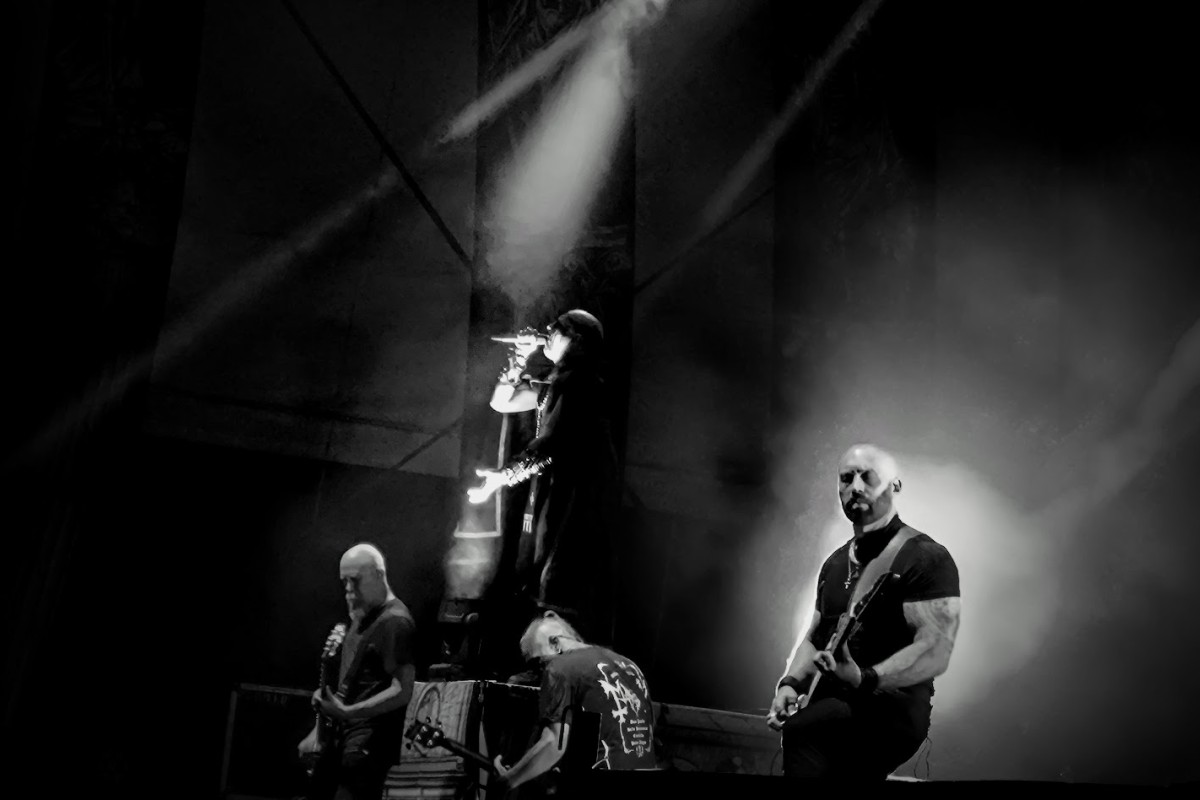
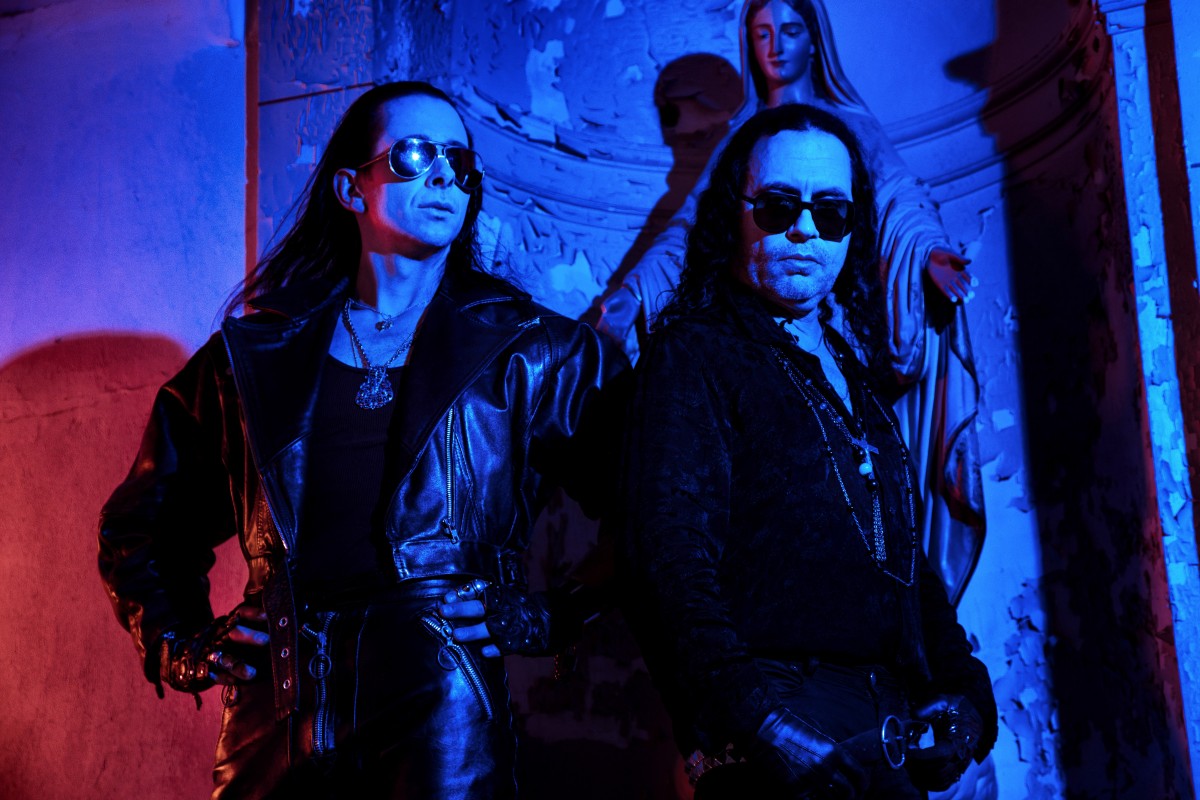
If you were asked to name the most iconic band in black metal, the answer would almost certainly be Mayhem. Much has been written, said and documented about the Norwegian outfit, which has existed in one form or another since 1984. The events that marked the band's early years and helped shape the emergence of the so-called second wave of black metal are well documented. Yet, beyond the controversies and mythology surrounding the group, there can be little doubt about Mayhem's significance in the wider world of extreme music. Releases such as Deathcrush, De Mysteriis Dom Sathanas and Live In Leipzig have left an indelible mark on generations of listeners. But Mayhem's story did not end in the early 1990s. Over the decades that followed, the band continued to release a string of outstanding records, including Wolf's Lair Abyss, Chimera, Daemon and, most recently, Liturgy Of Death, released through Century Media in February this year. Alongside founding bassist Necrobutcher, the current line-up features drummer Hellhammer, who joined in 1988, vocalist Attila Csihar, whose association with the band dates back to 1993, and guitarists Teloch and Ghul. We caught Mayhem live at Frantic Fest in Italy, where we also had the opportunity to sit down with Attila for a fascinating conversation. Our discussion ranged far beyond the band's latest album, touching on his legendary Hungarian band Tormentor, the early underground scene, the nature of black metal, philosophy, religion, ancient civilisations, artificial intelligence and the mysteries of human existence. As you might expect from a conversation with Attila, things occasionally ventured into rather unexpected territory – sometimes even to the very edge of sanity.
Interview with: Attila Gábor Csihar
Conducted by: Tomaz and Jerneja
Edited by: Jerneja
Tomaz: Hello, Attila! It's great to finally have the opportunity to do this interview with you. Let's start with your latest opus, Liturgy Of Death, which has been out for several months already. How has the response to it been so far?
Attila: Hello, and hi to the Italian fans. Thanks for the question and for the interview. I think the response has been good and I'm happy with it. From my perspective, this is a very dark album, lyrically and in every other way. People seem to like it too, so the response has been good. But, you know, time will tell. Not necessarily about this record, but, for instance, Esoteric Warfare was ahead of its time. Looking at it now, those lyrics are much more relevant than they were back then. Time always tells how things really are. As for me, I'm already moving on. When I make a record or finish such a big piece of work, I try to leave it behind and focus on the next thing.
Tomaz: How difficult is it for a band like Mayhem to create a new album when, right from the outset, you produced one of the defining works of the genre with De Mysteriis Dom Sathanas? Does the legacy of such a landmark album ever weigh on the creative process?
Attila: Yes, it's always a great task to make a Mayhem record. We don't make them very often. For us, it has to be about something. It has to have meaning. Then we release it and see what happens, how people react. But first of all, we have to feel that it's the right time to do it. It's always a great deal of work. We're kind of maximalists, you know, so we try to make the best thing possible. Of course, perfection doesn't really exist, but we try to reach it.
Tomaz: How did the creative process behind Liturgy Of Death unfold, from the initial idea to the finished record?
Attila: I came up with the theme of death and the whole philosophy surrounding it. It's about the universal meaning of death and passing away. Then the guys started writing some songs. We sent demos back and forth. I made some demos, wrote some lyrics, and a lot of things were discarded along the way. It took us a couple of years to do it. Of course, we don't work on it every day. It comes in waves. We come back to it, then we go on tour, then I come back and there's a new song, or someone sends another idea. In the end, we start putting together the best ideas and working on them. Then we finalise the lyrics and enter the studio. Before that, we make demos and rehearse, although this time we didn't rehearse the new material very much. Things are quite different today. Back in the day, we didn't have all these possibilities. Now I can record at home in my little studio corner, and it's easy to make demos. It's very different from how it used to be. And you also have to remember that we all live in different countries.
Jerneja: Do you prefer the way things work nowadays, when you can do so much from home, compared to how it was in the past?
Attila: It's hard to say. When I started out with Tormentor, and even before that with Anno Domini, we rehearsed at least three times a week for about a year. But that's what happens when you're learning to play and trying to do the best you can. With Mayhem, it's different. Since I came back in 2004, we've been touring, playing and making records for more than twenty years now. The band has been around for so long that, naturally, things change. We have a lot of experience, we've played together so much, and we understand each other much better. We don't need to rehearse as much anymore. These days, we mainly rehearse before tours, when we're learning a new song, or when we're putting new material together.
Tomaz: Well, I suppose that comes with forty years of experience in music.
Attila: It's definitely different now than it was in the '80s and '90s, when we didn't have that much experience.
Tomaz: Have you ever considered moving to Norway?
Attila: Yeah, I did at one point, but in the end I never went through with it. It wasn't really necessary. I can spend as much time there as I need to. But I'm from Hungary, from Budapest. My family is there, so moving to another country just doesn't make that much sense. I love Norway, though, but the winters are a bit too long for me. And what about you? Are you from Italy?
Jerneja: No, we're from Slovenia, but we live quite close to Italy, near Trieste.
Attila: Oh, really? I love Slovenia. I truly do, it's one of my favourite countries. I love Slovenian bands like Laibach and Borghesia, and actually quite a lot of bands from your country. I love the cities as well. One of my very good friends, actually one of my best friends in Hungary, is the Slovenian ambassador, Anžej Frangeš. He's from Ljubljana and serves as ambassador, but more importantly, he's a big music fan. We never talk about politics, we just hang out, you know. I know his family too. He's been a close friend of mine for a long time. I've always loved Slovenia. It's a beautiful country, and the people are wonderful. Seriously, I'm not just saying that.
Tomaz: Do you come to visit often?
Attila: Not that often, but from time to time. And I've always thought it was great.
Tomaz: Let's return to Liturgy Of Death. You mentioned earlier that death is a central theme of the album. What inspired your approach to exploring it in the lyrics?
Attila: It just came to me, you know, at that time, and I don't really know how. It kind of contains everything I was into back then, especially death itself. I just realised that we were old enough to take on a theme that heavy. It's universal, and I don't know what could be more universal than the fact that we all pass away. Everything is dying. So I was approaching it from different philosophical angles, and whatever came to me at that time found its way into the lyrics. I remember I was also reading Greek philosophers then, people like Epictetus and Seneca, perhaps. But I didn't want to go into Eastern philosophy or spiritual traditions. My approach was somehow rooted more in the Western tradition. That was kind of the inspiration, I suppose. I don't know. When I write lyrics, I really immerse myself in it, you know. It's actually quite hard. Sometimes I hate it when the weather is beautiful outside and I'm just stuck at home working on lyrics.
Tomaz: And just how much Satanism is there on this album?
Attila: Not much. In fact, I don't think there's any. It's not about that. It's about death itself. It's not about Satan or anything like that. So, actually, I'd say zero, in that sense. It's much more about death itself, the philosophy of death, how we pass away, and everything surrounding it. The universe. I mean, we could go into that, but I don't know. Take birth, for instance. I don't remember when I was born, of course, but I was there when my children were born. My son, for example, was delivered by Caesarean section. It was an indescribable, magical moment. But I remember thinking, 'Holy shit, okay, he's here now, but he was alive five minutes before that as well'. So life doesn't begin at birth. You can keep tracing it back. There are all these stages. The foetus, then eventually a cell, the sperm, but where is the actual beginning? It's hard to say, even in a biological sense. Life itself is a mystery. What is all this, really? I'm moving my hand, but what's actually happening? I don't know. And you can't control everything. You can't control your heartbeat. You're just sort of functioning, and we're all part of this system. I mean, we could go much deeper into that, but anyway... then there are other things. For example, every day you fall asleep. What is that? ... But if you think about it, when you fall asleep... imagine someone from another planet observing humans. They just lie down, disappear for a while, and then wake up again. That's also why we need houses, because you have to be safe when you sleep. Imagine never having to sleep. You'd just carry on doing whatever you're doing all the time. But it's strange, isn't it? Why do we have to sleep at all? I think it's connected to the sun somehow. Anyway, I don't want to go too deeply into all this and just jump from one thing to another. But when you're asleep, you're still in a reality of some kind, still within your consciousness, and then you wake up and come back to this world. I find that interesting as well. In a way, you almost die every day. You have to kind of die, you know, and then you come back.
Tomaz: Maybe you're just going into a different dimension when you sleep?
Attila: Yeah, I mean, in your mind. But in reality, we're just receiving electromagnetic waves and turning them into biocurrents. Then our brain makes a picture out of them, and what comes through our ears becomes sound. Everything is in our head anyway. But that's dreaming. And then, when you die, it's also kind of uncertain. There are so many near-death experiences you can read about. People see things, you know. Actually, my electrician once told me about something like that. He suffered an electric shock. He started telling me the story, and at first I thought it was just some kind of blah, blah, blah. But then he said he left his body and sort of flew into the sun and passed through it, like it was a tube. That was interesting because I'd had a similar kind of vision before. So I thought, 'Oh, really? Keep going'. And he said that on the other side, everything was very nice. He didn't want to come back. But then some kind of vacuum, some sort of vortex, pulled him back. He woke up again, and ever since then he's been into reincarnation and things like that. It's cool. But anyway, what exactly is that? What's happening there? Nobody knows. Religions have been trying to deal with these questions forever. This guy had a good experience, though. He said it was great and that he didn't want to come back.
Tomaz: Have you ever thought about writing a book on the subject?
Attila: I don't know, maybe. People have been asking me to do that for a long, long time. Maybe I should. Maybe when I'm older. It's difficult to say what you're really into, because that can change. I think that's part of the problem. People tell too much. Everyone should figure more things out for themselves. I think it's very important, at some point, to try and work out what the fuck is actually going on inside our minds.
Jerneja: That's actually the essence of Socratic maieutics.
Attila: Yeah, because everything comes down to that shit. All these stupid thoughts, all this fucking shit. It's basically about... If you don't get it for yourself, then you just don't get it. You haven't understood it. We're programmed, and the mind itself is constantly thinking. Normally, this flow of thoughts is very negative, so people are always stressed and afraid. I mean, I'm not a biologist or anything, but what I'd say is that we're all wired for survival. We're always subconsciously scanning our surroundings for possible dangers. We're human, and that's our animal side. There's nothing wrong with that, but it means you start thinking about the past or the future. Anyway, I think it's important to control the mind, although it's fucking hard to do. That's what I've figured out. It can cause a lot of problems, you know, and yeah, that's one of my interests lately. I've been looking into all these religions and the people working in those fields. I think the older these philosophies are, the less wrong they are. But you have to go back to before the Christian era and everything. I think all that stuff is wrong. I'm sorry, but I think the whole idea of God and all these stories about creation... I mean, they start with something like, "Okay, God created..." Okay, so who wrote that? It's all a bit of a mess. Like, the first day, the second day, and so on... Whatever happened, who was there? Who witnessed it? Because God didn't write it. Or did they just say, "This is what happened"? But who saw it? That's my first question, and then it all falls apart. It's so simple, you know... I think the image of God we have is more like that of the God in the Christian, Israeli – or whatever you call it, Hebrew – tradition, you know. The God we worship is angry, and this guy isn't much fun. But those people were living in the desert. It's such a different environment. Everybody has their own god, all around the world. I don't know why that particular god is so important today, because that god was actually very angry. Many times, he commanded Moses and the Jews, I don't know, to kill children and burn all that shit, like when they went to the Promised Land. I mean, that's just the Old Testament, and the New Testament is also full of shit. Who wrote it? It was written something like seventy years after the events, and most of the people who wrote about Jesus Christ had never even met him. Or take Paul, for example: he was persecuting Christians and then converted to Christianity. All of this is fucking shit. Come on! And all of this comes from the desert, from that level of civilisation. But if you look at India, those people already had fucking beautiful buildings. Their civilisation was thousands of years older, with much more profound knowledge of astrology and everything else. Or look at the Egyptian tradition. We don't really know much about it because of the hieroglyphs. I don't believe anyone can truly read them. But when you go there, these things speak for themselves. It's fucking amazing – such a high level of civilisation. And I'm not talking about the pharaohs, but about the people who actually built that shit, you know? Because I think those things had been there for much longer. I've been there, and this is one thing I know. You don't have to agree with me, but I know there was a very advanced civilisation. And it's just kind of dismissed. Nobody talks about it. And it's evident.
Tomaz: Some people believe that we originally came from another planet, one that was far more advanced and civilised than Earth. How do you view that theory?
Attila: I'm not talking about aliens. I think it was something that happened on this planet – humans, or perhaps another civilisation. I don't know what happened to them. They disappeared. I mean, look at the ruins in Egypt or Lebanon. I went to Baalbek in Lebanon to see the monoliths, you know, the trilithons – blocks of stone weighing around 900 tons, each one like a thousand Volkswagen Golfs carved out of a single piece of rock. And the Romans built the temple there. You know, that temple. How was that even possible? The Romans, yeah. I just don't know how they managed to move those blocks. Even today, if anyone knows how to move a block weighing, say, 1,900 tons, tell me. Because I've done some research, and I couldn't find much about it. You know, it's just one enormous block of stone. And there is more evidence, of course, in Egypt. They have these huge granite jars, and I wonder how they managed to make them. They're perfectly symmetrical, and there's this feature where you can spin them. I'm talking about granite here, and they even have two handles. I got goosebumps when I saw this because I'm really interested in technology and engineering. I find it all incredibly mysterious, you know. And then there are all these sculptures that they've examined, which are completely symmetrical. When they scan them with lasers and all that shit nowadays, the results are just weird.
Tomaz: Since you're interested in technology, I'd imagine you also have some views on artificial intelligence. What's your take on it?
Attila: Oh yeah, that's something new. I think it has its pros and cons, and we'll see how it develops, of course. I'm always looking towards the future, because that's what's coming, whether we like it or not. You can be an ostrich and bury your head in the sand, but it'll still be there. You know, we could have hated these fucking mobile phones when they first came along, but we still have to use them. I think AI can actually be useful for certain things, but it's very bad for others. I've been reading articles about it, and some of the things are just so wrong. Apparently, around 20 per cent of its responses are what they call hallucinations. So, on average, every fifth or sixth answer is wrong. That's with the big models, too. But I've heard there are other models that are much worse. It's fucked up, especially when they have these AI assistants. And I've been reading about some new trials suggesting that things could actually go downhill for these companies. They realise that they have AI assistants, but if that shit gives someone incorrect information, then the company is responsible for the consequences. Anyway, fuck the companies, so that's good. They could end up losing money over this. But I think AI could be useful for us when we want to ask it something. For instance, how to fix my car. Sometimes I use it and ask what's wrong with something, you know, just to get an idea. Not that I'm going to fix my car anyway.
Jerneja: Personally, I have nothing against AI, and I use it myself. However, I find its use in art and other creative work rather sad. You know, AI can create a piece of music, a painting, or even a book for you, and then you simply put your name to it and claim authorship. It's something virtually anyone can do. So where's the achievement in that?
Attila: It's also very dangerous for people who work as designers, for instance – the people who designed this container here, or this, you know. That's how people make things. It's a form of industrial design, you know. Things like that, or furniture from IKEA and shit. You know what I mean? Those people could really be affected by it. But I think eventually, maybe... I don't think it will happen in music in quite the same way. Okay, perhaps five people will get it right. Maybe you'll have something in your fucking car stereo where you can just say, "I want to hear Skinny Puppy, Slash, I don't know, a Slayer song", and it'll play something for you. Maybe that's how it'll work. I can't see the future, and it's hard to predict, but I'm not sure AI can take over everything. I think great art is always going to be human. It's going to remain human.
Jerneja: Actually, I've heard quite a few genuinely impressive songs created by AI.
Attila: AI can't create emotion.
Jerneja: Maybe you haven't heard much AI-generated music, but I can assure you there's plenty of it around these days. Even though AI itself has no emotions, it can still produce something that evokes emotions. At Terra Relicta, we've decided not to promote AI-generated music, but one of the challenges we face is that determining whether a piece of music is AI-generated or not can take up a lot of valuable time.
Attila: But I'm sure there'll be an AI tool that can detect it. I hadn't really thought about that. It's like a new era, you know. It's very hard to say. I tried using it to create art. It was fun for about five minutes, but then I was like, "Fuck it, scrap it". Maybe if you're into that kind of thing, but I'm not really. Still, I'm not against using it now that it's here. It wasn't my idea to bring it into the world, but now that it's here, why not? I use it, not for art, but for other everyday shit. For information and all sorts of stupid stuff.
Jerneja: There are already tools that are supposed to detect AI-generated content, and we use them, but we still find ourselves in doubt quite often. Anyway, enough about AI. There's something I've always been curious about and wanted to ask someone first-hand, and you seem like the perfect person to ask. What do you think of the idea that only Scandinavian black metal is true black metal? Some people go even further and claim that only Norwegian black metal is the real thing. What's your take on that? What makes it different, if anything? And where do you think that idea originated?
Attila: I don't know. Everybody has their own opinion. What is black metal? What makes it important? What do you call it? Of course, Norwegian and Scandinavian bands had a huge impact, but that doesn't mean much. There are so many great bands out there. I don't know. I like Blood Incantation. I think they're a cool band. They're from the US, and they're more progressive. I don't know, I don't even like labelling things like that. Whatever. I mean, black metal is a very broad spectrum, I think. There's so much you can call black metal, you know, and within that you can have pretty much anything. You've got hippie black metal, symphonic, progressive, old-school, industrial, whatever you want. Basically, it's about dealing with the darker aspects of nature, and, of course, challenging religion. That's what it should be about, rather than everyday things or commercial shit. I think that's what defines black metal. It has to be spiritual as well. It has to be spiritual, and it has to be a force – a force that makes you search. It's very dark, but at the same time, it's opening something up, you know. It's like releasing your demons when you listen to it, or... I don't know. It just helps you deal with the world. The world is pretty demonic, actually, in a way. Nature can be, too.
Jerneja: The reason I'm asking is that you were part of the scene that helped shape and define the genre.
Attila: Yeah, at first we described Tormentor's music as black speed metal, and then as black metal, black thrash, I don't know. We mostly called ourselves a black metal band back in the '80s, but everything was still quite fluid, you know. Venom had come up with the term black metal, after all.
Tomaz: Yeah, but the term came first rather than a clearly defined musical style, even though many people would probably argue otherwise.
Attila: Yes, and then the Norwegian bands came along, and now it's what it is.
Tomaz: Even Euronymous still referred to it as death metal, at least in the beginning.
Attila: Maybe. I mean, to me, death metal in the beginning was Celtic Frost. I don't know, the slower stuff was more like... That's what we called death metal back in the '80s. Then death metal became more like Possessed. It started with their song "Death Metal". But nowadays, I think it's different – more gory, more thrashy, more riff-driven, you know. Black metal is more atmospheric, more floating, less aggressive.
Jerneja: When you want to listen to music, do you choose black metal or something else?
Attila: I tend to listen to other stuff, because we play live so much and we're surrounded by black metal all the time. I mean, I love listening to music, though. I don't have a TV, but I have a nice stereo system, so I listen to music a lot. Sometimes I listen to black metal too, of course, but most of the time, if I'm listening to metal, I tend to go for more '80s metal. And sometimes it's just because of the vinyl and stuff. I listen to a lot of other things too, like electronic music, industrial and gothic rock. I like experimental music, and even classical music sometimes. I don't listen to much blues. That's not really my thing. Jazz, not so much either. Here and there, though. Bohren & Der Club Of Gore or stuff like that, okay. But that's not really jazz.
Tomaz: Another interesting thing is that last year you toured the US with Mortiis, which was quite an unexpected pairing. We recently had the chance to interview him as well. What was that tour like?
Attila: Yeah, it was a good tour, and we hung out together a lot, too. Mortiis and I also met a guy from Tangerine Dream, which was really cool – Thorsten, who is carrying on their legacy.
Tomaz: He also collaborated with Mortiis as a guest musician on his latest album, Ghosts Of Europa.
Attila: Maybe. I didn't know that. I'm currently talking to Rhys Fulber from Front Line Assembly, and maybe we'll do something together. I would like to do more stuff like that, it's just, you know, the time – it's always a problem finding the time.
Tomaz: Yeah, the older you get, the less time you seem to have. At least that's what I've found myself.
Attila: I would love to do so many different things – like that electronic stuff, for example. It's really interesting for me to explore.
Tomaz: Earlier, we talked about Liturgy Of Death, but where do you see the main differences between that album and its predecessor, Daemon?
Attila: I think these last two albums are connected. Daemon was a kind of opening to this, you know, this new direction where we left the experimental side behind. It was a little bit more traditional, so to speak – Daemon, at least – and then we took it from there to Liturgy Of Death. In the same way, Ordo Ad Chao is connected to Esoteric Warfare, so they are kind of distinct periods. I don't know, I think I prefer the latest one. I think it's better than Daemon, but, you know, it's up to you what you think.
Tomaz: Yeah, I prefer Liturgy Of Death as well. Both albums are great, but this one seems to have something deeper to it, at least in my opinion.
Attila: Thank you. Yeah, I hope so – that's good to hear.
Tomaz: Seven years passed between Daemon and Liturgy Of Death. What made the gap between the two albums so long?
Attila: The recording itself wasn't that long. I mean, we started working on it, like I told you, then we went on tour and did other stuff, and then towards the end we started working on it more and more. Then came the studio time. First, we recorded the music – I think in June, two years ago – starting with the drums, guitars and stuff like that, and I wasn't even there. I just received those tracks, did some more demos, went into the studio and changed plenty of things there. I did my vocal sessions in one week. Not very long, you know. The first Black Sabbath album was made in one day, and the first Tormentor demo as well. Still, it was quite intense, because we changed quite a few things at the last minute. Not much, but we still made some adjustments as we came up with better ideas. It all took shape in the studio – we didn't know exactly how it was going to turn out.
Tomaz: Yeah, but you're also touring extensively and making a lot of festival appearances. I get the impression that Mayhem is one of the most in-demand bands on the live circuit these days.
Attila: Actually, I sometimes miss just rehearsing and knitting the songs together and stuff. I get to do that more with Tormentor, you know, though that band has less experience than Mayhem. We didn't play professionally for 20 years, in a way. Anyway, it was crazy, but yeah... the first time I was on stage was in '86.
Jerneja: What do you enjoy more about this musical life: the process of working on a new album and creating new material, or the moment when it's all finished and you can take it out on the road?
Attila: I enjoy touring and playing live more. I think that's the whole point of doing this. But it's also good to create. Yeah, I love playing live, and I'm good at it.
Jerneja: Where do you find people are most interested in and engaged with your music?
Attila: It's hard to tell. Everywhere is good, really – we'll see tonight! South America is, of course, crazier in a way, and Asia is different. But, you know, nowadays when I watch a show, I don't jump around anymore myself, so I don't really judge it like that. For me, it's more about the attention. Whether there's a big mosh pit or no mosh pit doesn't really matter. It's more about people's focus and the energy in the room, and that feeling when you think, "Okay, now we are on the same wavelength, right on that cutting edge". You know, that's really good.
Tomaz: How much do you change once you get on stage and start performing?
Attila: I guess I do, because I have to shift my mindset a little bit, you know, to get ready for it and be able to properly present those lyrics. Normally, I put on some make-up or at least change my clothes, and that's usually about an hour before the show when I really start getting into it. Though I'm already thinking about it a little bit in the back of my head all day. It's not really about changing who I am, more like channelling something or opening up. Yes, there's a slight shift, of course – it's a different state of mind, a different state of consciousness. I love it; it's always interesting once we're on stage. In fact, I'm already getting into that headspace right now – I just did some yoga and meditation before this to prepare.
Jerneja: But you're also an actor. Do you still perform?
Attila: Yeah, a little bit, though for me it's mostly about the music. The acting side is really just there to add something extra, to maybe help it all make a bit more sense. Mostly, though, I'm just going with the flow, you know.
Jerneja: I was actually thinking of theatre. I remember reading somewhere that you've been involved in theatre as well.
Attila: Very few times. Like, I'm not really an actor, actually. I've done some acting – I once played Dracula, which was basically my biggest role – and I've had small parts in a few films. Actually, I'm going to be in an upcoming movie called Flesh of the Gods. It's directed by Panos Cosmatos, the Greek filmmaker who did Mandy and other horror movies. In it, I'll be playing an underground punk vampire singer.
Tomaz: When is the film due to be released?
Attila: I think this year, or maybe next year. Check out Panos – he's fucking cool. So yeah, very occasionally I do a bit of acting, though it's not really a professional thing for me. I'm much more into music – that's my main thing.
Tomaz: And what about your other band, or actually your first band, Tormentor? Do you have any live shows planned? And is there any new material in the works?
Attila: We are working on something. I think we should do an EP or a couple of new songs – why not? Though I think it's really all about the '80s. We played so many shows in the '80s. Like, Mayhem, for instance, didn't play that much back then, whereas we had, I don't know, a hundred or whatever – a lot. And there are all these memories and all those feelings. I think that's what we can represent. People who love '80s music can ask us to play because we're fucking really from there. Still, having a couple of new songs wouldn't hurt, I think, just because we're getting a bit bored of doing the exact same thing. Though I suppose we'll always have to play the old songs anyway. We're actually working on a new song right now, and it's really, really fun. The line-up is the same as it was in 1987 – everybody is the same – so for me it's like time-travelling; it's another dimension doing this.
Jerneja: Do you think you'll ever retire from the scene, or do you see yourself doing this until the end of your days?
Attila: I don't know. I mean, I just want to keep going and see what happens. Yeah, why not? I still enjoy it, and I still love music – the same, or maybe even more than ever. I love listening to music, and I love playing. It's my passion. I'm a little bit less crazy now, though! I have a nice hi-fi system and stuff, and I still love just sitting down to listen to music – and, you know, whatever, I'll smoke a joint here and there and just listen. I don't have a TV, though I catch up on some news online or watch films, usually with my son. He's into films – he's a director, and he's really cool. He's made music videos for Ministry and Fear Factory. It might not be a huge thing to some, but I think it's very cool.
Tomaz: What was it like playing live in Hungary in the mid-1980s? Did you have many opportunities to perform, or was it more difficult back then?
Attila: We became infamous very quickly. It was a different political system back then. We always had problems and trouble with the authorities, yet there were these clubs that probably needed attendance figures or something, so they kept booking us anyway. We didn't really get paid – just a little bit, maybe enough to cover our travel costs. At first, there were just constant fights, and in 1986–87 it was completely crazy. I was so young – maybe the same build as I am now, I don't fucking know – and it was fucking wild, with people fighting, pogoing, burning vinyl records and clothes. It happened once at one of our shows: I was just sitting backstage while this old hard rock band was playing, and suddenly the door opened. This guy burst in yelling, "Fuck this shit and fuck you!" I was like, "What?" He was bleeding, covered in blood or something, and the whole band stormed in going, "What's going on?" Apparently, the fans had climbed on stage and beaten them up! You could hear the crowd chanting "Tormentor" while beating the fucking band up on stage. I mean, in the first year or two, I couldn't even see the rest of the audience – just the same 20 people in the first three or four metres from the stage, and then everyone else standing way further back. Because if you wanted to get close to the stage, you literally had to fight for it. Later on, we got bigger and more people started coming to our shows. Eventually, we were drawing huge crowds with Tormentor, sometimes a thousand people or even more – it was crazy. By then, though, it was actually less fucked up. There were more people, and fewer fights, even if the atmosphere was still wild.
Jerneja: Do you think being in Mayhem has brought more attention to Tormentor?
Attila: Yeah, of course. They were Tormentor fans, after all, and that's why I got invited to join.
Tomaz: Yeah, Euronymous had also planned to release Tormentor's album through his label, Deathlike Silence Productions.
Attila: Yeah, he and Dead both loved it. He wanted to release it – I don't know all the details, but the guys really loved it. So that's cool, really cool. I didn't know about Mayhem at that time, you know. They knew about Tormentor, whereas I wasn't really into the tape-trading scene. At the time, I was already into bands like Skinny Puppy and all that kind of stuff. I thought black metal was over at the end of the '80s and early '90s. That was before the Norwegians took it over, before Mayhem and everything that happened. There was a bit of a gap. Bathory moved into Viking stuff, Destruction left behind the Satanic stuff and just went full thrash metal. A lot of bands changed – Celtic Frost put out Cold Lake – everything felt strange, and maybe only Slayer were still cool. I was already looking into other things, though, so I thought my next challenge should be electronics. I had another band called Plasma Pool, and when I heard from Mayhem, I was already into that. I stopped doing Tormentor and started that band. I played a lot of shows with Plasma Pool, too. It was cool as fuck.
Tomaz: Yeah, it was interesting in the '90s seeing bands experiment and release all sorts of different albums.
Attila: For sure, and electronic music was very different back then too, because we didn't have computers like we do today. You had to own synths and actually know how to programme them. I remember when Cubase first came out on the Atari – you know, the Atari 520ST. The very first Cubase on Atari, yeah. Suddenly you could use a sequencer to make music. And those fucking early samplers – they were so expensive and so challenging! Like the Roland W-30. I remember those floppy disks you'd slide in to create samples. That was truly groundbreaking stuff. It was a huge challenge, and I loved it. I'd get high and make this dark, psychedelic electronic music. It was really cool.
Tomaz: Before we wrap up, there's still one thing that's always puzzled me. Why weren't you credited as the vocalist on De Mysteriis Dom Sathanas?
Attila: I don't know. That's the mystery – that's the mystery of the album! No, I'm not sure.
Tomaz: So you're not sure?
Attila: No, I have no idea. I actually thought about that when I first saw it – like, "Wow, that's strange".
Tomaz: But I think everyone knew you were the vocalist anyway.
Attila: Not in the beginning. I mean, I don't really know what people knew or didn't know back then, though it felt a little bit strange to me. I remember the first time I saw De Mysteriis Dom Sathanas and I wasn't listed on it – so I guess I'm the mystery!
Jerneja: Maybe mystery itself was the point?
Attila: Maybe, but I didn't kill anyone – so I don't know why I'm not listed!
Jerneja: Well, you still have time. Maybe Mayhem hasn't had quite enough drama after all, haha.
Attila: No, I'm not going to kill my band members, haha. That would be stupid. There are other people to kill first.
Tomaz: It's getting quite late, so you probably need to get ready for the show. Thank you for taking the time to talk to us. It was a really enjoyable conversation, and quite a different one as well – a rather philosophical one.
Attila: Thank you for the interview. By the way, check out this other project I've been working on with Bernhard Gander – I'm the vocalist on it. We did this crazy, fucked-up contemporary classical music piece with a full orchestra. It's wild shit, so definitely check that out too.
Tomaz: Okay, we'll definitely check it out.
Attila: There should be a video of it on YouTube. I actually think I might release it on my own label.
Jerneja: So, you also run a record label?
Attila: Yeah, though it's only a small one – it's called Saturnus Productions. I work with Season of Mist, so I just don't have the time to do much more with it. Still, sometimes I like to put out some of those older or more unique things, you know, just to make them available – music like this Bernhard Gander project or some of the Plasma Pool material. You should check out Plasma Pool from around 1991 to 1993. Those were mostly live recordings, though. We only ever recorded four demos – just in a basic demo studio, like a one-afternoon kind of thing – and the rest were mostly live recordings. Unfortunately, we never made it into a proper studio to record an album.
Tomaz: Well, now we really are going to say goodbye. Once again, thank you very much. Is there anything you'd like to say in closing?
Attila: Yeah – hey to all the Slovenian people who love our music! That's fucking cool, and I really love it. Slovenia is fucking cool; I think it's a great place and I really like it here. I don't know what else to say – thank you very much!
Live photos by Tomaz
Mayhem links: Official Website, Facebook, Instagram, Bandcamp, YouTube
 "We were outsiders, and nobody knew what the fuck was going on. We just listened to this extreme music that nobody else liked, and that made us very strong..." - Mikael Stanne
 "Sometimes an album just falls into place, and Rapture is one of those albums. From the beginning, I felt that things were lining up and everything was flowing." - Ashley Dayour
 "The speech that they hate is my speech, but my speech is not a hate speech. What can you do? You can just mirror/reflect them - hopefully, they will see how grotesque..." - Dero Goi
 "All of us want to bring back analogue methods—doing everything by hand. AI is completely outside our creative universe. It's a system designed to make things easier and faster." - Andy Julia