
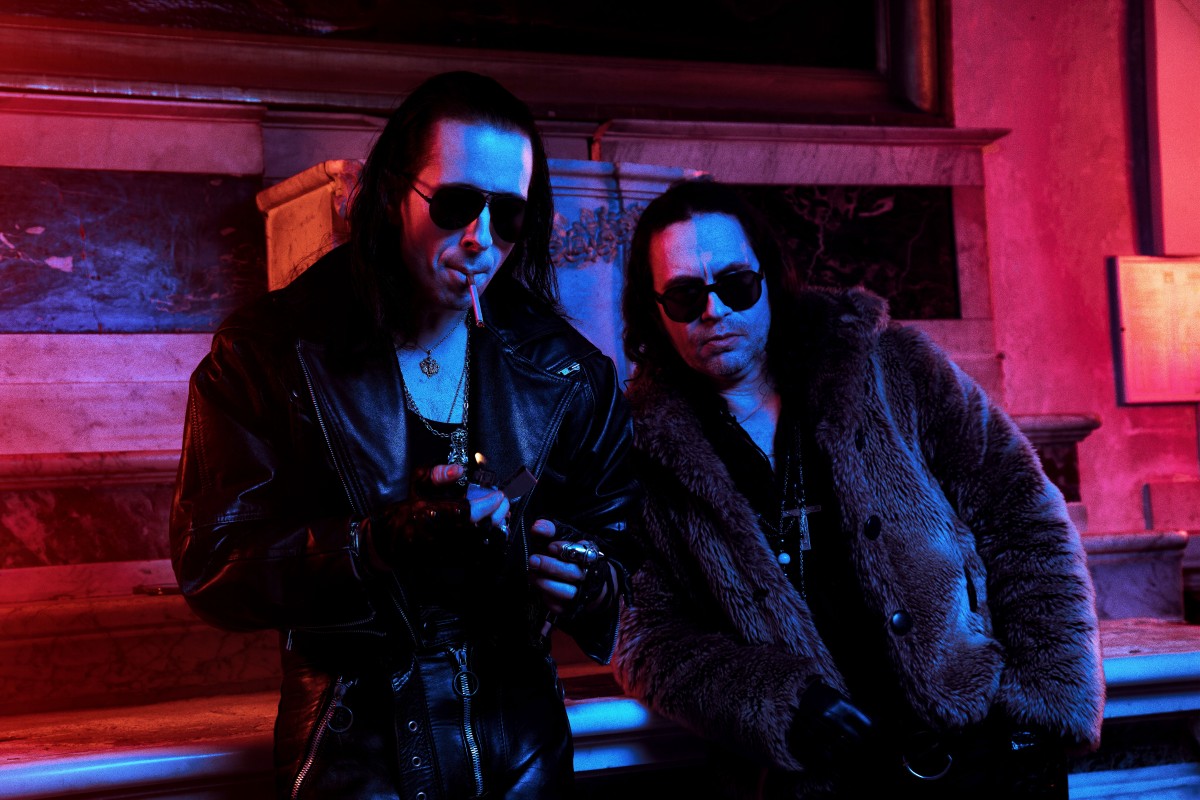
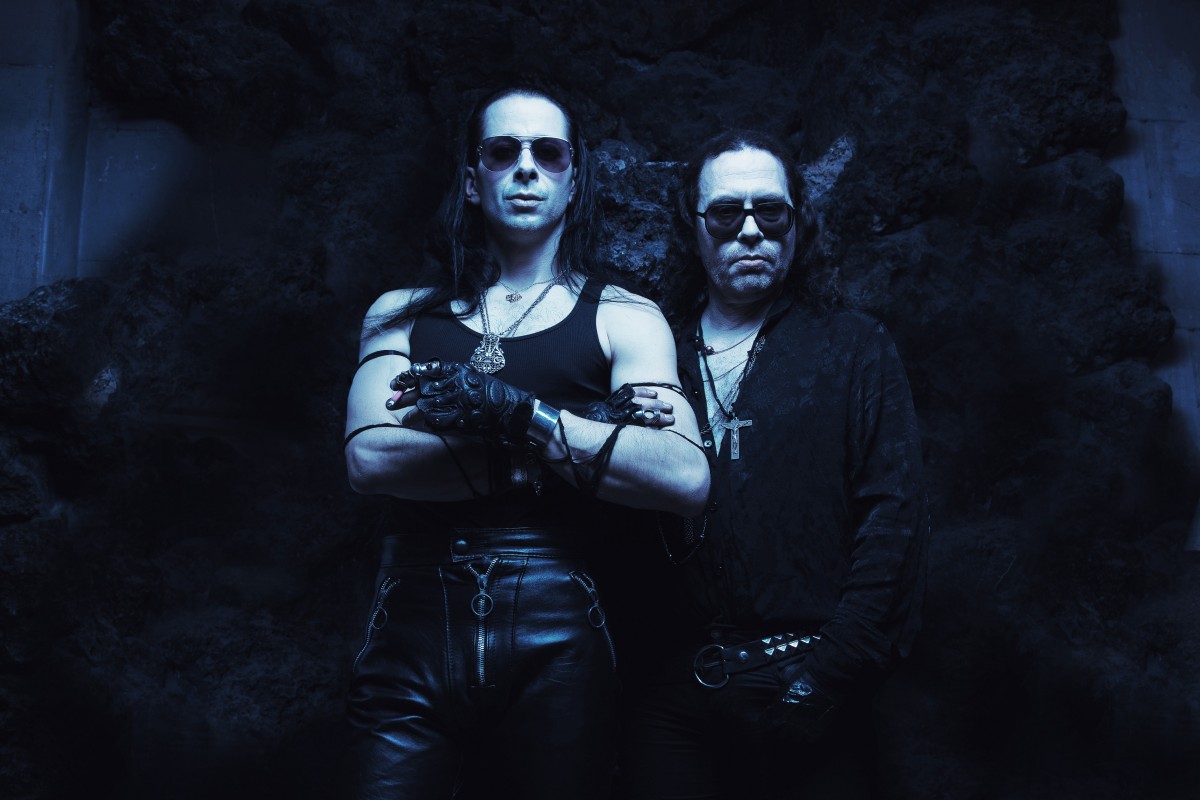
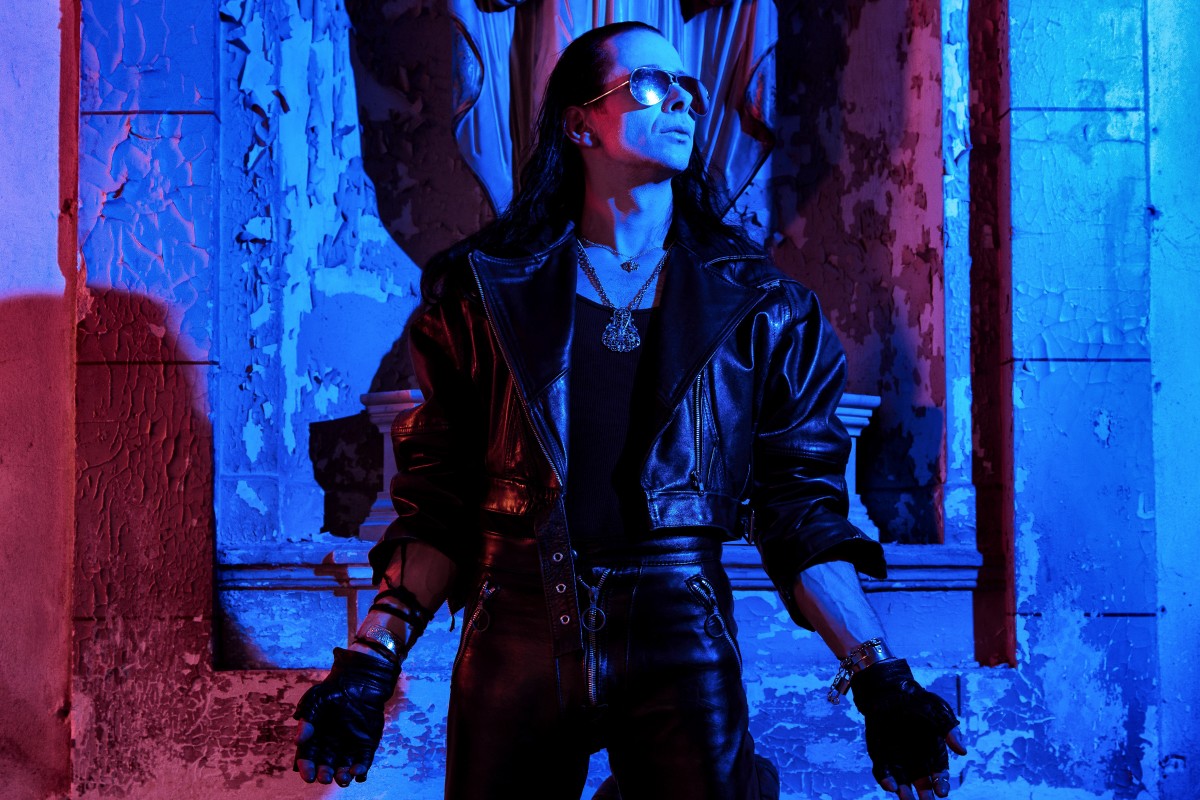
Few bands in today's post-punk landscape conjure such spectral beauty and emotional gravity as Soror Dolorosa. Emerging from Toulouse in 2001, the project was initially founded by Andy Julia—then recognised for his work as a drummer in various black metal outfits—alongside bassist Hervé Carles, guitarist Franck Ligabue, and vocalist Christophe Guenot. The early years saw several shifts in formation: Julia assumed vocal duties, Ligabue moved to drums, and Emey joined as guitarist. This reconfiguration crystallised in their haunting debut EP, Severance (2009), heralding the start of a compelling discography. Subsequent releases—Blind Scenes (2011), No More Heroes (2013), Apollo (2017), and their latest opus, Mond (2025)—have firmly established Soror Dolorosa as a cornerstone of dark alternative music. Each album deepens their signature fusion of post-punk, gothic rock, and cold wave, embracing poetic melancholy and sonic grandeur. Over the years, the band has weathered numerous line-up changes, and today Soror Dolorosa stands as a duo: Andy Julia and Hervé Carles. For live performances, they are joined by guitarist Dea Hydra (Luminance, Emptiness), whose shimmering contributions were already felt on Apollo and now return with renewed intensity. Their newest release, Mond, is a nocturnal hymn for those who yearn for the electric pulse of the '80s. It channels the era's ecstatic collision of jagged guitars and driving electronics, yet refuses to wallow in nostalgia. With production refined by James Kent (Perturbator), Mond delivers a colossal sound—romantic, cathartic, and unmistakably modern. We caught up with Andy, Hervé, and Dea at Castle Party Festival, where the conversation flowed wide and deep—touching on the band’s journey, their creative spirit, and the enduring allure of darkness... and a few other things besides.
Interview with: Andy Julia, Hervé Carles, Dea Hydra
Conducted by: Jerneja, Tomaz
Edited by: Jerneja
Jerneja: Hello, Andy, Hervé, and Dea! Right then, let's begin—now that we're comfortably settled in the fresh air with a cup of coffee in hand. I'd like to start with your latest album, Mond, released last October. What are your impressions, and do you feel it's been received more warmly by listeners and the media compared to your previous records?
Andy: Yes, it was received better. It had more impact. Each of our albums gets a bit of a different reaction, and I think that's because we evolve with every release. The feedback for Mond was really good—some magazines even named it Album of the Month. That helped us get a lot of concert invitations. The songs seem to connect well with people, and overall, I think this album works best so far. We're really proud of it.
Jerneja: So does that mean you mostly play songs from the new album live these days?
Andy: It's about half and half. At festivals, we usually play around twelve songs—five or six from Mond, and the rest from our earlier material.
Jerneja: So we might hear "Autumn Wounds" tonight as well? The weather's certainly more autumnal than summery...
Andy: Probably, yes.
Jerneja: I'm curious—why did you choose Mond as the album title, using the German word for "moon"? What was missing from the French lune?
Andy: Well, Mond in German means "moon", but it also sounds very close to monde, the French word for "world". That connection really intrigued us—the idea of the moon as our world. For me, the word Mond felt almost like an apparition. I can't quite explain it—it's part of a concept we've been developing for years, something that comes from the subconscious. The word itself, without the "e" at the end, is short and minimalistic, and in that way, it felt like a fitting counterpart to Apollo. To me, Apollo and Mond form a kind of symbolic couple—Apollo and the moon. I don't know exactly why, maybe it's just the way it sounds. I do love the French word lune as well, but Mond struck me more deeply. It had a certain resonance.
Jerneja: It's similar in Slovenian and Italian too—the word for moon is luna.
Andy: Luna, yes. It comes from Latin, doesn't it? I really like the word. But maybe it feels less like us, even though Soror Dolorosa is a Latin name (meaning "sister pain"). That name comes from Latin roots, while Mond feels more distant—almost foreign. Maybe it has something to do with the moon's position in the sky at a certain moment, like a reflection of our thoughts. It's hard to explain. There are many layers to it, and I just tried to express it as best I could.
Tomaz: It's clear you think deeply about names and things like that. It must be important to you—and I imagine it's all somehow connected.
Andy: Titles are symbols, and they really matter. When you've been making music for twenty years, you leave traces behind. Album titles are part of that. If you haven't released too many records, you tend to remember everything that happened around each one. Through my music and composing, I try to leave behind something meaningful.
Jerneja: And what was the reason the trace left by your previous album lingered for so long? Mond came out a full seven years after Apollo, while your earlier records were released every two or three years.
Andy: I think it was mainly because of the line-up change. Rebuilding the band took us about three or four years. We had to start over—rethink the sound, reshape everything. When the line-up changes, you really have to reconstruct the whole thing. Then we spent another three years working on the production, because we were very particular about getting everything just right. We wrote around seventeen songs, but kept only nine. We wanted to keep only the very best—make the album well-shaped and quite minimalistic too. It took us years to decide what we really wanted. We gave ourselves time to think it through. And we're glad we did it this way. Making a good album takes time. I don't think it's possible to do it properly in six months or even a year.
Jerneja: Now, a question for each of you—which song from the new album is your personal favourite?
Hervé: For me, it's "Sugar Moon", but I also really like "Broken Love".
Andy: That's a tough one, but I'd say "Sugar Moon" as well.
Dea: If I really have to choose—which is hard—it would be "But Today" and "Souls Collide".
Jerneja: You mentioned that you wrote seventeen songs for Mond. I'm curious—what happened, or will happen, to the eight tracks that didn't make it onto the album?
Andy: That's an interesting question. Those songs are still very present in our minds, and I think they might eventually be released as an EP. But nothing's certain yet. We've already started working on new material, and this time we won't wait another seven years before releasing the next album. We've got some ideas, but of course, they still need a lot of work. It takes time to create songs you're truly happy with. Sometimes it can take six months just to fully shape one track. So yes, we've got unreleased material—we're keeping those songs because they're good, but they didn't quite match the mood of Mond.
Tomaz: There's always been a distinct '80s atmosphere in your music, but Mond really feels like it was born straight out of that decade. You didn't discover any new musical ideas—you made the '80s feel fresh again.
Andy: I'll be honest—I think everyone at this table is a fan of Kim Wilde, A-ha, or Depeche Mode. Before Mond, we were maybe more inspired by death rock or gothic rock with live drums. But now we've moved away from drums—we use machines—and that's brought us closer to our new wave influences. You mentioned the '80s, but to be precise, it's the new wave side of the '80s. Mond has a lot of guitars, but they're arranged in a way that gives it that new wave sound. We wanted to make an album that's danceable—something with the energy of the dancefloor, but done in our own way. That's why it definitely sounds like an '80s record. The rhythm, the grooves—everything was designed for movement. James from Perturbator mixed the album, but he didn't change the arrangements or alter the compositions. It doesn't sound like that because of James—it sounds like that because that's exactly what we wanted. We also wanted it to feel sharp and modern.
Dea: It's also brighter. The darkness, the despair, the resignation—they've been partly left behind. That's another reason it sounds more like the '80s. It's stepped out of the cave and let in a bit of sunshine. There's a touch of positive energy.
Andy: There's still some melancholy, and even moments of despair—"Souls Collide" is a good example. It's still dark. But I think it's a question of gravity. We went to the moon to compose this album, so the gravity isn't the same as on Earth. In our minds, things felt lighter. That's why it's more floating, more danceable. There's less gravity.
Tomaz: How would you compare Mond and Apollo?
Andy: There's a big difference between them, but I think Dea can tell you more—he was the main brain behind Apollo.
Dea: Well, we were all the "main brain" really. That album had a lot of guitars and keyboards. Apollo is much more introverted, more progressive, more unusual—more exploratory. It goes in many directions. That wasn't something we planned from the start, but we embraced it. The explorative nature of the album is also linked to Andy's travels at the time. He travelled a lot—discovered new territories, new worlds, new cultures—and we wanted the music to reflect that openness. It's true there are fewer hits on Apollo—maybe only one or two tracks are danceable or catchy. The rest is more about exploration. Not exactly experimental, but definitely exploratory.
Andy: It’s like a big narrative—immersive. It's like taking a bath, not a shower. A bath can last three hours if you want, while a shower is quick and direct. Apollo penetrates your whole body and goes deep into your mind. The tempos are very different from those on Mond. For me, these two albums form a perfect duality—a balance. There's the moon and there's the sun. It was important for me to release both, because that duality is, in my view, the essence of music.
Tomaz: Mond is your second album released under Prophecy Productions. Soror Dolorosa is currently the only post-punk/coldwave/gothic rock band on their roster. How satisfied are you with their work?
Andy: I think we have a really strong relationship with the label. They believe in us. They don't sign poser bands from the goth or metal scenes—at all. There's also a special history between us, because I worked with Alcest for twenty years. So we know each other well. I think it was written in stone that we'd end up working with Prophecy Productions one day. We're part of the Prophecy family now, and it's quite interesting to be the only band of our kind on the label—to be one of a kind in their catalogue. We also share certain aesthetics and creative ideals with Markus from Empyrium. I remember buying their first album when I was fifteen, and I'm really happy we're now on the same label. We're good friends too.
Jerneja: We saw them perform at Prophecy Fest last year—and they delivered a truly remarkable show.
Andy: I'm a big fan of Empyrium... Everyone at Prophecy Productions was really pleased with Mond, because it's so catchy and danceable. When we sent them the masters, the whole team at the label was listening to it all day long. It was refreshing for them—something different from their usual releases. It felt like a breath of fresh air. Now they can present a goth band that's heading in a new direction, so I imagine it's exciting for them to explore new horizons.
Jerneja: Andy, when you started your musical journey, you were deeply involved in black metal. Do you ever miss it?
Andy: I had the chance to be part of it at a really special time for black metal. I stopped around 2007 or 2008, after Darvulia's last album. I'm happy with that decision, because for me, black metal belongs to a time before the internet. That's how I feel. Back then, there wasn't the kind of communication we have today—everything was more mystical, more underground. We traded tapes, wrote letters, and met people in places no one else knew about. That was black metal for me. It existed outside the usual sense of reality. Black metal is magic—black magic—and too much information killed the mystery I once felt. I'm grateful I met Hervé, who introduced me to goth music and encouraged me to create it. Before that, I was only making black metal—I played drums in several bands. Hervé came to one of our shows and said we should start a band together. He told me I just needed to listen to Joy Division, Christian Death, and Depeche Mode. I didn't know those bands at the time, so I discovered them later—around 2003 or 2004. I'm really glad I found goth music. Black metal, for me, is too exposed to the outside world, while goth—at least for me—is something internal.
Jerneja: Do you still play drums? Do you perhaps even have a kit at home?
Andy: Yes. When I lived in the city, playing drums was a bit complicated. But I've moved back to the countryside now, and I'll have my drum kit at home very soon.
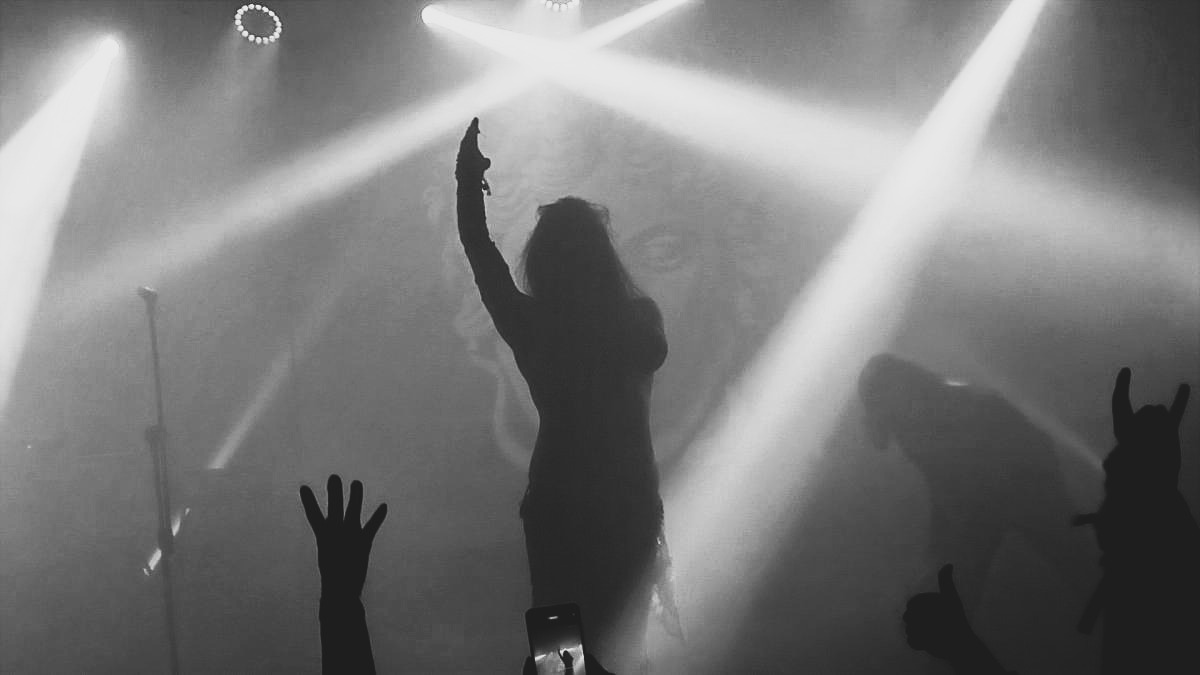
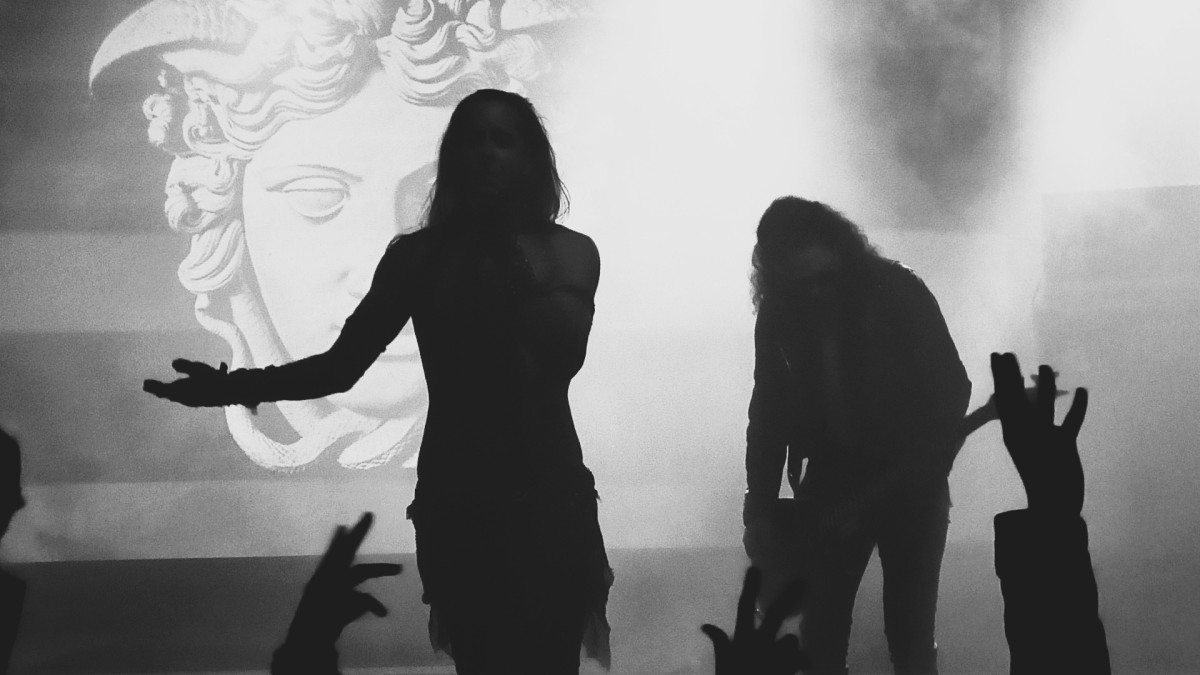
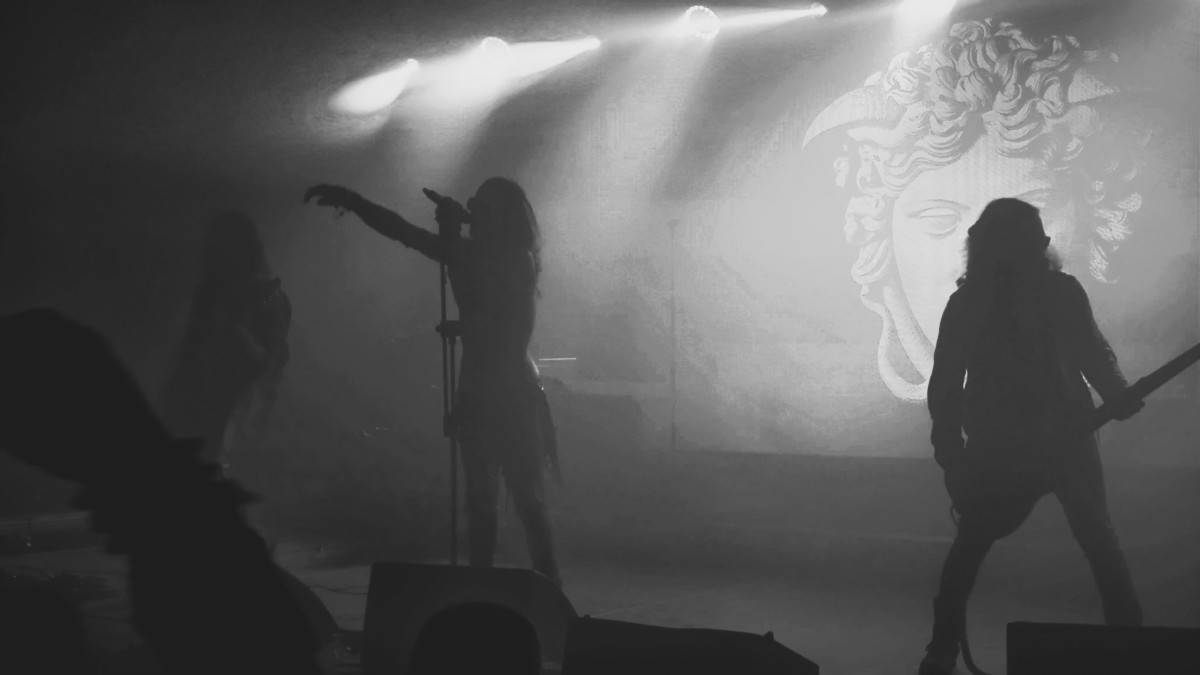
Tomaz: Tonight will be the first time Jerneja and I see Soror Dolorosa live. From what I've seen on YouTube and in photos, your shows seem explosive, passionate, energetic—not exactly what one expects from a typical goth performance.
Andy: There's definitely a lot of energy. Maybe it's something rooted in the '80s. We've been like this from the very beginning, and Mond is even a slightly faster record, which adds to that catchy energy. That energy—and sometimes even aggression—comes from black metal. We've channelled it into gothic music. Many black metal bands are very intense and dynamic on stage, and I think we carry that same spirit.
Jerneja: And how does the songwriting process work in Soror Dolorosa?
Andy: Sometimes it starts with a bass riff, sometimes with guitar—but most often, it begins with a vision. You have this vision, you follow it, and eventually a song emerges. For me, it's always about the vision. At first it's blurry, but over time it becomes clearer—especially when all the instruments come together. It's a collective effort. Sometimes the music comes first and the vocals arrive later, sometimes they develop together. But there's always a kind of synchronicity between the different elements.
Tomaz: We've already touched on the line-up changes earlier, but let's get a bit more specific and current—two members, Jean-Baptiste Marquet and Xavier Pinel, left the band earlier this year. Could you tell us more about that?
Andy: Jean-Baptiste and I worked together on Mond, but he left the band because he simply didn't have the time anymore. We had a lot of concerts lined up, and he couldn't commit. He wasn't in a position to be available, and it takes time—he has other things going on in his life. He decided to focus more on his job than on the time we now spend on the road. He just couldn't balance his personal life with the life of Soror Dolorosa.
Jerneja: That's a common reason, and I've often wondered—why don't musicians in such situations stay in the band but opt out of touring, with live musicians stepping in for shows?
Andy: It's not that simple. When you're deeply invested in a band—working for years, even at home, shaping sounds and compositions—you can't just be the guy behind the computer while someone else goes out and performs your work. The hardest part is finding a balance between roles within the band. Jean-Baptiste was with us for seven years, and since Mond came out, we've played five shows. He said that was already too much for him. It's tough to make a living from music these days—you need a job, you have responsibilities, and at the same time, you need to be available for the band. Xavier, the other member who left, was a live musician. He wasn't involved in composing. Now that Dea is back, things are much more interesting and easier. We've decided to continue as a trio instead of four, like before. Everything's become so expensive—travel, flights, hotels—and with four people, it got very complicated. Being three makes things a bit simpler and more manageable.
Tomaz: And you, Dea—you've recently returned to the band. What brought you back?
Dea: Yes, I came back. I first joined Soror Dolorosa for the No More Heroes tour and stayed on. Then we composed Apollo together, and later I left along with two other members. After that, Jean-Baptiste and Xavier joined the band—but they've since left, and now I've returned. I came back mainly for live performances. Soror Dolorosa has always been Andy and Hervé—they're the core, the creative minds behind it all. The band has gone through many line-up changes, but those two have always remained.
Andy: We've had a lot of line-up changes over the years, and it took us twenty years to finally say: this is it—Soror Dolorosa is the two of us. We love playing with other musicians, and it's great to have a full band, but over time, it brings complications. It's important to have a stable foundation—something you know will always be there. That foundation is Hervé and me. We have our own way of working, and keeping things simple is better for the band's health.
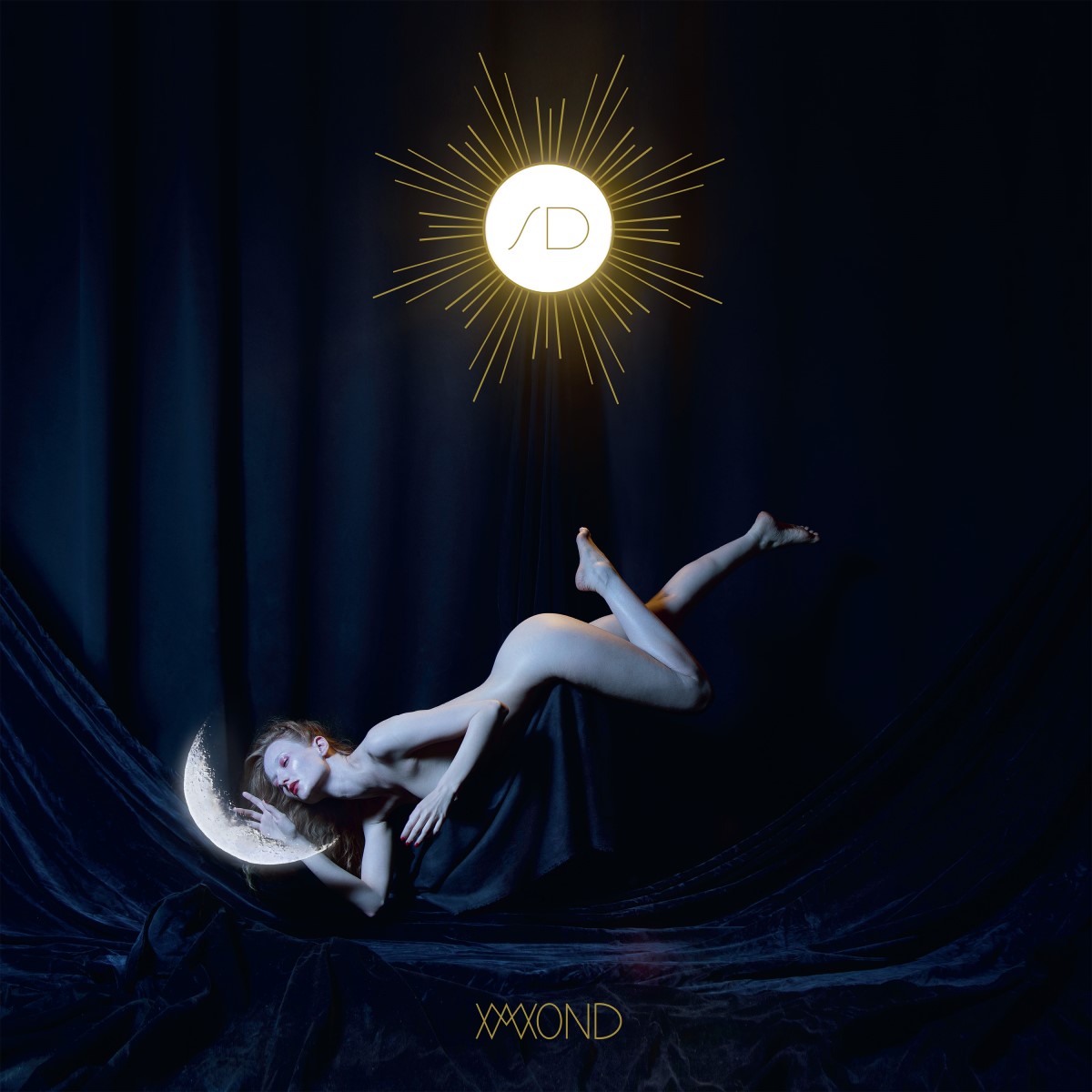
Jerneja: Andy, since you're also a professional photographer, I assume the cover of Mond is your work?
Andy: Yes, and it was very important to me. It came from a vision I had while composing the album. I made a sketch and showed it to the rest of the band. It was of a girl falling from outer space—from somewhere to somewhere unknown, somewhere between the moon and the sun. She's drifting out of gravity. There's a kind of drama in it, but a very aesthetic one. That vision came to life through my wife, who embodied the concept—so I photographed her.
Jerneja: And how did you create that photograph? Did you perhaps use Photoshop?
Andy: No, not at all. We made the curtain ourselves, and underneath it we placed blocks of black wood—the same ones you see on the back of the vinyl. That's what she was lying on during the shoot. I didn't use any Photoshop for the composition. The only element added digitally was the moon—she’s reaching for it. We took a photo of the real moon and placed it there.
Jerneja: Either way, it's a stunning cover.
Andy: It took me five hours to create that image. Her body's position had to be very precise. It's like when you're painting—you might spend months thinking about the exact placement of a glass you want to depict. It was that kind of precision. We took many photos, but this one captured the exact posture. That was the key.
Jerneja: I also noticed that the band's initials—"SD"—look different...
Andy: Yes, yes—each album has its own visual identity. The first one, Blind Scenes, featured a design inspired by the Vienna Secession style. Then, No More Heroes leaned more towards Art Deco. Apollo had a more antique feel—something Egyptian or perhaps Eastern European. And now Mond is more minimalistic and very elegant. We only added a shining sun on the back.
Tomaz: When it comes to photography, art and similar things, you seem like a bit of a perfectionist. I've seen many of your photographs, and they're all incredibly aesthetic.
Andy: Photography is my main occupation—I work as a photographer every day. So yes, it's a kind of professional deformation. It's something you know very well, but at the same time, you can be extremely self-critical. So yes, it's very precise.
Jerneja: Do you have your own photo studio?
Andy: I used to have my own studio—an atelier in Paris. The Mond cover was created there.
Jerneja: Do you focus solely on artistic photography, or do you also shoot weddings, funerals, concerts and so on?
Andy: I used to work in commercial photography, mostly in fashion and advertising. So my world exists somewhere between landscapes and being a musician. I also love working with other musicians—like I did with Alcest, and more recently with Perturbator. I created the artwork for Perturbator's latest album, Age Of Aquarius. That was a special project—I'd been thinking about it for a year beforehand. It was very precise, a concept built around statues.
Tomaz: You mentioned your long-standing collaboration with Alcest earlier. I actually discovered Soror Dolorosa through Alcest. If I'm not mistaken, you toured together?
Andy: Yes, we toured together in 2012—with Alcest and Les Discrets. It was around the time Alcest released Les Voyages de l'âme, and Les Discrets were just putting out their second album, Ariettes oubliées.... So the three of us toured together, and it was fantastic—we're very close friends. We had a great time, and I have wonderful memories from that tour.
Tomaz: Alcest was probably your direct link to Prophecy Productions?
Andy: Absolutely. We met the people at Prophecy thanks to Neige from Alcest—he introduced us. And the first time we spoke with Stefan Belda from Prophecy, he already knew who we were. He told us that when he was fifteen, he played bass in a post-punk band. Prophecy is essentially Stefan Belda and its founder, Martin Koller. We have this private joke—Stefan once said, "If there's going to be one post-punk band on Prophecy, it has to be you guys".
Tomaz: These days, there’s a lot of talk about artificial intelligence in the music industry. Do you use AI yourselves, and what's your opinion on it?
Andy: We absolutely don't like it, and we don't support it. It's not part of our world at all. All of us want to bring back analogue methods—doing everything by hand. AI is completely outside our creative universe. It's a system designed to make things easier and faster, and we don't want that. We want to create something perfect—from our minds to reality. We don't want to ask a machine to do it for us.
Tomaz: More and more music projects based on AI are emerging lately, and some of them get a lot of plays on streaming platforms.
Andy: Absolutely. Spotify doesn't distinguish between them in its playlists. I think this is killing art as we know it. It's not just affecting music—it's happening in photography too. In my opinion, it's dangerous for real artists. I'm not afraid, because I believe the goal of an artist is to be unpredictable—to go beyond the limits of AI. You have to reach another level, a deeper one. You need to express your own essence, not just something that "sounds like something". There's no essence in artificial art—only function. Essence comes from the human soul.
Tomaz: There are many other, far more dangerous things happening in the world today. Do you have any thoughts on that?
Andy: I spent the last twenty years living in the city, and I've just moved back to the countryside—because I didn't want to hear about it all anymore. There's too much chaos on this planet, and personally, I just want to make a garden and enjoy the sun, the moon, and the rain. I want something simpler—just to take care of what's close to me. I don't want to be too involved in what's happening around me. There's too much information all the time now. I also don't want to get caught up in everyone's opinions. I just want to look after what's around me—my family, my wife—and that's enough. I'm not interested in politics. I'm only interested in art, the history of art, and things like that.
Jerneja: Just like you left Paris, we moved from Ljubljana to the countryside a few years ago, while we stopped watching television—apart from films, series and non-political documentaries—about ten years ago.
Andy: Same for me. That's the kind of life I find meaningful—taking care of nature and what's happening around you. If you learn to observe nature, you learn the definition of life, and how it connects to your own existence.
Tomaz: Thank you for taking the time to speak with us. It's been both informative and enjoyable. Any final words from you?
Andy: We're very happy to be part of Terra Relicta. It took quite a few years for us to finally meet, and it's a pleasure to be represented by you. You're an important media outlet—especially because of your sharp musical taste—so it's a real honour for us. We're grateful you came to us on this special occasion.
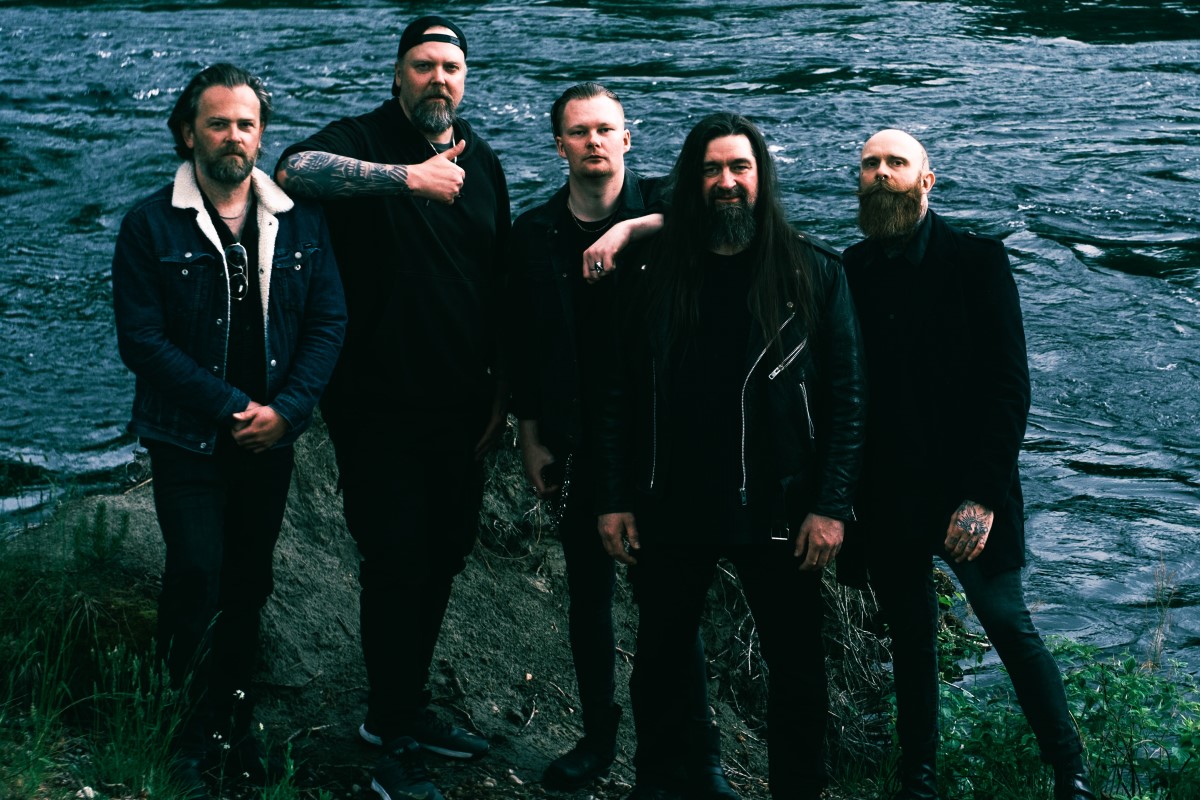
Band photos by: Mathilde Richard
Live photos taken at Castle Party Festival 2025 by Tomaz
Soror Dolorosa links: Official Website, Facebook, Instagram, Bandcamp
 "For my sake, I could just stop playing the old stuff, but on the other hand, I know that our fans want it." - Anders Kobro
 "I can call our show an emotional exhibitionism. If you want to drink beer and cry, please come to our show, haha." - Nokt Aeon
 "I'm quite obsessive, and when I work on music, I can overwork and get myself in trouble. I always had a breakdown when I finished an album, because I drove myself to the brink." - Mick Moss
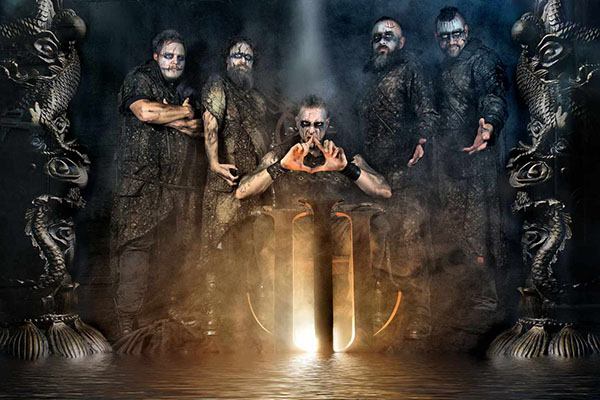 "The whole thing for us with the lore we have created is inspired by Greek Mythology and the stories of Atlantis." - Phil Primmer