
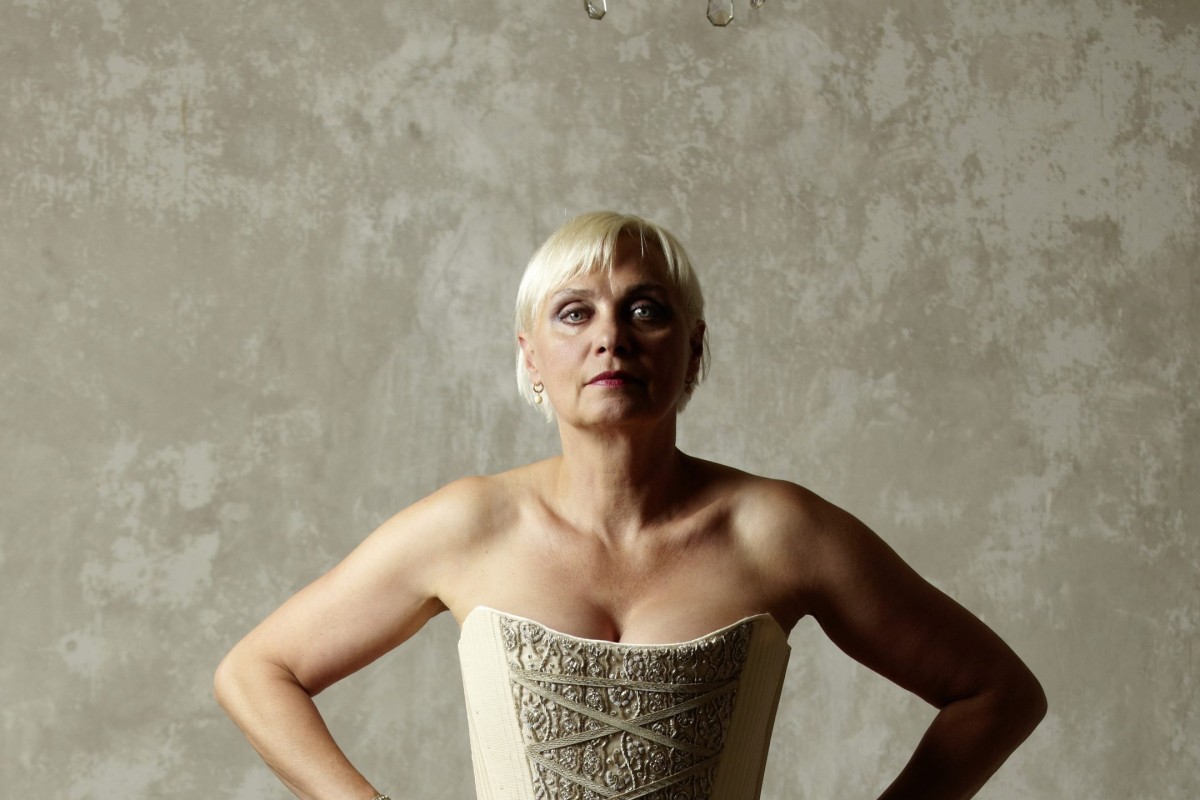
Anja Huwe, a true icon of the 1980s post‑punk movement and founding voice of the cult band Xmal Deutschland, has returned to the stage. Emerging from Hamburg's underground in 1980, Xmal Deutschland carved out a bold and haunting sound with a line‑up of five women: Anja Huwe (vocals), Manuela Rickers (guitar), Fiona Sangster (keyboards), Rita Simonsen (bass), and Caro May (drums). Their debut single "Schwarze Welt" appeared the following year on the ZickZack label. Although German audiences were initially hesitant, a UK tour supporting Cocteau Twins secured them a deal with the legendary 4AD label, where they released the seminal albums Fetisch and Tocsin, along with the cult club classic "Incubus Succubus". Later, under Phonogram, they broadened their sonic palette with Viva, before closing their chapter with Devils on Metronome—a record that leaned more towards mainstream pop—prior to disbanding in 1990. Since then, Huwe has devoted herself to visual art, re‑emerging musically in March 2024 with Codes—a powerful solo debut created with long‑time collaborators, including her close friend Mona Mur. With renewed interest in Xmal Deutschland and freshly remastered reissues via Sacred Bones, Huwe's voice and the band's classics once again reverberate through the shadowed corridors of post‑punk. We heard that echo at Castle Party in Poland—but before the show, we sat down (in fact, we were standing) with Anja to reflect on the past, the present, and what lies ahead.
Interview with: Anja Huwe
Conducted by: Tomaz, Jerneja
Edited by: Jerneja
Tomaz: Hello, Anja. We're delighted to meet you. You've returned to the music scene after many, many years. How does it feel?
Anja: Thank you for having me. Well, it was quite a natural step. It's pretty exciting, because I said that I wouldn't play live at all, but there were so many requests. I agreed to quite a few of them, including this Castle Party festival.
Jerneja: Will this be your first performance at a major festival since returning with your solo project?
Anja: No. We started in The Hague at Grauzone. That was a festival too, and it was my first gig. I didn't expect anything, because I'd never been there, but there were nearly 2,000 people, so it was pretty big. Then we played in Ghent (Belgium), Paris, and some other places as well, and we still have many more ahead of us.
Tomaz: Last year, you released your first solo album, Codes. How did the whole process unfold, given that you had been away from music for so many years? Did everything go smoothly?
Anja: Yeah, actually, I was always involved in music. I mean, not being in a band, but I was connected with music in various ways, like writing and doing interviews with people. I had many requests to sing, but I never did it. This time, when I started recording my album, I had a request from a guy from Tel Aviv, Israel, asking me if I would be interested in singing a song for him—just singing, or re‑writing if I wanted to. This is the song "Skuggornas", the first one on my album. I started working on that with Mona Mur, who is my music partner. She has a studio in Berlin, and she was always asking me to get back into music. I always said that I'd never return, but through working with these guys, it was pretty exciting. Then one day I met Miki Berenyi from Lush—they were on 4AD Records too—and she's back in music again. She said one interesting sentence: "Music is fun, isn't it? I mean, I find singing really interesting. Again". This was really striking, because I had the same feeling. So, it was pretty relaxed and interesting to write music and songs without having a band. Just two people. At first, there was silence—no one was interested when I told some people in the music business that I was recording a solo album. But that changed.
Jerneja: Mona Mur has always been involved in music, but, interestingly, she was never part of Xmal Deutschland, and the two of you hadn't collaborated before.
Anja: No, she was never in Xmal Deutschland, but we did collaborate. We've known each other for 40 years. She wrote the very first article about Xmal Deutschland, and we used to share a flat, so we were always connected. Later, she moved to Berlin, and I moved to New York, then London, but we stayed in touch. I wasn't interested in the kind of music she was doing, but somehow it all came together. So, we started working on this project. I wasn't sure if it would really work, but it seems that it did.
Tomaz: What exactly did you have in mind when you named the album Codes, and where did you find inspiration for the lyrics?
Anja: Well, as I said, this guy from Tel Aviv came to me asking for a song, and we started talking about how Israeli people come from all over the world. I was curious about where his family came from, and he told me they were from the Ukrainian/Polish area, of course, a Jewish family. We talked about his grandfather, who lost his entire family during the war and in the years after the Second World War. He wrote a diary towards the end of his life, when he was nearly 90. I asked what it was all about, and he said it was about his grandfather's survival. He was hidden in the woods when the disaster happened there, and from then on, he lived in the forest. He joined the Bielski partisans—who are quite famous, and there's even a film about them. I think a well‑known actor played his character. To me, it was fascinating: living in the forest without family, through the winter, with no food, almost nothing. I really put myself into this story. I said to Mona that we should do something with it—it's such an interesting theme. The woods, the darkness… and that's how it all came together. It's called Codes because there was a sentence in the diary that said, "Everyone has codes". We all have codes—how we communicate—and if you lose that communication, those codes, you're lost. Goths, punks, everyone has codes: how you dress, how you speak, your whole behaviour. If you lose that, you are no one, you are nothing. I took certain codes from the lyrics and put them into my own words. For example, "living in the woods" became "living in the forest". And then there are people like Putin or Trump, who can do whatever they want, ignoring everyone, and these times are tough. For me, it all came together at the right moment. It's really interesting because people always tell me the album feels timeless. It's there, it says it all, and whatever happens, it belongs to these times.
Jerneja: So, if I understand correctly, the album was mainly inspired by that man's experiences, and it isn't meant to be political—or is it?
Anja: No, it's not political at all. It's more about feelings and situations. You can transfer these stories and situations into the present day. It's about humans and what they can do in completely unexpected circumstances. Well, you have to survive—not only in the woods, but also in cities. If you lose everything, then you're lost. You need to find some kind of camouflage or something.
Tomaz: Since the album cover features your photograph, I assume it must also be introspective, representing you as well.
Anja: As I said, I only took the story of this man—hearing it, reading it—and brought parts of it into my own life, because my life is also very complex. There are certain areas where you can tell: I've been in situations where I nearly died or something. So, in a way, I can adopt things. I can put my emotions into it, so of course it's about me too.
Jerneja: As you're also a painter, one might expect the album cover to feature one of your artworks.
Anja: I still do my art, but this has nothing to do with it. It's about me and my personality. But anyway, music isn't my only focus—I also do exhibitions. I'm doing this, I'm doing that, a mix of everything.
Tomaz: As one of the founders of Xmal Deutschland, I wonder why you didn't release your new music under the name Xmal Deutschland, as a kind of revival?
Anja: Because there's no Xmal Deutschland. They don't want to do it.
Tomaz: But you could use the name, since you already perform live under it.
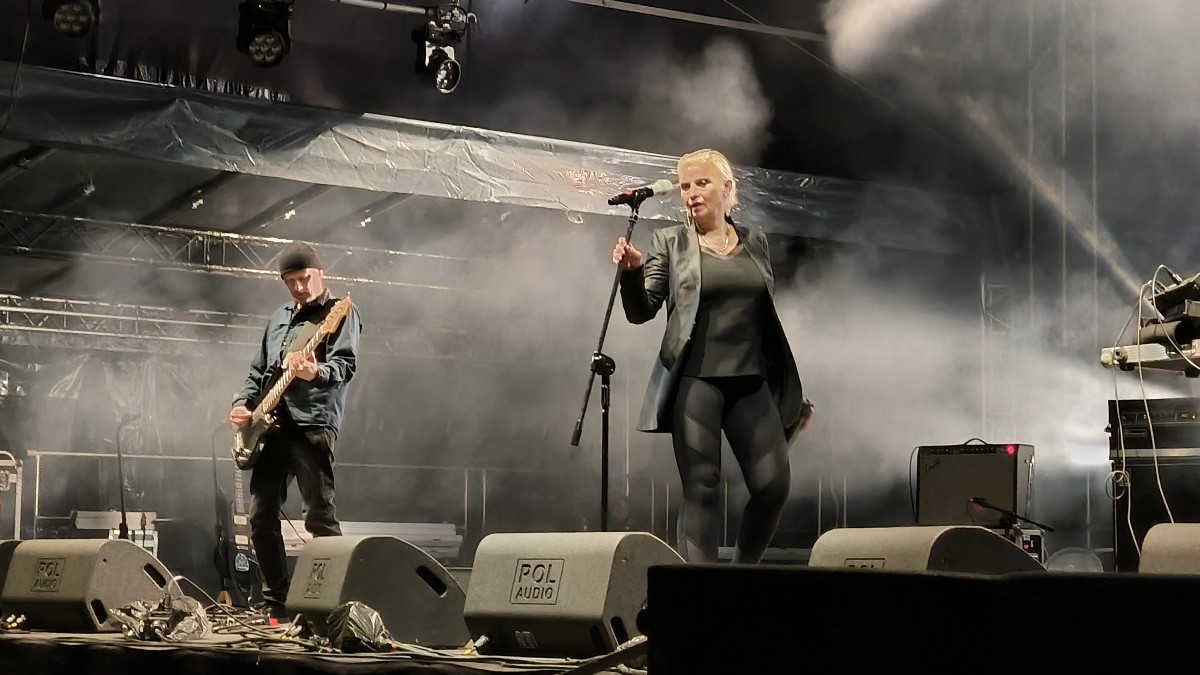
Anja: It doesn't make sense. It's over, you know. Xmal Deutschland doesn't exist anymore. Well, I recorded the album with Manuela, who played guitar, but she doesn't want to appear live. That's why I'm doing live shows with Mona and some other musicians. Xmal Deutschland only has re‑releases, but beyond that, they're not interested. Reforming bands is not my thing. I never look back; I just want to move forward.
Jerneja: Yes, but nowadays many bands "rise from the dead"...
Anja: We are re‑releasing the album Devils pretty soon. Look out for it. It'll be remastered and released as a double album. I think it will come out exactly on the same date when we play in Poland again.
Tomaz: That's great. On the album Devils, there are two of my favourite Xmal Deutschland songs, "Searchlights" and "Dreamhouse". How would you compare the time in the 1980s, when you first started making music, with today?
Anja: I don't follow the music scene much, but for me personally it's interesting. Back then, in the '80s, people's behaviour was completely different—much more reserved, just dark, you know. These days it's very euphoric. People just love it; they come to the shows, and at my first concerts, some were literally crying. Everyone takes pictures or records you, of course, because everyone has a phone.
Jerneja: Does that bother you?
Anja: I find it really bizarre, because right after the concert, you're already on the internet. I mean, come on. It's very different from how it used to be, but it's fine. I haven't played too many gigs yet, maybe just a handful, so there's more to come—including some big ones, like in the UK, Berlin, Leipzig, and elsewhere.
Tomaz: Will you also play at the Wave Gothic Treffen festival in Leipzig?
Anja: No, not at WGT. I don't want to. I hate labelling. Castle Party is fine—it's similar in a way, but in a different setting. I mean, I could play all the goth festivals, but I don't want to. I see myself as an artist, as an individual, not as part of any kind of labelling. I simply don't like labels.
Jerneja: Speaking of labels, Xmal Deutschland are often labelled as a gothic rock band. But in fact, it was post‑punk, since the gothic rock genre didn't even exist at the time.
Anja: Post‑punk, I think that's fine. Yet many say it was a goth band, but it's not. For some reason, that's wrong, and I've tried to explain it. There was no gothic rock back then—you're right, and one of the few to say that.
Tomaz: Apart from performing at festivals, do you also plan a tour?
Anja: Yeah, we will tour in Britain with The Psychedelic Furs, so it's going to be big. Then there are some gigs across Germany, also in theatres, which is cool because we use visuals as well. Our show is a combination of music and visual art, with some of my work included too. For us it's important not to play only at music festivals, but also in certain spaces like art festivals or theatres, to make it even more special. That's where we come from—even Mona does music for films, art films and that kind of thing. Our guitarist is a designer, so we all work with art.
Jerneja: I like concerts that include projections...
Anja: Yes, it can be really nice and very special.
Tomaz: Your live performance is always a combination of your solo songs and old Xmal Deutschland tracks, isn't it?
Anja: It's a combination because people expect it. You can't just say no—you have to give them something. Many people know Xmal Deutschland, and at the same time, they come to see me, and I suppose they know my solo album as well. So I think it's fine to give them some Xmal Deutschland material too.
Tomaz: And how does the audience react to your solo songs compared with the Xmal Deutschland ones?
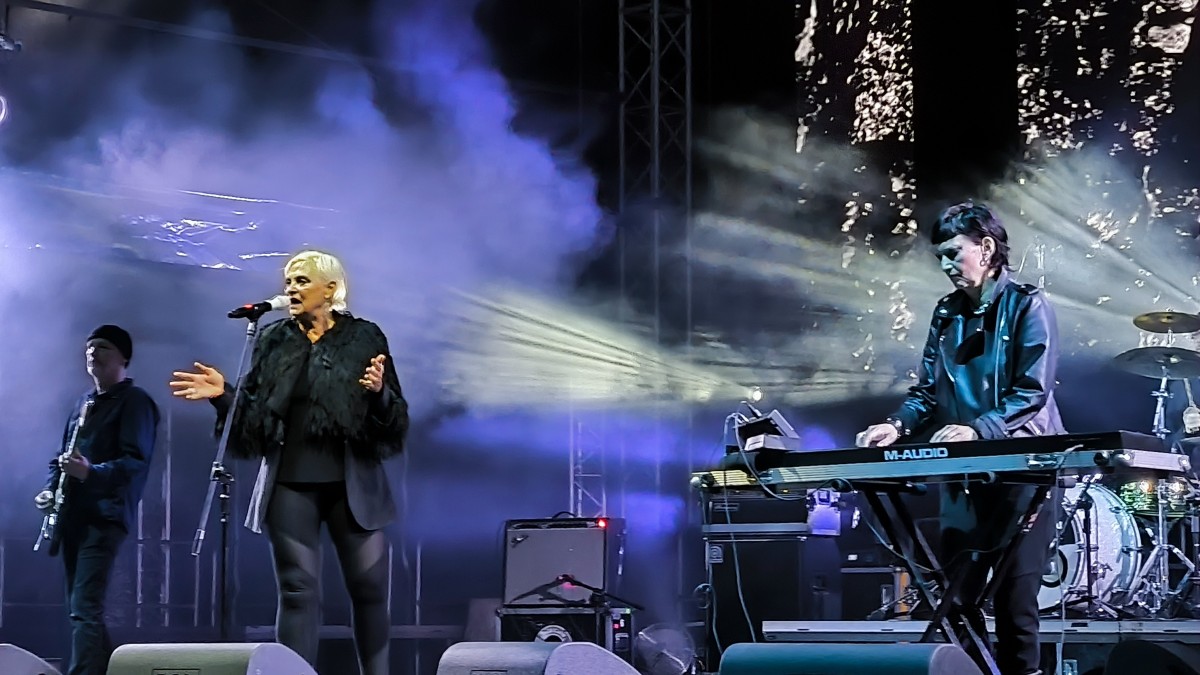
Anja: Of course, they know Xmal Deutschland's music better. But the show is built on rhythmic elements—it's more electronic, you'll hear it. I'm in my own world now, so I can't really say much about it, because we haven't even done ten gigs yet, and more or less, we're only at the beginning of our work together. We're still trying to get it all together. Of course, I know I need to play "Mondlicht" or "Allein", because people know those songs. In general, people enjoy the sound. For example, we played at some festivals where there were many young bands—just two people—and then we came on stage with five, and we blew them away.
Tomaz: You recently released a new single, which is actually a combination of two songs—one from your solo album, "Living In The Forest", and an old Xmal Deutschland track, "Polarlicht". How did you come up with that idea?
Anja: Well, I went to New York the day after releasing my album, and I was walking down the streets. I thought about "Polarlicht", and I thought about "Living In The Forest", and I realised they're pretty identical in a way. So I decided to give it a try as a mash‑up. I was listening to a guy on the street, and he had this kind of mash‑up of songs that I really liked. I thought it was an interesting idea to bring together songs that, in a way, don't belong together. We then started working on it in Berlin, and it works.
Tomaz: Do you also play it live?
Anja: No, because we play both songs in their entirety.
Jerneja: And what's next? Perhaps a new album soon?
Anja: We'll be playing throughout the year, with more shows to come in 2026. The reissue of Xmal's album Devils is coming in October. Then, probably, there will be another single released—"The Girl In The Iron Mask". It's a B‑side Xmal Deutschland song. A slow one, kind of a love song. It will be released on the new edition of the Devils album. Then there's something new we're working on. Next year, the John Peel BBC Sessions will be coming out on 4AD—four sessions, a double album. After that, I'll definitely go back to the studio to work on new material. I already have some. I might also work on a book, because I have a lot of photos, and there's a lot to tell. So my life is pretty full, as it always was.
Jerneja: A book? Perhaps an autobiography?
Anja: Kind of. I mean, I don't take myself too seriously, but I've been through various things that are very interesting. I've also met many people through art, filming, and all that sort of stuff. As I said, I have a lot of different material—many photos and so on. I haven't given it away, I've just kept it.
Tomaz: In the past, you've collaborated with many people. Which experience left the deepest impression on you?
Anja: When I take on a project, I always do my work and generally enjoy it. I'm not too focused on people, but things always come up. Now that I'm working with these guys, it's really nice—they're good people, relaxed, good musicians, and that's fun, you know. For example, yesterday we were in Berlin rehearsing for this concert, and it was easy. I liked it.
Jerneja: Thank you very much, Anja. We could ask you many more questions, but we know you're in a bit of a hurry. Hopefully we'll meet again soon—perhaps even in Slovenia.
Anja: I would love to come to your country. If that's possible, or if someone makes it possible, we'll be there.
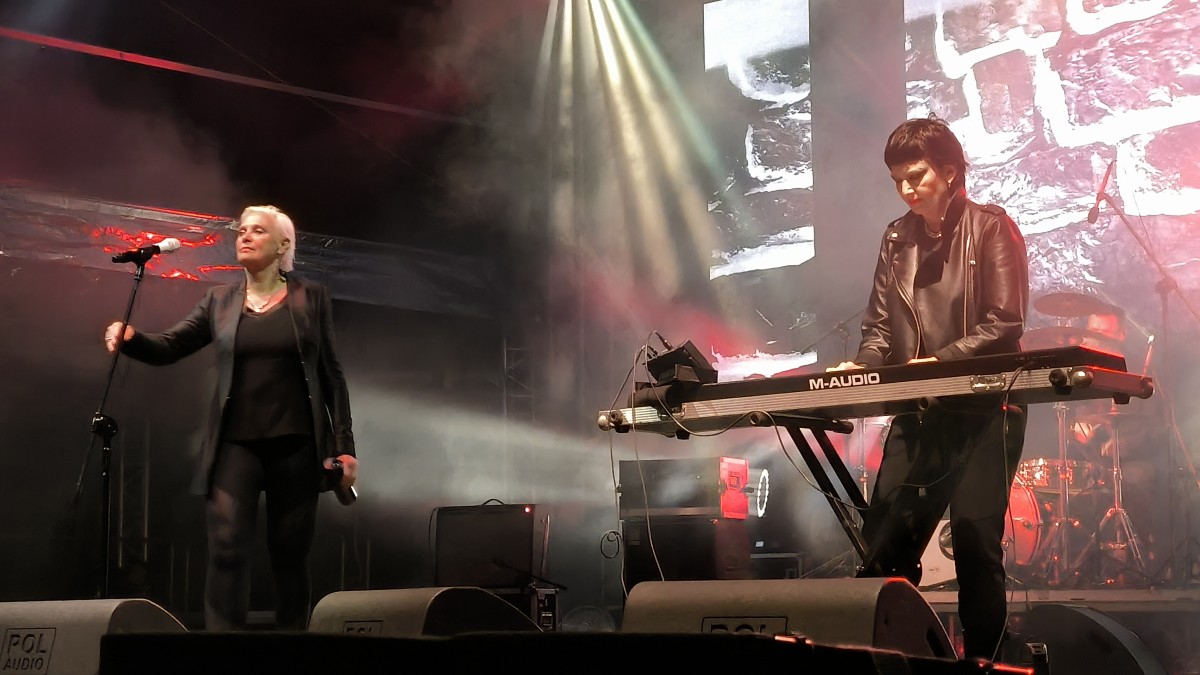
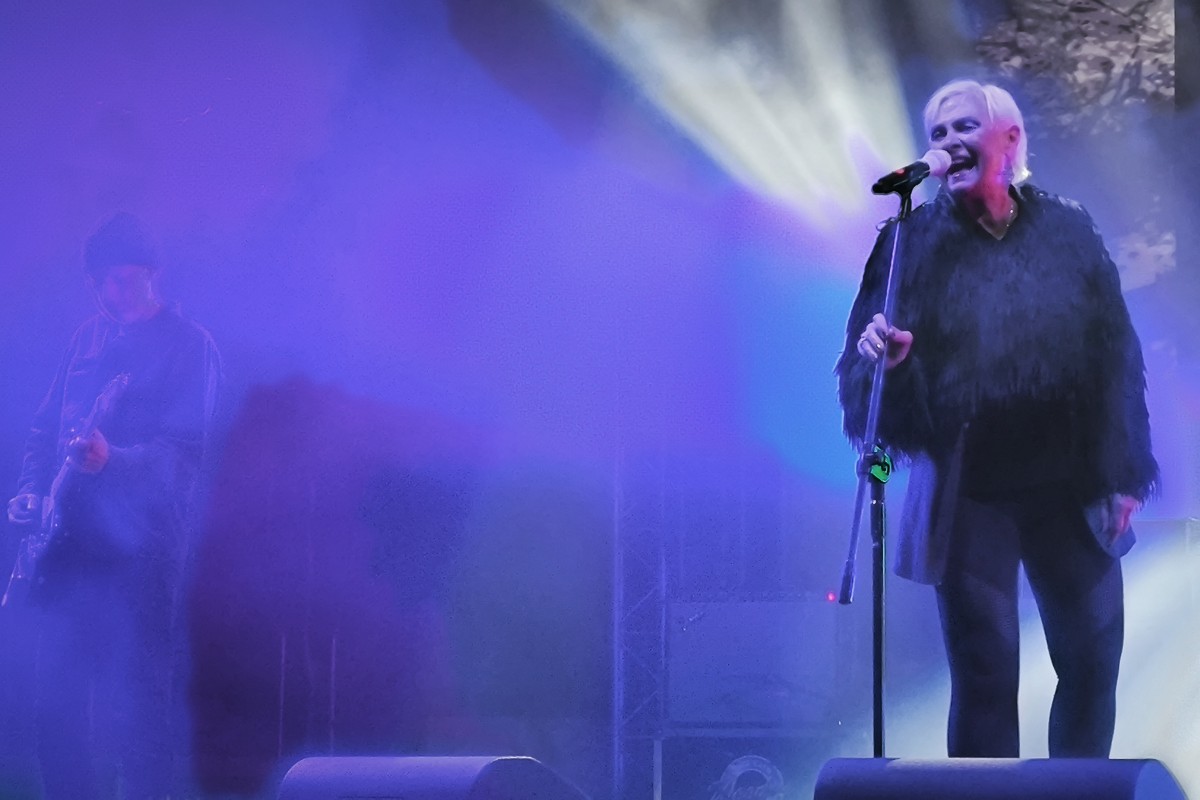
Live photos taken at Castle Party Festival 2025 by Tomaz
Anja Huwe (Xmal Deutschland) links: Official Website, Facebook, Instagram, Bandcamp

 "There were already bands doing small illustrations of symphonic metal, and I was thinking, why doesn't someone do this all the time?" - Christofer Johnsson
 "It's about humans; we are the high parasites. We feast on the earth and on all the things that the earth gives us. We don't just take a little bit, we take everything." - Aaron Stainthorpe
 "You can see it in social media, in the world, with the wars going on, and I think it's an appropriate title for an album." - Skinny Disco
 "I think we longed for a band where we could be there from scratch and form everything the way we want." - Fabienne Erni