
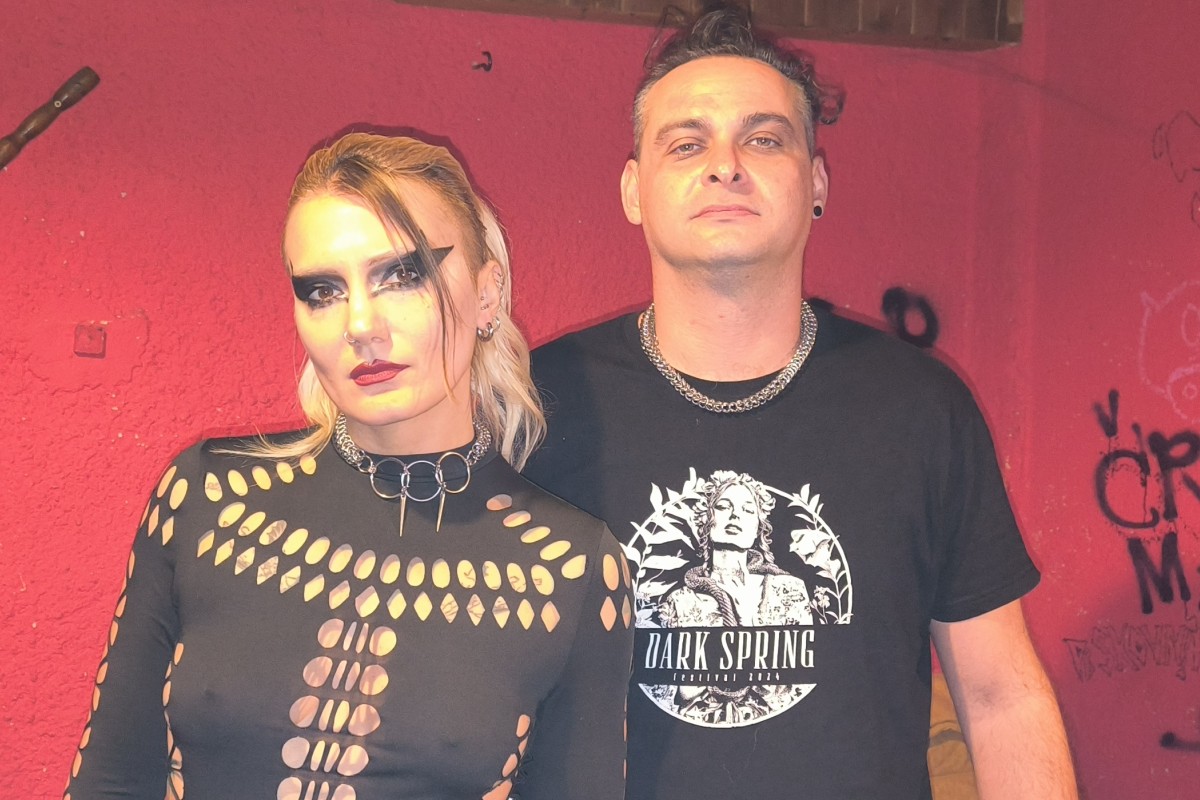
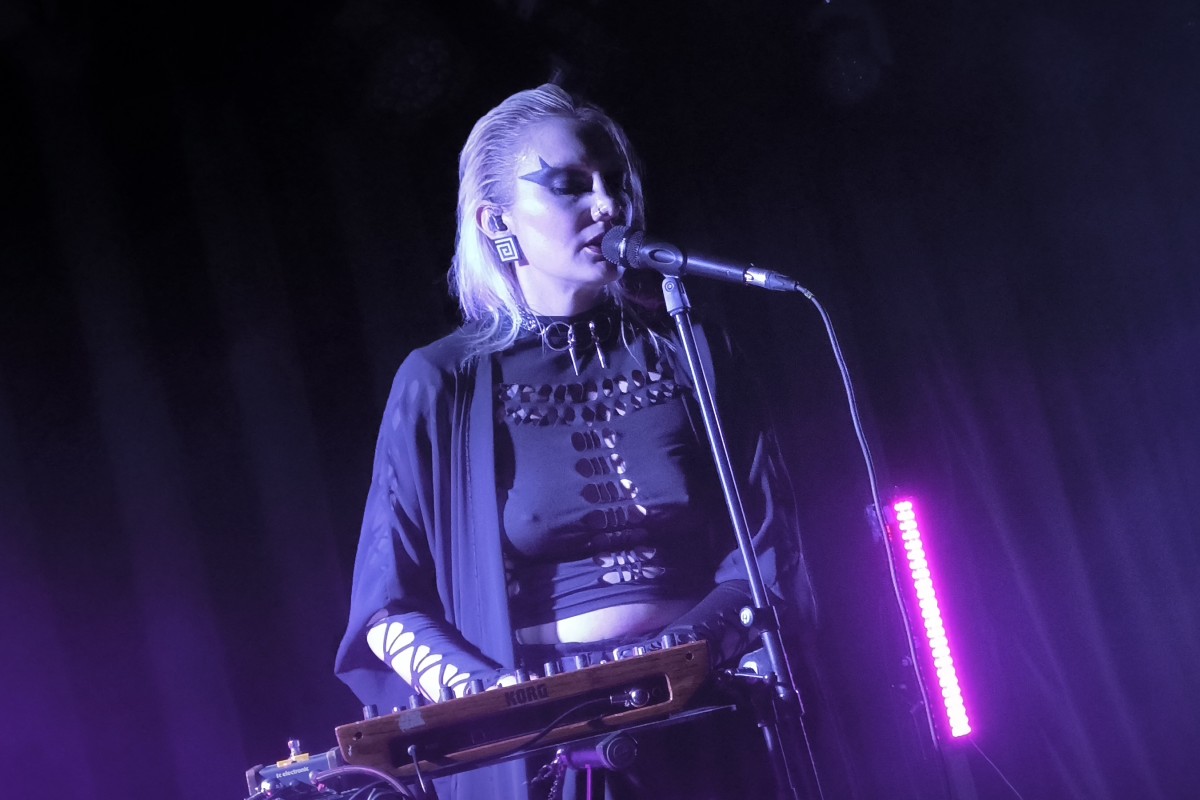
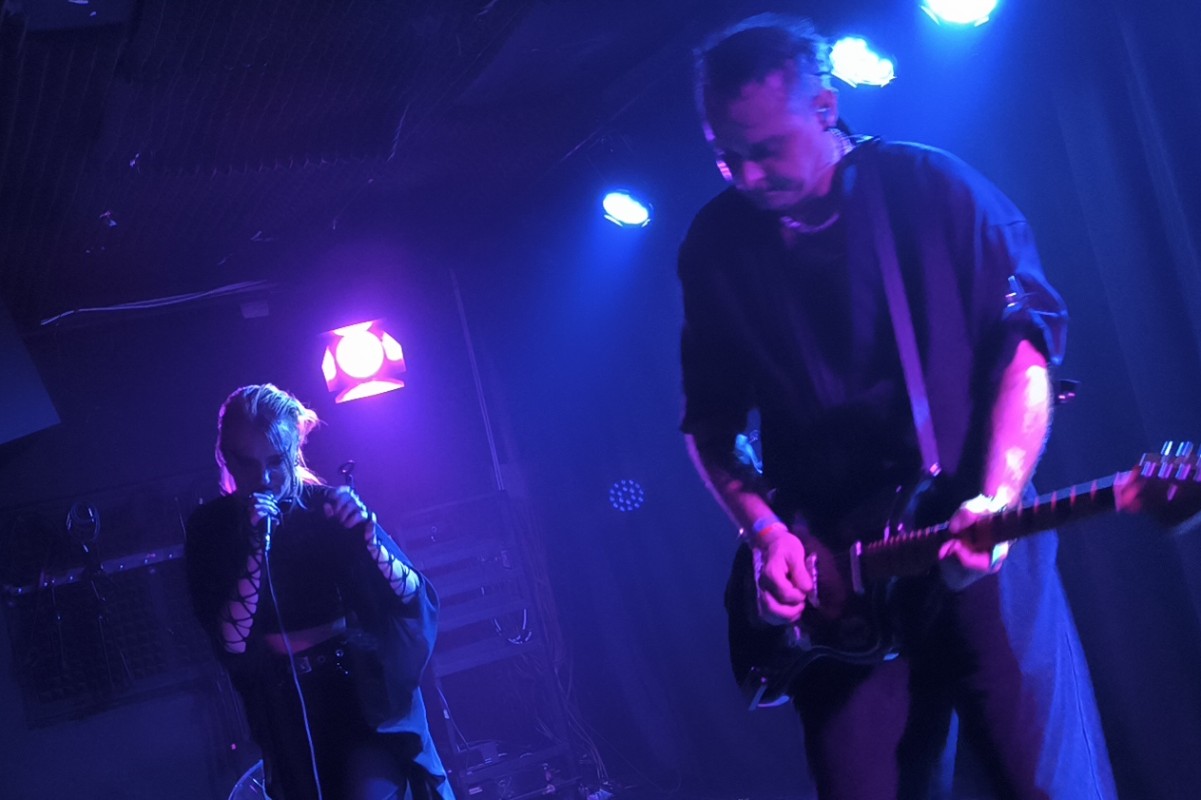
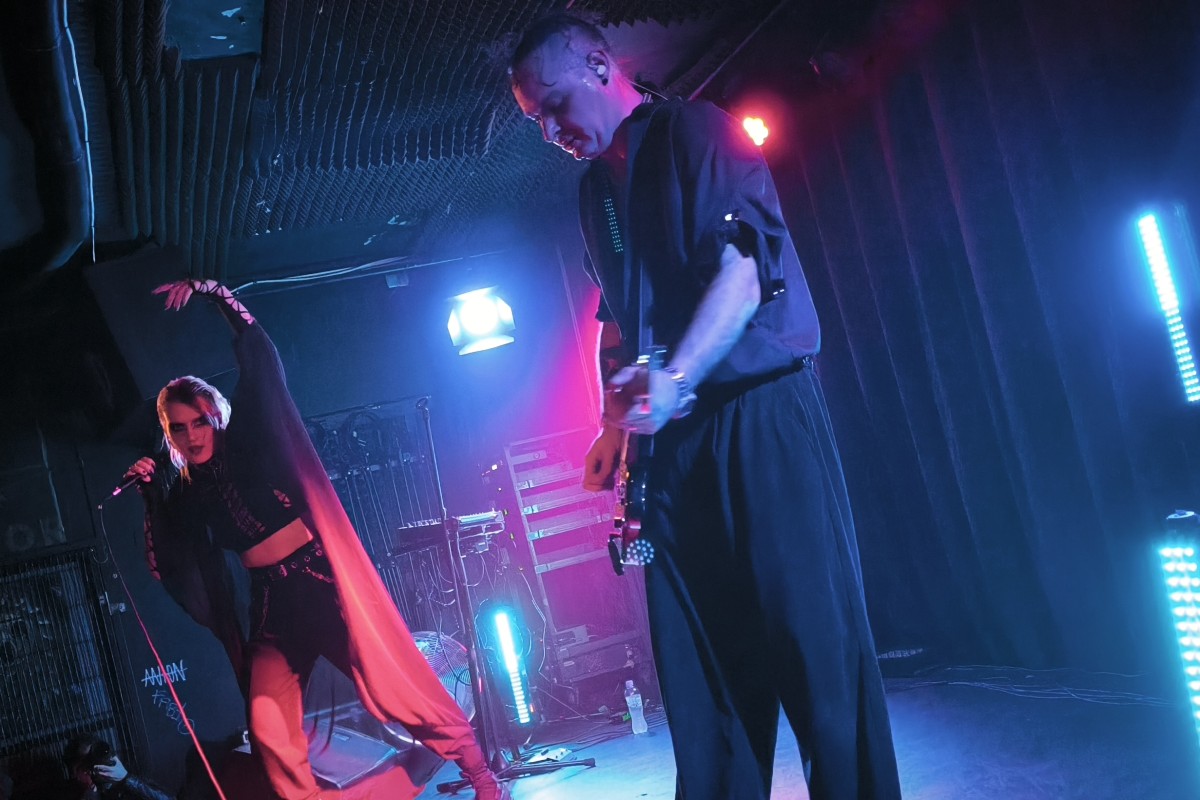
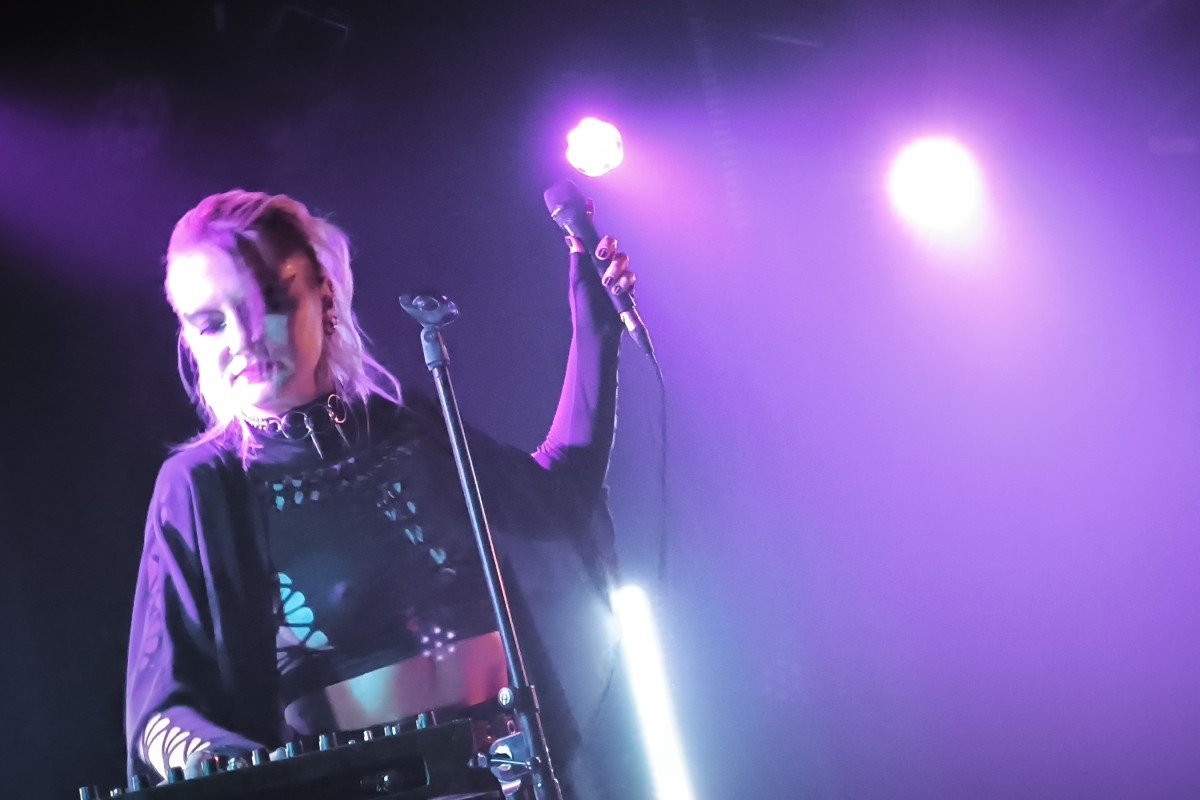
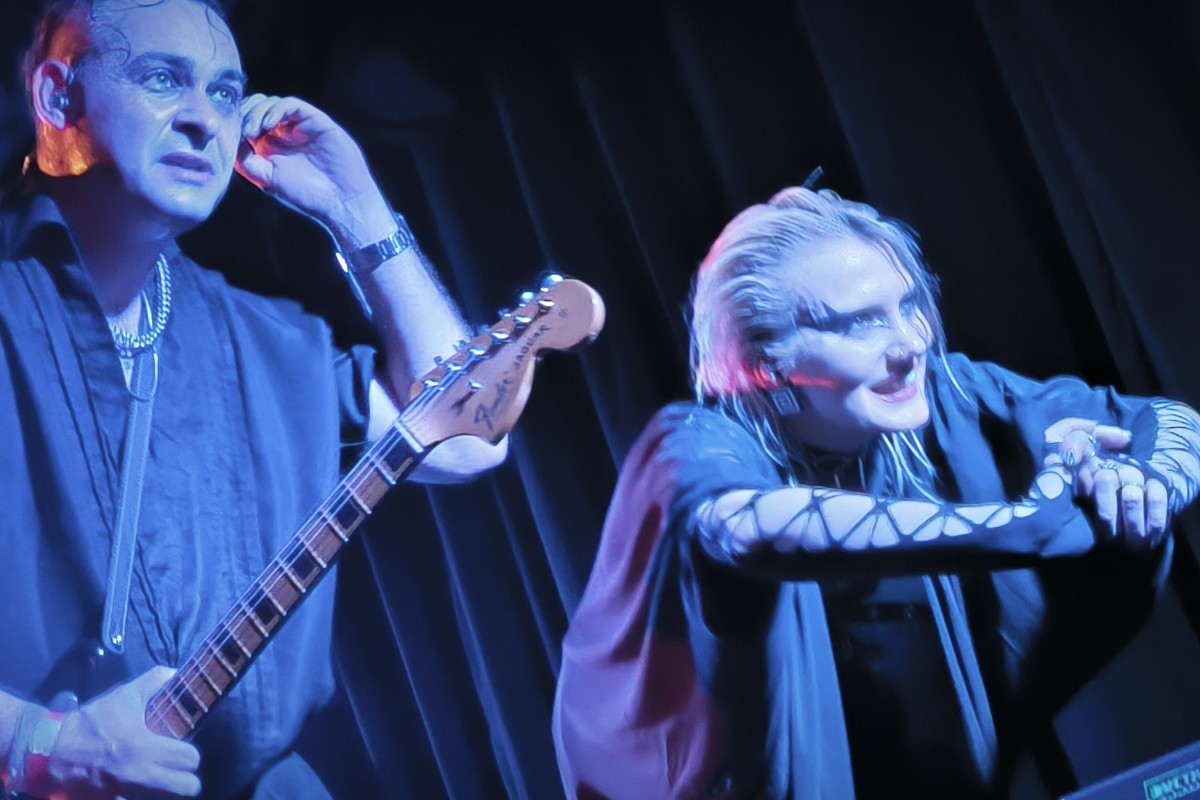
In the ever-expanding cosmos of darkwave duos, few succeed in forging a voice as distinctive and uncompromisingly shadowed as Ankara's Ductape. Alongside compatriots She Past Away, the pair – Çağla Güleray (vocals, synthesiser) and Furkan Güleray (guitar, bass, drums) – have secured Türkiye's place on the international dark music map, while channelling the restless spirit of post-punk's original upheaval. Since their formation in 2019, Ductape have assembled an impressive body of work: three full-length albums (Labirent in 2021, Ruh in 2022, and Echo Drama in 2024, expanded in spring 2025), a string of EPs and singles, collaborations with kindred artists, covers, compilation appearances, and a series of strikingly self-produced videos. Their sound is a vessel for raw emotion – pain, death, solitude, the unveiling of inner truths, recurring nightmares, the suffocating sense of entrapment, the collapse of hope, and ultimately the quiet acceptance of it all. Yet within this darkness lies release: a rhythm to dance upon, a catharsis that heals. Renowned for emotionally charged performances and atmospherically rich tracks, Ductape have swiftly risen to prominence across the global post-punk and goth circuit. Their live presence has already graced some of the scene's most respected festivals and headlining tours, and with a new album in the works, anticipation runs high for another jewel of melancholic melody and driving, pathos-laden beats. On 10 October, Ductape gave their very first concert in Ljubljana (the report is HERE). Just before they took to the stage, Terra Relicta sat down (this time we actually sat down – and on a comfortable sofa, no less) with Çağla and Furkan, who revealed almost everything a devoted listener might wish to know.
Interview with: Çağla Güleray, Furkan Güleray
Conducted by: Jerneja, Tomaz
Edited by: Jerneja
Jerneja: Hello Çağla and Furkan. If I'm not mistaken, this is your first time in Ljubljana. What are your impressions?
Çağla: Yes, it’s definitely our first time, and it's really exciting. We've always wanted to come – even a couple of years ago – but now is the right moment, and we're looking forward to the show, to see how the audience will react. So, it's lovely to be here.
Furkan: The weather is also, luckily for us, very good.
Jerneja: Yeah, almost like in Türkiye, haha… This year, you've spent a lot of time touring. Tomorrow you'll be in Vienna – the last show of this tour – then you'll have about a two‑week break before hitting the road again. What is it like living that way?
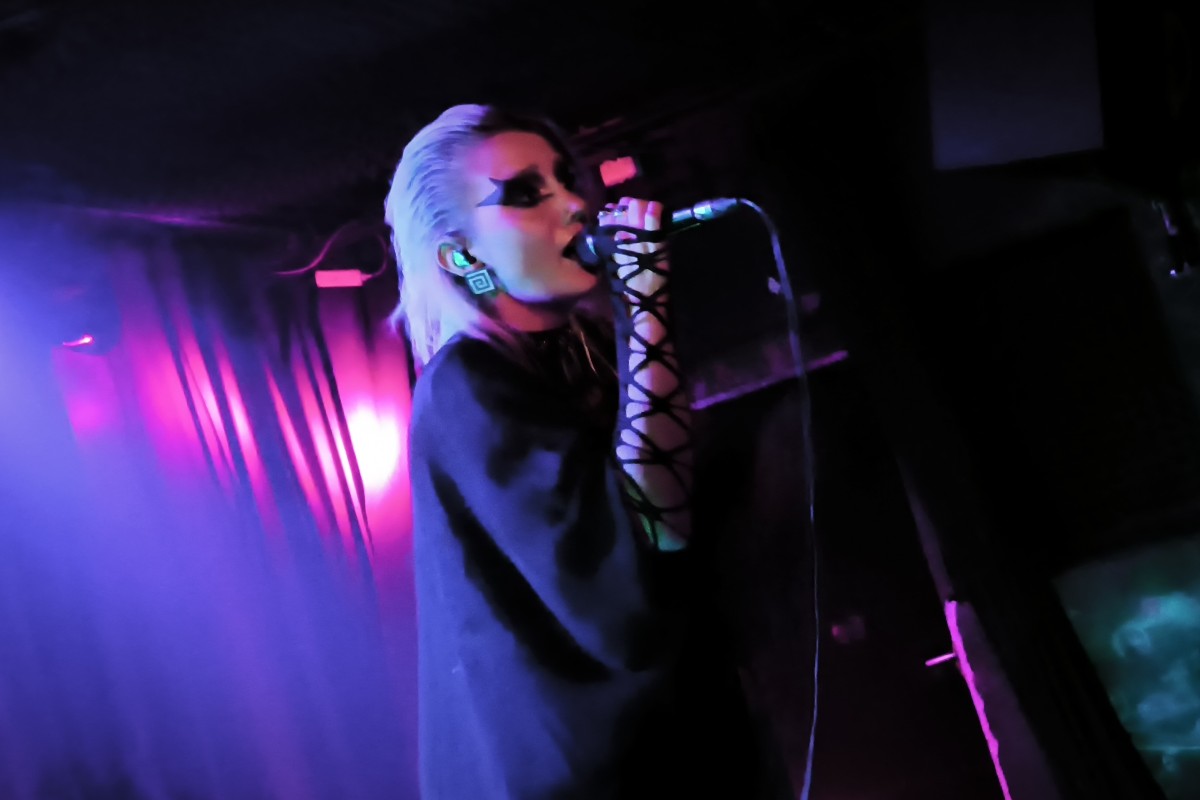
Çağla: Yeah, we've been on the road for three weeks now, and tomorrow it’s going to be our last show before we start again. As you said, this year we’re going crazy. It's tiring, of course, and hard to manage everything. In the meantime, we also recorded a new album, released new songs, and even made some videos on our own. But also when we're at home, we're Ductape. So, no rest for the dead. We keep going because we love what we do. We love being on stage, because it's the only place where we can truly be ourselves. When you're on stage, you don't feel tired anymore. Before and after, yes – but not during. We love it. We're going home in two days. We'll take some rest, and then in two weeks we'll start again with some European shows, and then we're going directly to Latin America, which will take around three weeks. After that, a couple more European shows will follow, and slowly we'll close the year, almost on New Year's Eve – if we survive. For New Year's Eve, we'll be at home until we start again next year.
Jerneja: You've already toured in Latin America, haven't you?
Çağla: Yes, this will be our third tour there. We've already toured twice in Mexico and twice in other Latin American countries, like Brazil, Argentina, Chile, Peru, and Colombia. This time we'll go even further, and we'll also visit Costa Rica, Ecuador, and some other countries. The Latin America tour will be merged with the Mexican dates – about 15 shows or so.
Jerneja: Quite a few bands have said that touring in Latin America is a wonderful experience – is it the same for you?
Çağla: When we played in Mexico, people were very welcoming and, although we are a new band, the audience already knew all the lyrics to our songs, even the Turkish ones; they were singing along. People there are very passionate about music, and witnessing that makes you want to return again and again. It's fun, but it's also hard, of course, because you have to take a flight every night, and every morning you wake up in another country. It's not as easy as it is in Europe, where everything is closer. There, it's a huge continent, but it's always worth it. Everyone is so lovely and welcoming. I can say that we love being in Latin American countries.
Tomaz: As you've already mentioned, you're working on a new album. All we know so far is that you released the first video single from it, "Fine", today. Could you perhaps share a bit more?
Çağla: Well, five or six songs are already finished. It's still Ductape – we haven't changed anything. We do what we love, except that we've added new synthesisers. We're trying to focus a bit on new synth sounds, which will be the only main change. We got a new machine, and we're using some different things. Furkan is doing the mixes now, so it's completely ours. It's what we love. As a secret, I can tell you that the second single will be out soon, and it'll be in Turkish. It's deep from our hearts – of course, all of them are – but that one is the most depressing track from our upcoming album. We plan to release the album next year in the spring, or at least before the autumn. It depends on how much time we'll have to finish it, but we're doing everything we can.
Jerneja: So, one album every two years…
Çağla: We're very eager to release new songs. By releasing songs, you release your emotions. When you feel something you need to share, creating songs is the best way to do it. You can reflect on yourself so that you can relax and be relieved of that emotion. That's why we try to release new songs every once in a while. We don't do it because of algorithms or anything like that – it's simply to relieve our inner selves, to reflect our emotions.
Tomaz: Last year's album, Echo Drama, certainly helped to popularise Ductape. Before that, you were a completely underground band. The album was very well received in the darkwave and post‑punk community. How did the work on that album unfold, and what do you think of it today?
Çağla: It seems like that, yeah. Echo Drama was still the same as our previous releases, but something was different. We gave it more punch, I guess – you can still feel the emotions, but you can also dance to it. So, that's the difference compared to the previous albums. That's the thing that gives it that poppy feeling, maybe, because of the dance moves and those drums. As you said, we gained a lot of attention with Echo Drama, especially after the Echo Drama deluxe edition, where we added two more songs. The deluxe was released at the beginning of this year, and it really attracted a lot of attention. We loved it, and we want to keep that momentum with the new album as well. Yet, we don't want to be one of those bands that release songs which all sound the same; we don't want to repeat ourselves. Every time we try to put something new on top of it. Nevertheless, we are doing great; we are touring a lot. We've been touring with Echo Drama for two years. Next year it's going to be the Faded Flowers tour; it came as a momentum, and we want to keep it this way.
Tomaz: The album Echo Drama also has a very interesting title, which could mean many things. I imagine it as some kind of repeating dramatic events in people's minds. How far from the truth am I?
Çağla: It's exactly how you put it. It's like an echo from the past, repeating yourself, repeating the feelings and everything. I mean, there's no certain explanation for it, but it's some kind of psychological term that isn't used that much. We came up with the idea of using the word echo for the title, but then drama also came into it. When we saw the explanation for that combination of words, we said yes, because it can also reflect your past, as well as your music. It's about something new yet still the same, and we thought it was a good idea for the album title. It also sounds very nice.
Jerneja: In general, things keep repeating until you change something radically.
Çağla: It's a cycle, yes. With our upcoming album, we'll be able to reflect the same emotions as before. So, in a way, Echo Drama continues forever.
Tomaz: The cover of Echo Drama doesn't look particularly special at first glance – monochrome heads of people. Yet there must be a deeper meaning behind it.
Çağla: The idea for the album cover was born out of our feeling that we are always going in a different direction from the crowd. I think many artists feel this way. When everybody goes one way, you need to go the other. So, on the cover, only two people are looking in a different direction. We reflected ourselves in those two figures. That was the main idea behind it. We tried many options, but that one was the one we liked the most.

Jerneja: Even in the danger of a stampede, your chances of survival are much greater if you go in the opposite direction from the crowd – provided you don't find yourself in the middle of it from the start… As far as I know, you created the cover as well as all the artwork and imagery around Ductape, and also wrote the lyrics.
Çağla: Yeah, you're right, I did the artwork. Well, it's not something planned. Everything is spontaneous. Sometimes nothing comes to mind, and sometimes all of a sudden you get those emotions you want to reflect. It just flows automatically, and then you start working on it. At least in my case, it's like that, but also in Furkan's case, because I know how many times he gets stuck as well. It also happens that I can't find the right word for lyrics, so I ask Furkan for help, and he finds it for me. The same goes for the artworks and album names. We first start creating the songs, and then we come up with an idea for an album name together. It's totally spontaneous. The biggest inspiration is how we feel at that exact moment. Whether we feel sad or overwhelmed, we reflect that. Everything depends on that very moment; we only need to be certain that this is it, and then we do it. It's all about our own emotions.
Jerneja: Now, a question for you, Furkan, since you've been quiet all this time. You are a founding member of Softa, which, since 2007, has blended dark, emotional tones with post‑punk and alternative rock influences. About a year before forming Ductape, you also founded the post‑punk/noise rock/no‑wave band Apartmanlar. What made you decide to start Ductape as well?
Furkan: Well, I pushed Çağla a lot for years, and eventually she said yes. We started making music together, and we became so busy with Ductape that I didn't have time for other projects.
Çağla: Yeah, he was pushing me even before Apartmanlar was formed. In 2018, they started making music for Apartmanlar, and all that time, he was asking and encouraging me to do something together. I had no experience and was afraid, but one day I said yes, and we started Ductape. That was one year after the line‑up for Apartmanlar was settled. They were active for quite some time, until we began touring seriously.
Jerneja: Since he encouraged you to create music together, I assume you'd already had some contact with it, or perhaps played an instrument?
Çağla: I always loved music, but I didn't play any instruments. I later learned to play the synths.
Tomaz: Unlike many other darkwave bands with female vocalists, whose voices tend to sound rather similar, yours is truly distinctive. The moment one hears it, it's clear it's Ductape.
Çağla: Thank you, I'm glad you think so. Perhaps it's because I knew nothing at the start. I hadn't even sung in the shower before. Then, of course, I tried to learn, I practised a lot, I worked to find my own voice – and now I feel much more confident.
Jerneja: You recently collaborated with The Devil & The Universe, and I particularly like that track, "Shadow Projection (feat. Çağla Güleray (Ductape)), because of your vocals. In fact, I find their latest album, Occult Pleasures, much stronger than the previous ones.
Çağla: Yes, it's a really good album, and I loved being part of it.
Tomaz: You've already worked with quite a few musicians. Do they usually invite you to collaborate, or do you connect with them in some other way?
Çağla: When it comes to vocal collaborations, I'm usually invited. They often ask if I can join them on a track. With remixes too – most of the bands are close friends now, and we love what they do. So when they ask if we can remix one of their songs or add guest vocals, of course, we say yes. They're people we already love, and that's really how it happens.
Jerneja: So far, you've done one cover, "Marian" by The Sisters Of Mercy. Why "Marian" in particular?
Çağla: Actually, we've done two covers. One is the one you've mentioned, "Marian", and the other was for Golden Apes – their song "Golden Apes" – but that was released only on Bandcamp. It appeared on the compilation Scattered Light, which came out for Golden Apes' 25th anniversary. As for "Marian", I must say we're not huge fans of The Sisters Of Mercy, but we do love a couple of their songs, and at that time, we kept listening to "Marian" over and over. Then we said, "OK, we need to cover this". Everybody loved it, and we were really surprised. We just recorded it on my phone. It was the first time we'd ever tried doing a cover, and it turned out great.
Jerneja: I actually find your version of "Marian" even more compelling.
Çağla: Haha, we hear that a lot, and some say that they can finally hear the lyrics.
Tomaz: Bands from Türkiye – such as She Past Away, Jakuzi, Elz And The Cult, and of course Ductape – are very popular within the darkwave and goth scene. What do you think is the reason for this? Is it because of a rather exotic atmosphere, or something else?
Çağla: I don't know. The goth scene in Türkiye is not as big as it seems, but it's evolving and growing lately. There are still some bands that wait to be heard outside of Türkiye, and it looks like Turkish people do it well. Actually, just two of us, She Past Away and we, made a success outside of the country. There are, of course, some new bands forming up in Türkiye as well, and the scene is growing. But, when you look at it from the outside, everyone says that there's something in Türkiye that makes you love its goth and darkwave. I'm actually not sure about that, and I don't know what to say, but I think that we are a very depressed country. Even our traditional folk music is depressive. Turkish people, on the other hand, are not suicidal; they are just depressed, it's in our DNA or something, I don't know.
Tomaz: Do you face any problems with the government because you're a gothic musician? In many Muslim countries, artists encounter numerous obstacles.
Çağla: No, not at all. It's called a Muslim country, but it's not as if you're forced to do certain things. We don't have any problems – we can dress however we like, make whatever kind of music we want. Things are a bit chaotic right now, but we're a free country, and we don't face any restrictions.
Jerneja: Tomaz hasn't watched Turkish TV series, but I've seen quite a few – and in them people often drink alcohol, even though it's forbidden in Islam.
Çağla: Yes, alcohol is forbidden in Islam, but Türkiye is a republic, and we have democracy. We're not ruled by religion, unlike some other Muslim countries. You can eat whatever you want, drink alcohol, dress as you wish. The two of us aren't Muslims, so we don't mind, but even Muslims in Türkiye can do whatever they want – nobody cares, and nobody can say anything. Of course, there are some cities and areas where people are more orthodox, and if we show up dressed as usual, they might look at us strangely. They might stare if you drink alcohol during the fasting season. But that's not because Türkiye is a Muslim country – it's simply because some people are too conservative. It's the same with Christians: some are just too extreme in their religion.
Tomaz: This year and last, you've played at quite a few festivals. What are your plans for the coming year?
Çağla: Yes, we'll be playing for the very first time at Wave Gothic Treffen (WGT) in Germany – though it hasn't been announced yet, haha. Then we'll perform at Pekkersfeesten in Belgium and at the Dark Malta Festival. We'd love to play at Castle Party in Poland too – we're already in touch with them, so we'll see what happens. We're really looking forward to playing there one day.
Tomaz: You mentioned earlier that you produce and direct your own videos. Do you enjoy that as well?
Çağla: Furkan likes to produce and direct, and I enjoy editing, so we're a good match. He comes up with the ideas – how we should do it, whether it should look like this or that, where we should shoot, from which angle, at what time of day – he plans everything, and then we film it. Afterwards, I edit it, and I love doing that. Furkan also enjoys writing scenarios.
Jerneja: It's interesting that you also shoot videos while on tour – for instance, you filmed the video for "Sinners" in Pompeii, Italy. Was that a spontaneous decision on the spot, or planned in advance?
Çağla: Well, I'm an archaeologist, and I always try to visit ruins or ancient cities wherever we go. We had a show very close to Pompeii – only half an hour away – and I told Furkan I'd always wanted to visit. So we had the chance to go, and we said, "Let’s shoot a video". We used a handcam and our phones. Everyone there was staring at us, like, "What on earth are they doing?" It was fun.
Jerneja: Regarding the video for "Fine", which was released today, you're preparing a potion. What's it meant to be?
Çağla: At the beginning, it says we'll make you an endless happiness spell potion, because we need something to make us happy. The song is about something like that.
Jerneja: Some people use drugs for that purpose, haha…
Çağla: Haha, it's not about that. It's more like when you fall, you hit the ground so hard and stay there for such a long time that you eventually start to feel better. That's where we are now, and I can live with that. It's a sad song, but we tried to make something fun out of it. Furkan, who wrote the scenario, came up with the idea of creating a spell to be happy. We are making this spell like in an old cooking show. It's funny – in the background, there's a kitchen picture from the '50s, and we're doing the spell like witches on TV. It was a fun idea, and we said, "Let's do it". While we're making a potion, we're very sad, but we're trying it for the first time together with the audience. In the end, we drink the potion and start laughing – because it worked. The spell worked, and it made us happy.
Jerneja: Because of the video, I expected you to be black-haired today or even from now on.
Çağla: Oh, no, no. We shot that video in the studio with a green screen behind us. I had blonde hair at the time, but it reflected some of the green light. So we thought it best not to risk it, and I put on a black wig. It worked well with the concept. I had black hair for a long time in high school, and I miss it. The idea mainly came from the green screen setup.
Tomaz: In the promotional photos for the Ruh album, you wore overalls, like heavy workers. For Echo Drama, though, your outfits changed drastically.
Çağla: Heavy workers, haha, OK. We had some overalls and everything. I wanted to wear overalls because then I wouldn't need to think about an outfit every night and every day while on tour. On stage, I could just wear overalls, and that would be it. But I couldn't find any good ones for myself, so I had to change into dresses. I used my everyday clothes instead.
Tomaz: Your lyrics are in both English and Turkish. How do you decide which language a song will be in?
Furkan: We make the music first, then we listen to the demos and decide whether it's for Turkish or English lyrics. It depends on the feeling of the song.
Çağla: We decide with the first tune – you just know which language it should be. Somehow, you feel it.
Tomaz: My three favourite songs from Echo Drama are "Red Scar", "Veil Of Lies" and "Blue Black". Which one, or ones, are yours?
Çağla: This is the hardest question so far, but I'd say "Blue Black". It has a sentimental place for us. It was written for someone, that's why.
Jerneja: What do you enjoy doing in your free time? Do you perhaps have any unusual hobbies?
Çağla: We like making videos, haha. Sleeping. I've been a tattoo artist for three years, but I haven't really had the chance to pursue it properly. I also enjoy painting.
Jerneja: I can see Furkan has a lot of tattoos. I suppose you were the one behind them – and very enthusiastically so…
Çağla: Haha, I only work for him. That's what I do besides music – tattooing, painting and drawing.
Furkan: I like watching football matches.
Tomaz: Thank you, Çağla and Furkan, for taking the time to answer our questions. It's been great fun. Would you like to add anything?
Çağla: Thank you for having us. It's been a pleasure to meet you in person and do this interview. Your questions covered everything, so there's nothing more to add. So, once again, thank you for that. Furkan, would you like to say something?
Furkan: No.
Çağla, Jerneja, Tomaz: (laughter)
Live photos by Tomaz
Ductape links: Official Website, Facebook, Instagram, Bandcamp, YouTube
 "It would be an exciting thing to be a part of the fourth The Sisters Of Mercy album. I think my role has changed in the last few years." - Ben Christo
 "The speech that they hate is my speech, but my speech is not a hate speech. What can you do? You can just mirror/reflect them - hopefully, they will see how grotesque..." - Dero Goi
 "I find it really bizarre, because right after the concert, you're already on the internet. I mean, come on. It's very different from how it used to be, but it's fine." - Anja Huwe
 "I hope that through our music and our words, people can feel that connection between us and them, and feel a little bit better — or at least less alone." - Alessandro Belluccio