

When it comes to melancholic rock, few names resonate as profoundly as the English band Antimatter. Formed in 1998 by Mick Moss and Duncan Patterson, whom many will recognise as the bassist and composer behind Anathema, the project quickly carved out its own shadowed niche. Following the release of Planetary Confinement in 2005, Patterson departed to pursue new musical horizons, leaving Antimatter to evolve into the solo vision of Moss. In 2007, the seminal Leaving Eden emerged - an album now regarded as a cornerstone of melancholic rock. Its seamless fusion of art rock, dark rock, doom metal, progressive textures and gothic atmospheres struck a deep chord with listeners drawn to emotionally intense, sonically weighty compositions. Subsequent releases, Fear Of A Unique Identity (2012), The Judas Table (2015), Black Market Enlightenment (2018), and A Profusion Of Thought (2022), each added new layers of surreal tension and aching beauty. Moss’s baritone, rich with sincerity and emotional depth, often evokes a darker, more introspective echo of Eddie Vedder or even Brendan Perry. Had Anathema ventured further into shadow after A Natural Disaster, or had Pink Floyd unearthed a deeper melancholy, or Pearl Jam been born of gloom rather than grunge, they might have sounded something like Antimatter. But instead, we have Antimatter itself - a cult of sorrow and introspection that cuts straight to the heart. Beyond Antimatter, Moss joined forces with Portuguese musician Luís Fazendeiro (Painted Black) to form Sleeping Pulse, releasing their debut Under The Same Sky in 2014. A new album is on the horizon - but more on that, and much else besides, in the interview below.
Interview with: Mick Moss
Conducted by: Tomaz, Jerneja
Edited by: Jerneja

Tomaz: Hello, Mick. It’s lovely to finally meet you in person, and thank you for taking the time to speak with us. It's been three years since your last album - is that right?
Mick: It's been three years since my last studio album. This year, I released a triple album with archive recordings, Parallel Matter. That was a great way to unlock my archives and to make some new recordings, some alternative versions of existing songs. So, there are some remixes, electric versions, acoustic versions of electric songs, and it also includes my four-track cassette demo recorded between 1995 and 1999, which nobody has heard before because I’ve never released it. That was very cool to release. The last studio album, A Profusion Of Thought, was released three years ago, and I did the triple album, Parallel Matter, with rarities, this year.
Tomaz: Are you working on anything new at the moment?
Mick: I am, but it's not Antimatter. I've recently announced about Antimatter, as far as studio work is concerned, it'll take some sleep now, maybe for five or even ten years. Currently, I'm working on the second Sleeping Pulse album. Sleeping Pulse is a side project I have with Portuguese musician and artist Luís Fazendeiro (Painted Black), and we are doing the second album. Straight after that album, I'll launch my third project, The End Of Empathy, which is the heaviest project that I have ever been involved in. It's kind of a melodic metal, doomy, a bit grungy,... It's hard for me to put labels on it, but I think it's something like a grunge doom thing. I'm not very good at describing music, but I'm looking forward to this one. The older I get, the heavier I'm getting. Usually, people go the other way round.
Tomaz: Many bands have been returning with heavier material recently, Paradise Lost among others.
Mick: Yeah, but I never did such heavy stuff before, and now I'm doing it. Yes, Paradise Lost did really heavy stuff in the beginning, then they went into more soft electronic things, and yeah, they are heavy again.
Tomaz: How would you describe the difference between your most recent studio album, A Profusion Of Thought, and Black Market Enlightenment, which is one of my personal favourites?
Mick: It's hard to talk about it that way, because the last album that I did is actually a collection of songs that were never recorded for a specific album; they never made it into an album, because I had so many songs for one album at that moment. I always end with 12 or 13 songs, and then I record nine or ten of them. Every album has two or three songs that were left out. I was never able to do anything with them because the albums that I made were always concept albums. Every time I was making an album, I was working on a different concept, and as a result, my archive was growing and growing.
Jerneja: Some of these songs could have been released under one of your other projects. Is that something you ever consider?
Mick: It is what I did. In 2020, I took a look into my archive, and there were almost 30 songs that were never recorded. There were even things that didn't make it onto the Lights Out, Planetary Confinement, or Leaving Eden albums. For example, "Fold" was written for Leaving Eden. So I thought I'd take ten of them, record them, and save them, because as I get older, I'm becoming more and more aware that my mortal body won't last. When I die, the unrecorded songs that I've stored in my head will die with me. So they can only be released in the afterlife. I went on a mission, took ten songs, and saved them. That's where A Profusion Of Thought comes from. That's how the title came about.
Jerneja: Does that mean you're a perfectionist or particularly selective?
Mick: I am, yes. I'm picky and a perfectionist as well. I'm quite obsessive also, and when I work on music, I can overwork and get myself in trouble. You know, I always had a breakdown when I finished an album, because I drove myself to the brink. I literally wanted to make a double album, because I could have done 20 songs, but that would probably kill me. So, there are still around 15 songs floating around.
Tomaz: Does this contribute to the melancholy in your songs?
Mick: Well, I had a similar conversation yesterday. As a person, I'm actually not a melancholic one. I'm from Liverpool, and people from Liverpool are known as buoyant and happy. I was thinking, where does it come from? When I started writing music, I was around 20 years old, and I was in an incredibly depressed period. I couldn't handle gravitating that way anymore, and so my music came on. Since then, if I ever try to do something that stirs away from melancholia, it feels wrong and unnatural. So I'm kind of, let's say, stuck, not trapped, because I have certain areas of music that I feel I can move to. I can do many things, but happy music, I don't think I can do that.
Jerneja: There must be something in your music that attracts listeners with very different tastes. Your work appeals to fans of gothic, metal, progressive, doom, alternative rock, and psychedelic music. You also play festivals across different scenes. How do you account for that broad appeal?
Mick: In my life, I've been through many phases. We all have musical phases. I remember well what I loved about each particular genre of music that I've been into. I'm channeling out everything that I love. When I was a kid, I was listening to Ultravox and other synth-pop stuff. When I was a teenager, I was listening to Iron Maiden, so that's where the heaviness comes from. Grunge was my next thing, and after that was progressive rock. So, if you take all of these elements and you mix them up, there's a lot of Antimatter in there, you know. It doesn't surprise me that my music appeals to many different types of people.
Tomaz: The first two or three Antimatter albums with Duncan Patterson were far more experimental, ambient, and eclectic than the material you made after Duncan left. How do you reflect on those early records now?
Mick: It was Duncan's music that was very experimental. The first three albums were my solo project and Duncan's solo project side by side. I have written all of my songs, arranged them, recorded demos, and he did the same. Then we just put our songs together. If you take a listen to the first album, Saviour, the songs "Saviour", "Over Your Shoulder", "Psalms", "Angelic", and "The Last Laugh" were my solo project, while "Holocaust", "God Is Coming", "Flowers", and "Going Nowhere" were Duncan's. So, five of my songs, four of his songs, and we just united them. Duncan was way more experimental than I was at that particular point in time. You see, I have already gone through my experimental phase, and you can hear my experimental phase on disc three of Parallel Matter. My 90s recordings, at that time Duncan was playing in Anathema, where he wasn't particularly experimenting; they were going on with some kind of a Paradise Lost formula, but I was already experimenting a lot with electronics, not because I'm a particularly creative artistic guy, but just because it was there that I found myself at that particular time. So, by the time Antimatter came around, I abandoned my experimental phase and moved into formulaic songwriting, but Duncan moved from formulaic doom-structured songwriting into experimental one. In a way, we were mirroring each other.
Tomaz: Duncan experimented not only with Antimatter but also with Íon, Alternative 4, and other projects...
Mick: Yeah, he's got his own style of doing stuff; there's a lot of space in his compositions. On the other hand, I'm a very frenetic composer; I'm always throwing things into my songs, maybe sometimes even too many ingredients. I don't like too much space. I would use space when necessary, to break things down, but if I listen to a song and get bored halfway through, I need to throw something in there to change things. That's where my progressive side comes up.
Tomaz: Although your music is partly progressive and draws from many elements, every Antimatter track still sounds cohesive, fluid, and natural. The songs never feel disjointed; everything is assembled very smoothly...
Mick: I'm very obsessive about arrangements. The arrangement is a big thing, and songwriting is not just about lyrics. If you can't keep someone's attention during the song, you have failed. I test it by keeping my own attention. If I'm becoming irritating at any point, or if I'm becoming bored, then I know I need to move the song into a new area. I need to resolve it. When I said before that I was quite obsessed, I wasn't lying; I'm obsessed in every aspect.
Jerneja: Leaving Eden was the first album you recorded entirely on your own. It's all your songs, and it shows a strong Pink Floyd influence...
Mick: Pink Floyd is my number one band. They have been so for decades. As far as I'm concerned, Pink Floyd are the masters that nobody comes close to, you know, so their influence will always be present in my music. It's inevitable.
Tomaz: You did a brilliant cover of "Welcome To The Machine"...
Mick: Yes, but I did it in a very Antimatter way. It's an upside-down version of "Welcome To The Machine".
Jerneja: Apart from that, have you recorded any other covers?
Mick: We do "Another Brick In The Wall" live sometimes. Dave and I play an acoustic version of the song, here and there. We also covered "Nobody Home" from The Wall album, but that was a long time ago.
Tomaz: Was there any particular reason you chose "Welcome To The Machine"?
Mick: Well, I mean, there's no particular lyrical reason. Wish You Were Here was, for a long time, my favourite Pink Floyd album, so that was my favourite album from my favourite band. So if I were going to do a cover, it would probably be from there, you know.
Jerneja: And the "Wish You Were Here" track has already been covered so many times.
Mick: A million times.
Jerneja: What about "Hey You" - have you ever considered covering that? I love that one.
Mick: Oh yes, my girlfriend sings that on karaoke whenever she sees that it's up. The Wall was a huge album when I was a teenager, and in that period, around 1989, almost everyone of my age was obsessed with that album.
Tomaz: You've also made some beautiful collaborations and guest appearances. I have to mention the ones with Oceans Of Slumber, Remina, and Trees Of Eternity - true masterpieces. How do you choose collaborators, and what do these partnerships mean to you?
Mick: For me, a collaboration is a big thing, and I don't choose it lightly. For me, that's where I really play around in someone else's game. Different sides of music influences me to sing in different ways. My own music doesn't seem to have any surprises for me anymore. When I work with other people, I get this inspiration to sing things. If someone asks me for a collaboration, the first thing I do is ask myself if I have the time for this. Am I busy at the moment? Then, can I contribute to something worthwhile? Because if I can't, there's no point in doing it. And, the music has to give me a vibe at the same time. So, these are three things, criteria that must be met.
Tomaz: What was it like working on "Algol" with Heike and Mike from Remina?
Mick: Oh, really cool. We met two years ago at the Metal Gates festival in Romania. We all clicked, and we were all getting on. Since then, we kept in touch through social media, and I think it was Heike who got in touch with me to see if I wanted to sing on that track. I responded like, "yes, sure, let me listen to it". There were obviously a lot of keyboards, and for me, it was amazing. Like I said, I grew up listening to the 80s synth-keyboard stuff, you know, the synthwave and synth-pop. We crossed some ideas, and I must say that we got together really quickly. I was really proud of it, because they managed to pull out of me four or five different voices in one track. I think that I sang on the lowest tones in my whole life on a couple of lines of that track, like really low. I tried to get deep down there, and it also got me to get the highest in my register that I can go. The song took the whole range of my voice. So, for me, it was fun and I love the final result.
Jerneja: I adore Heike's voice; it’s so distinctive you recognise it immediately...
Mick: She's got a very atmospheric voice. When, eventually, I'm going to do another Antimatter album, she'll probably be very high on my list of female voices that I'll look towards to be on the album with me.
Tomaz: Your lyrics speak to people on many levels and always feel deeply meaningful. Where do you find your inspiration?
Mick: Well, like I mentioned earlier, that I'm an obsessive guy, I'm also obsessed with things that bother me. Things don't just end in my mind and then leave. I need to dig in; they torture me for a long period of time, and this is where the lyrics come from. They are from processing something, again and again, and it needs to come out; otherwise, I can get stuck in there. So that's what I'm doing. I'm trying to find nice ways to write down what I'm feeling, rather than being too literal, like using metaphors and things like that.
Jerneja: But do you like being that way, obsessed in such a way?
Mick: No, of course not. I would prefer not to be. I did therapy earlier last year. I'm trying to deal with things. It's like a washing machine full of bad thoughts, and it's going round and round and round. I'm trying to find some peace.
Tomaz: Are all your lyrics written from a personal perspective?
Mick: I have written probably more than 120 songs, and only one of them was inspired by something that I read in a science fiction book. Everything else has been personal.
Jerneja: Now, a few business questions. Antimatter has long been associated with Prophecy Productions, and you’re playing Prophecy Fest this year. You released several albums with the label. How come the collaboration ended?
Mick: The last album that I released with Prophecy was The Judas Table in 2015. Then, Black Market Enlightenment, A Profusion Of Thought, and Parallel Matter all came out via my own label. I just wanted to take more control, because I thought I could do it; that I could take care of everything. Brexit has been a real pain in the ass, you know. I run a record label from the UK, and most of my fans live in mainland Europe. Brexit has made some things extremely difficult, but I'm managing to find ways.
Jerneja: Is your label primarily intended to release your music?
Mick: Yes, just for Antimatter and my projects. I couldn't do that job for anybody else. I understand my music, and I understand what to do with my CDs. I travel around, I play gigs, I can do it, so it makes sense for me.
Jerneja: Many bands and artists have set up their own labels, lately, mostly for their own releases...
Mick: Yeah, that's true. In the past, when I worked so hard on an album that it drove me crazy, to the point that I had a breakdown. I just handed it over to somebody and said, "here you go, this is yours now". Then I came to the point when I just didn't do that, and kept control. Now I know that I can do it. I experimented with Black Market Enlightenment, and that was a very scary time, because I invested so much of my own money into that. You also need to pay for the videos, manufacturing, and everything else. I spent thousands and thousands.
Jerneja: At least you knew where your money went. Incidentally, at Terra Relicta, we work with a wide range of record labels - some of them, particularly the smaller or newly established ones, still struggle with the basics. They send us promotional material that is incomplete, lacking in information, poorly organised, and often arrives either too late or sporadically.
Mick: For sure. I kept on top of that, and my first goal was to break even. I thought that if I could break even, it would be great. As a surprise, I did that very quickly and then went into plus.
Tomaz: But you’re still in touch with Prophecy Productions, aren’t you?
Mick: Yes, for sure, because if they do a re-issue of an older album, then I make a deal with them. I also play at Prophecy Fests every couple of years. This year, in September, will be the third time that we will be playing there. The other band that I have, Sleeping Pulse, is signed to Prophecy Productions. So, there's still a very strong connection.
Tomaz: I’m glad Sleeping Pulse is returning with a new album. I loved the first one but assumed it was a one-off studio project. Will you follow the same style as the debut, or should we expect surprises?
Mick: Well, we always planned to do more than one album, but Luís has another band, and I've got another band, so finding the time between all this was kind of hard. It took COVID to come, because neither of us had anything to do, and I called Luís to send me some music. The second album is amazing. I don't want to sound arrogant when I say that it's amazing, but I'm really fucking proud of it and I can't wait to get it recorded and finally released.
Tomaz: Will it be in the style of the first album?
Mick: I don't write the music for Sleeping Pulse; Luís writes all the music, and he sends it to me. Then I write the vocal melodies and the lyrics on top of that. I'm not really in control of the style; Luís is the one. I think that on the new album, half of the songs are tied directly to the debut album, and the other half has a very new feel. So, there's a lot of the past in there, but there's a future as well.
Tomaz: Before we finish, I’d like to ask about your other hobbies. Who is Mick away from the music?
Jerneja: Jerneja: I know you’re fond of cats; one even graces your Facebook profile picture…
Mick: Oh yeah, I've got a new cat. That cat is on my Facebook because my girlfriend said that it looks like me. Usually, my beard is a bit longer, and that cat looks like me. He came to live with us a few months ago. He just appeared out of nowhere and moved into our house, and the next thing is that he's sleeping on our bed. Cats choose their owners, it's not the other way round. Aside from music, I don't have any other hobbies. As long as I can remember, my life has been drawn towards music. Already when I was a kid, I was fascinated by records, vinyls, and you know, unlocking the secret that was on each vinyl by putting the needle on it, and listening to the music. The radio was always on, as I remember. I have no brothers or sisters, so I was listening to music the whole time. I was always drawn to musical instruments, and live performances on television have just spoken to me since I can remember.
Jerneja: Are you a self-taught musician?
Mick: Yeah, as most people that I know. We are from working-class families, so the idea of paying for music lessons was too much of an expense. I used to play a bass guitar along with Jethro Tull and Rainbow's records. That's how I learned to play - along with those vinyls.
Tomaz: And which was the first vinyl record you bought yourself?
Mick: Oh, in 1985, I bought 19 by Paul Hardcastle. It was that little 45" vinyl, but the first vinyl album that I owned was The Collection by Ultravox. It was in 1984, and I was nine years old. If you listen to Ultravox, and if you then listen to the last five Antimatter albums, you can hear the connection there.
Tomaz: Almost everyone we’ve spoken to from the UK has been a football fan with a favourite team. Are you into football, and if so, which club do you support?
Mick: No, I'm not into football, not me. When I was a kid, football was always kind of meh. Well, I was taken to the match a few times to watch. Ok, if I had to choose a football team, it would be Liverpool, because my family was into it. Otherwise, I'm not interested; it doesn't get me. My friends were talking about football all the time, and I was always pulled aside.
Jerneja: Since we’ve ventured into the realm of sport, let’s say we’ve now crossed the finish line. Is there anything you’d like to share with your fans and the readers of this interview at this point?
Mick: I would like to say that life is short, and if there's someone you love, tell them, give them a hug, and never let them go. You never know when someone close to you might disappear.
Jerneja: Thank you, Mick, for this poignant parting note. If all goes well, we’ll cross paths again on 12 October at Orto Bar in Ljubljana, one of the stops on your XXV Tour, which kicks off on 1 October. Take care!
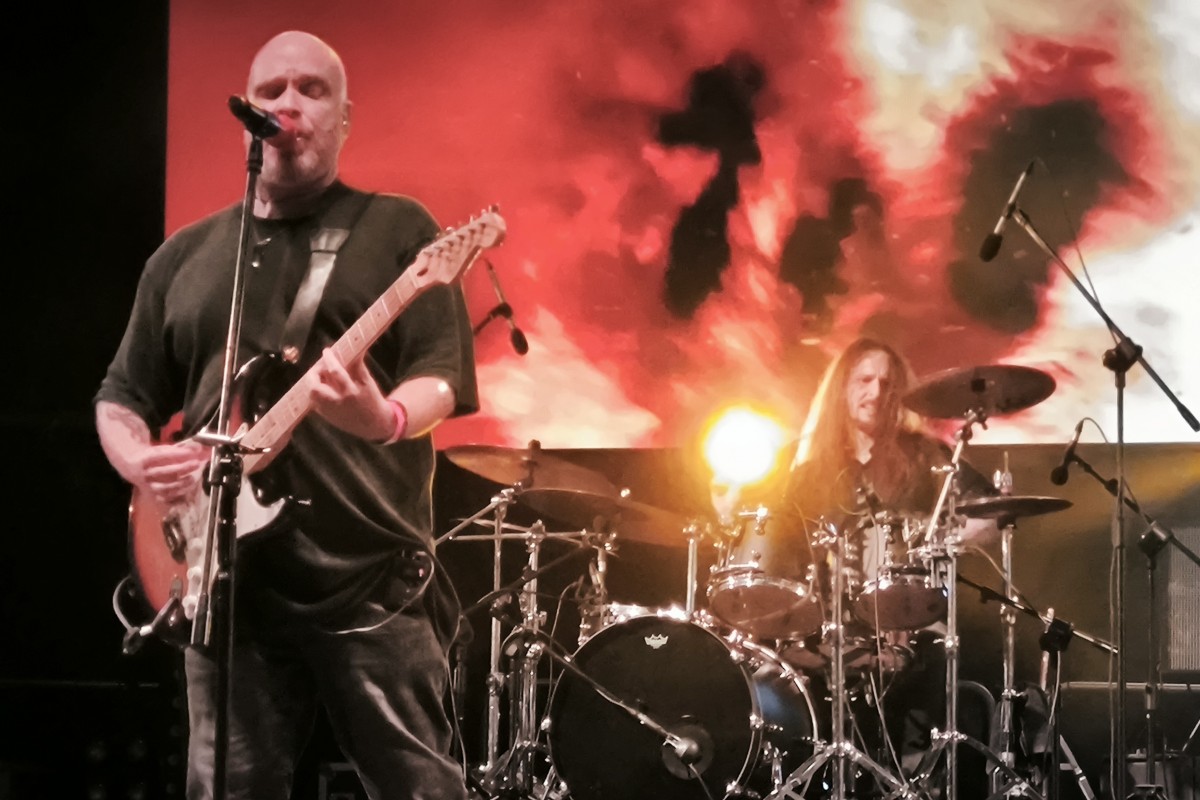
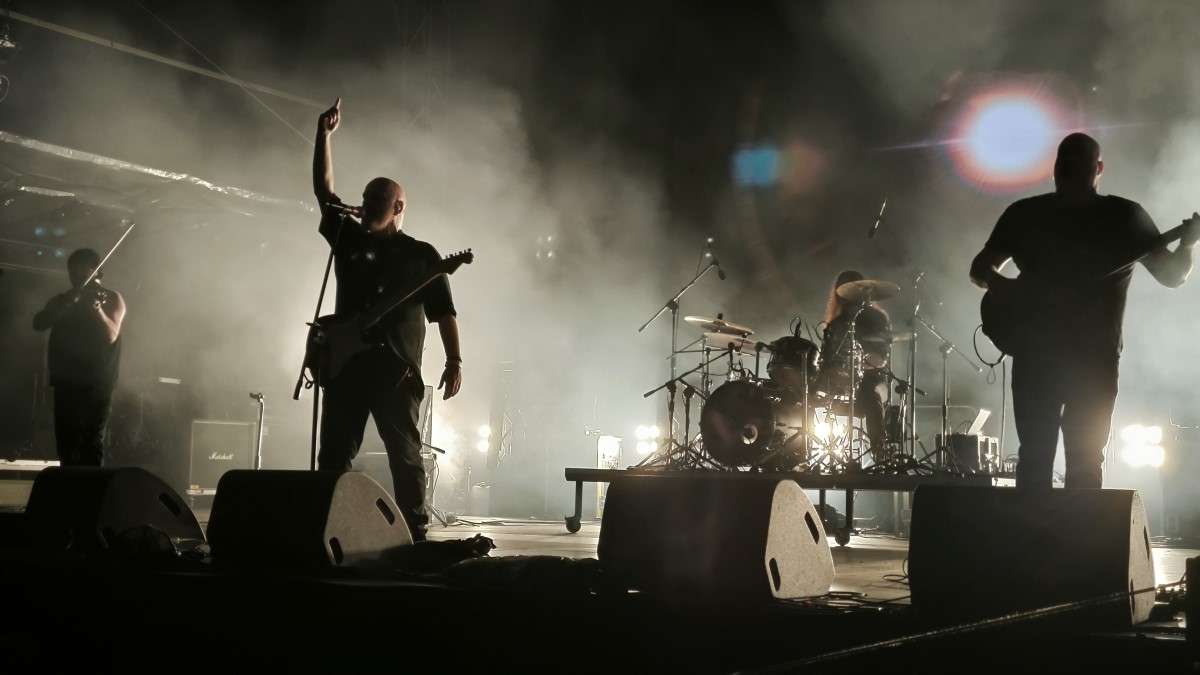
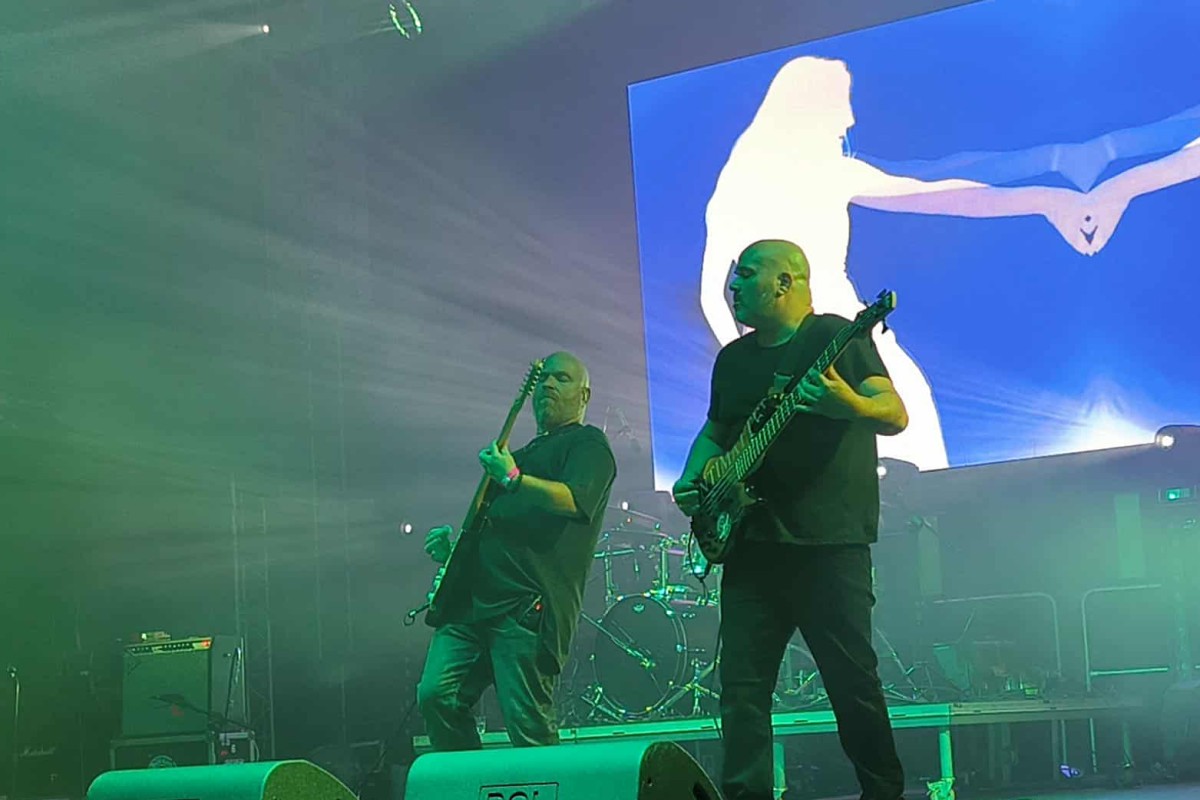
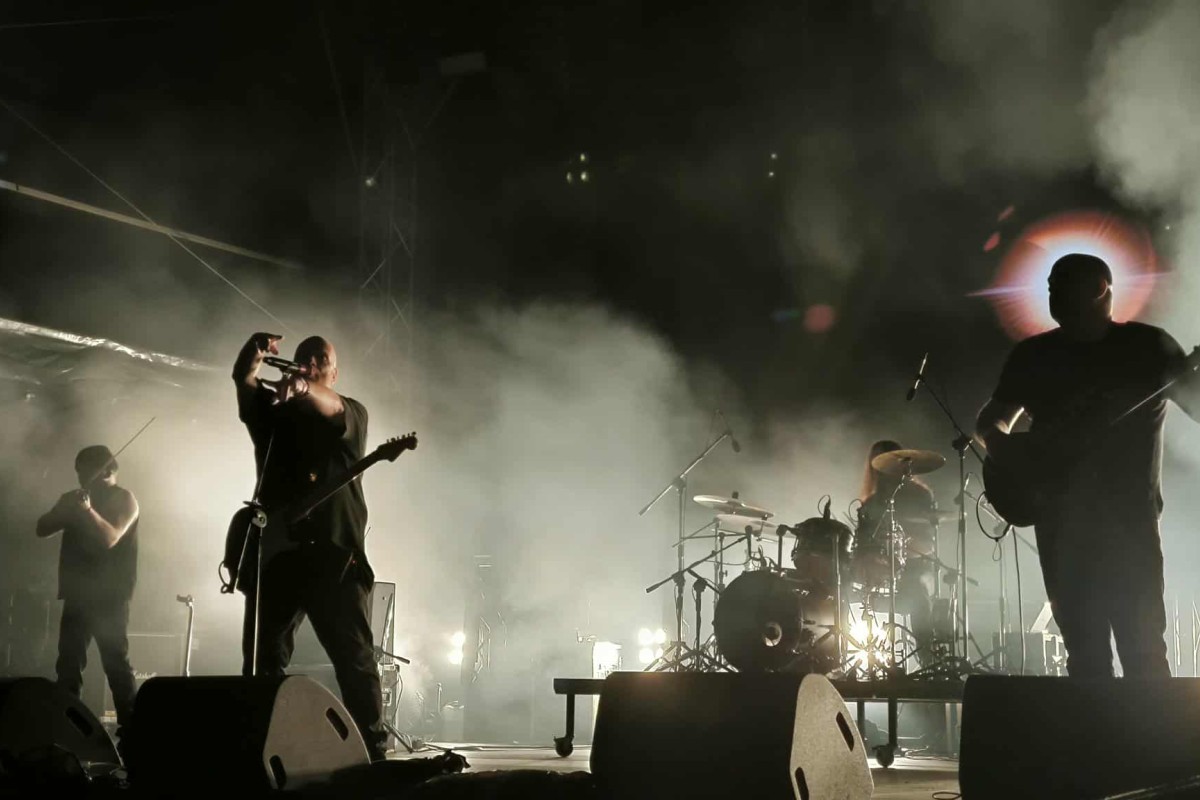
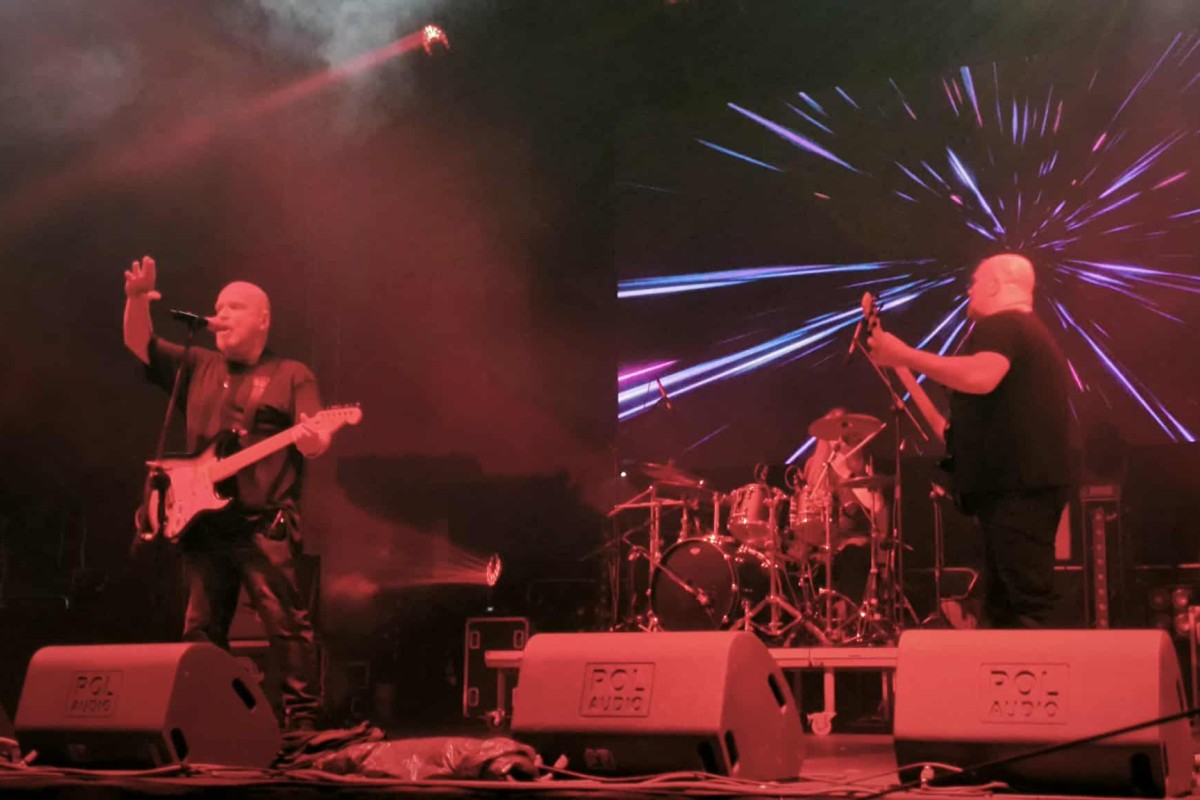
Live photos taken at Castle Party Festival 2025 by Tomaz
Antimatter links: Official Website, Facebook, Bandcamp, YouTube
 "Sometimes an album just falls into place, and Rapture is one of those albums. From the beginning, I felt that things were lining up and everything was flowing." - Ashley Dayour
 "We paused our work as I was grieving heavily, but once we returned to it, things took on a whole new meaning." - LV Darkling
 "I find it really bizarre, because right after the concert, you're already on the internet. I mean, come on. It's very different from how it used to be, but it's fine." - Anja Huwe