

You can support Terra Relicta by donating! Please, do so, and thank you!



Interview with: Sean Pollacco
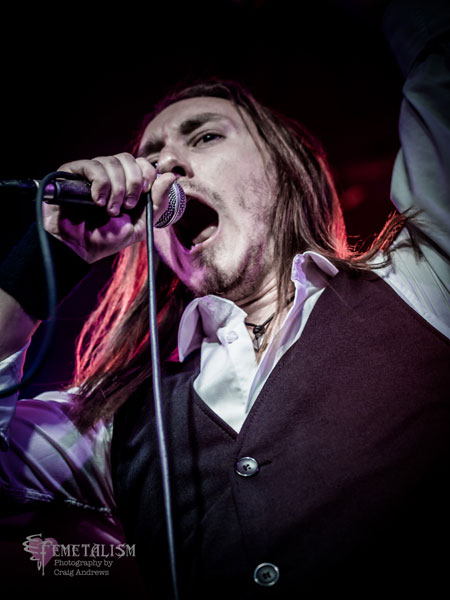
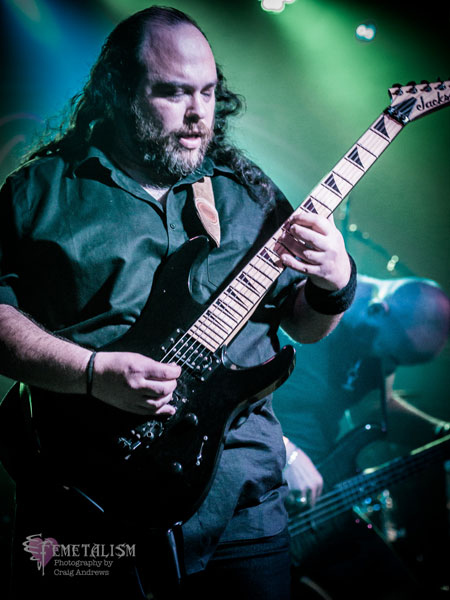
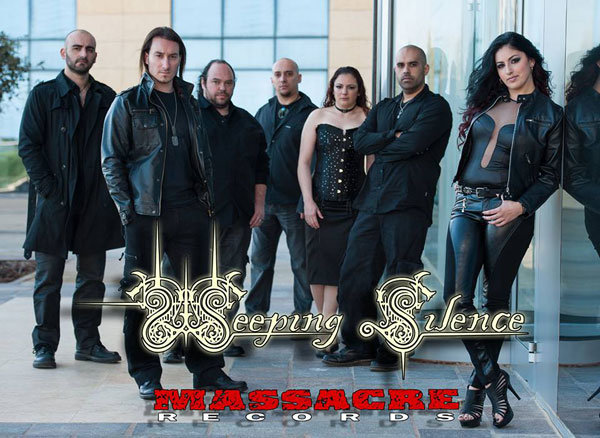
Conducted by: T.V.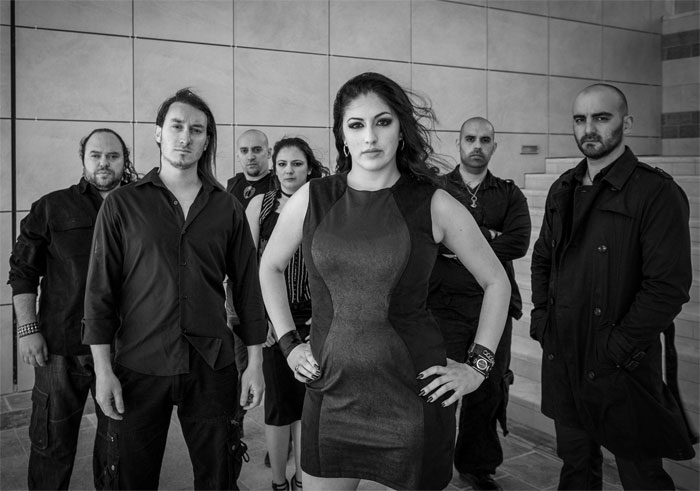 The Maltese gothic/doom metal force majeure, Weeping Silence, returned this October with their fourth full-lenght album named Opus IV Oblivion (read the review over HERE), an album that showcases the band stronger than ever, with a refined gothic/doom metal sound, which can bring to this band much more of an international recognition than anything they did before. The band was formed back in 1998 and ten years after they released their debut album End Of An Era, which was followed by Theatre Of Life in 2011 and For The Unsung in 2012. Weeping Silence went through several line-up changes and it seems that the new formation is there to stay as the band seems to have the right chemistry. So, beside the original members Sean Pollacco (bass), Mario Ellul (guitars) and Angelo Zammit (drums), the band now consists of Alison Ellul (keyboards), Manuel Spiteri (guitars), Diane Camenzuli (vocals) and the latest addition Dario Pace Taliana (vocals). As well the band finally got the label contract that suits them just fine in established German metal house Massacre Records. I talked with friendly bassist Sean Pollacco about many things, but mostly about their new opus, Opus IV Oblivion, about Maltese metal scene, future plans, influences, line-up changes and yet much more. Please read this very insightful interview and if you're a fan of gothic/doom and atmospheric metal and you still haven't checked out this band, than please do it as soon as possible, because you never know, Weeping Silence might become one of your favorite musical choices.
T.V.: First of all I must congratulate you for such a great album, Opus IV Oblivion. I think it is by far the best album you've done so far! Of course I wonder if you are satisfied with it and if you reached the desired goal?
Sean: Hello and thanks for having me here for this chat. It’s great to see you liked the new album. I feel that this musical direction we have taken suits us best and we’re very happy with the music and lyrics on this release. Our goal was to sign with a reputable label and release a gothic-doom album that would reflect the band’s new line-up and style. I guess we achieved that goal. However, there is a very long list of new goals we must now look at!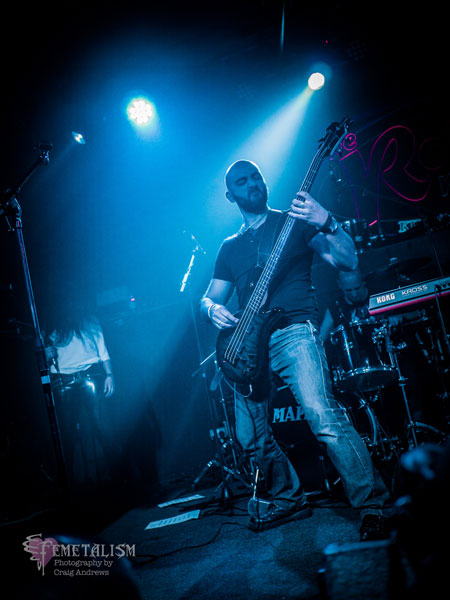 T.V.: Where do you see those most notable differences between this new album and your older ones?
Sean: This album is heavier and doomier than any of our previous releases; and the most notable differences are our new vocalists Diane and Dario. This is their first album with the band. Another very noticeable difference is the lyrics. On the past releases they were written by Rachel and Joe, who are no longer with the band. On Opus IV Oblivion most of the lyrics are written by me, and Diane wrote the lyrics of two songs.
T.V.: It's pretty obvious for what the first part of the title, 'Opus IV', stands for, but what did you want to express with the word 'Oblivion'?
Sean: The choice of title is a bit tricky. It’s our fourth album as you correctly pointed out. However, the name should be read as ‘Opus for oblivion’, which is a musical composition written in the name of destruction/oblivion/annihilation. The word ‘for’ is simply replaced with the Roman numeral ‘IV’ to indicate our 4th album.
T.V.: And now, can you give me a deeper insight into the lyrical concept on the album?
Sean: The lyrics tie in very strongly with the album title. They reflect the destruction of the world by man, humankind’s destruction, and also a personal self-analysis of death and oblivion. This is evident in songs such as "Eyes Of The Monolith" in relation to the world, or "Stormbringer" in respect to the self-analysis of life and death. "Ivy Thorns Upon The Barrow" is about an after-death experience as imagined by a living person who’s thinking about his/her own oblivion.
T.V.: So those lyrics are more kind of an observation of the world and humankind, than being an introspective thing? Tell me also how do you see the things that are going right now in the world. I think that we live now in pretty confused and dangerous times…
Sean: The lyrics are sometimes an observation and other times an introspective. The point-of-view varies, but the theme mostly remains centered around oblivion of the many realities that one can observe. About current affairs, yes there is much going on. But to be fair there always is. The world was never free of fanaticism and dangerous realities. Maybe at this moment they seem to be closer to home, but that doesn’t mean that 20 or 200 years ago the world was going through a better period.
T.V.: One of many things that caught my attention was the cover artwork done by Jan Yrlund. I know it's inspired by and based on the tomb art at the St. John’s Cathedral in Malta. Can you explain where's the connection between this artwork and music or lyrics on the album?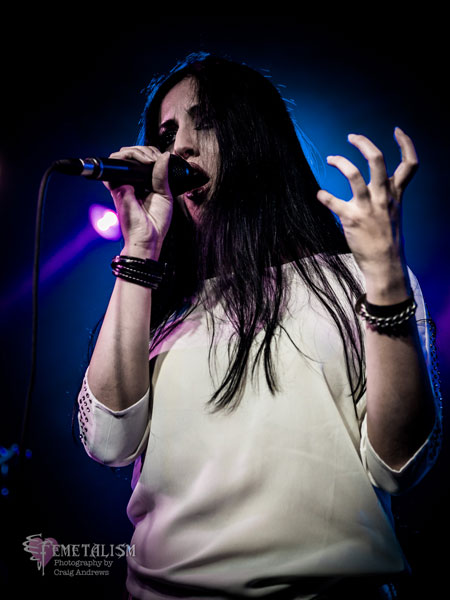 Sean: The cover artwork shows a skeleton in motion, breaking a clock and holding a sceptre with the symbol of eternity. It’s a Renaissance style work of funerary art. If we are to analyse this work we could say that death has taken a life-form of its own – what is commonly called among art-historians ‘the anthropomorphization of death’. His action of breaking the clock signifies that death has control on life, and that life can be stopped in an instance. He carries the symbol of eternity in the form of a snake with its tail in its mouth forming the serpent circle above the sceptre, which is symbolic of our lives ending and continuing in death. All this is happening on the tomb, which in itself is sealing life beneath its epitaph. All this symbolism ties in well with the concept of oblivion, death, and self-analysis on an individual scale and if stretched also on a universal scale.
T.V.: As well Opus IV Oblivion shines because of great production and I couldn't believe that it wasn't done by any of renowned producers, but by quite an unknown name David Depasquale. How, did the recording process go and how are you satisfied with the final result?
Sean: Well, this album took long to finish – about a year in total, although not continuously. We started off with a pre-production, which we then analysed in detail before the actual recording. After some months we entered the studio and recorded the album, which saw a lot of dedicated work by us and David Depasquale, who although does not have the international reputation as yet, is set to become a renowned producer soon enough! We spent hours pouring over the equalization and mix, after which we sent it to Andy of Red Room Studio for some feedback and mastering. It was exhausting, but extremely rewarding. A shout out to David and Andy for the work they put in. We can’t wait to record our fifth album at David in some years’ time!
T.V.: I think that the arrival of the new female singer, Diane Camenzuli, brought a kind of new energy in the group. Are you satisfied with her job so far and where do you see major differences between Diane and your previous singer Rachel Grech?
Sean: Diane has a great voice and is a dedicated singer who’s committed to the band. In addition she has a very nice personality and a cool stage attitude. So she literally ticks all the right boxes. I believe she did a marvellous job on Opus IV Oblivion. I remember that she was a bit sick at some stage during the recording, which made this even more difficult for her. Diane is different from Rachel in several ways. Most notably she sings at a lower register than Rachel, and is better suited in my opinion for the slower and doomier parts of the compositions. At this stage of our career we are not really composing symphonic high-register pieces. We’re focusing more on the gothic-doom elements, which means melody/heaviness/doom/harmony/ambiance. Diane’s timber is also different to Rachel’s.
 Sean: When I look at Opus IV Oblivion I can see (or hear, maybe) something that’s more than gothic-doom. We have a varied musical taste, as a band. There is a very small dose of theatre in the vocals for example, that can be noted in "Gothic Epitaph". Personally, I’m a great fan of Arcturus’ Le Masquerade Infernale, so I love that element. There is some pop-ish element, noticeable in "Bury My Fairytale". So, yes it is varied to some extent. I think it makes it unique, not stylistically maybe, but at least gives it a Weeping Silence twist on the style.
 Sean: Metaldays is possibly the nicest festival in Europe due to its fantastic position and surroundings. It is an honour for us to return there. Personally, I like that it’s not a huge festival. The amount of people is just enough for there to be a great feel and presence at the stage, and in addition it doesn’t feel crowded. You can see the band up close, which is nice. 2016 will also see a host of awesome bands, so I am looking forward to both our show and the shows of other bands! I’ll surely see you there, at the bar maybe?
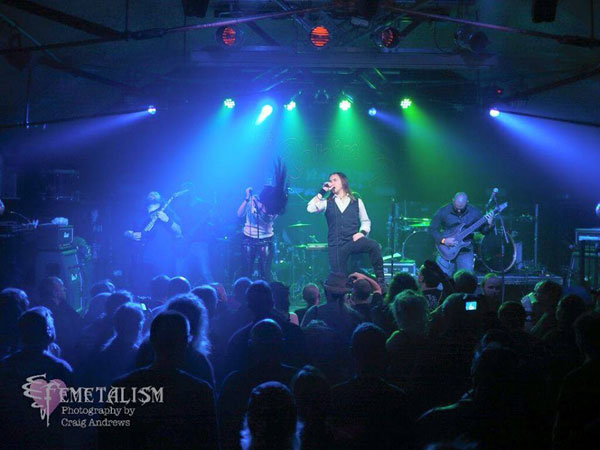 Sean: The chemistry is perfect, really! Yes we all live in Malta.
 T.V.: Who is Sean outside the music world. What are your interests in life?
Weeping Silence links: Official website, Facebook
This email address is being protected from spambots. You need JavaScript enabled to view it.


