

You can support Terra Relicta by donating! Please, do so, and thank you!



Interview with: Martin Bladh
Conducted by: Michael
Martin Bladh is a multi-faceted artist. Over his years in the public eye, Martin has worked on numerous visual, musical, and performance art projects. He entered the public realm through his power-electronics project, IRM, with Erik Jarl, and later joined by Mikael Oretoft. He would soon join forces with Magnus Lindh creating the musical force know as Skin Area. Martin has also done musical projects with Sektor 304, entitled Ruby, and with Bo I. Cavefors, entitled The Island Of Death, as well as a number of his own personal musical projects. Delving into the medium of film, Martin has created a handful of videos, many of which can be seen on the DVD accompanying Epicurean Escapism I. He also played a large part in the production of the feature film, Gasper. In the visual art world, Martin has joined forces with Karolina Urbaniak, starting Infinity Land Press. Through Infinity Land Press he has already participated in the production of a number of books, including The Rorschach Text, To Putrefaction, and No Breath Of Sound - The History Of Drowning. With all these projects in the works along with more that I haven’t even mentioned, and others which haven’t yet found their way to the public eye, Martin Bladh is a very busy man. I am honored to have the multi-media artist take a little time out of his dizzying schedule to answer some questions about his art and some others which lead in a more personal direction.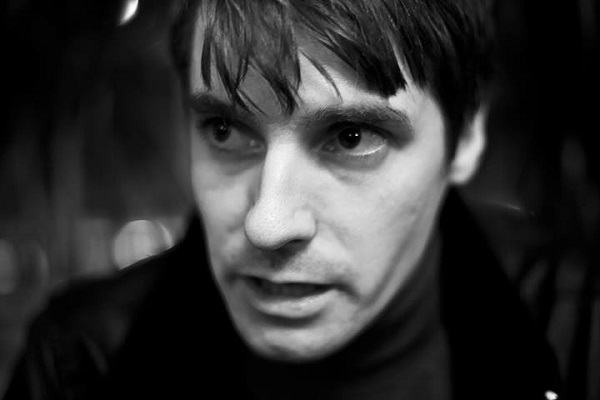 Michael: I have to admit from the start, I was a bit nervous to conduct this interview. So often these days in entertainment, artists follow their own path, without much attention to overarching themes or the history of art. I get the feeling when observing your various forms of art, that there is a serious depth, hidden meanings, allegories, which all need to be taken into account to fully appreciate your body of work. Do you have a formal education in the arts, or has this always been a natural passion for you?
Martin: I’m interested in the history of art, and yes, I’ve studied it at the university as well. Even though you don’t need the faculties I really believe this is something people need to know and understand, before they can call themselves “artist,” or using words such as “important,” “urgent,” “brave” or “original.” I also went to so-called art school for some years, which was, and is nothing but utter BULLSHIT that should be shunned like the plague. I’m sure that at least 95% of all this silly playground nonsense does more damage to the so-called artist to be and the art-world in whole.
Michael: Considering my previous question, do you find that fans often notice the underlying meanings?
Martin: Well, I’ve different kinds of fans. Some of my “music fans” are mainly interested in noise and the pitch of my voice. I mean if you haven’t bought the latest IRM and Skin Area CD’s, read the lyrics and looked at the artworks you have a very vague idea about the content. You can’t listen to an MP3 and experience it, that's just impossible. Then of course you wouldn’t count as a FAN if you didn’t buy the actual record, right? Saying that, my work has a vagueness, and ambivalence to it, it points you into specific territories but it doesn’t have one specific meaning.
Michael: Are you equally happy to see fans enjoying your art, regardless of their understanding of the underlying meanings?
Martin: I don’t like laziness, which is a huge problem these days. There’s too much information out there and it’s too easy to get it; that instead of really analyse a subject people are just scratching the surface and move on to the next download. I mean, the day people will start to buy kindle art-books everything is fucked! But of course, it’s always nice to be appreciated, even if it’s only for having composed a curious tune, or a framed decorative piece of tapestry. 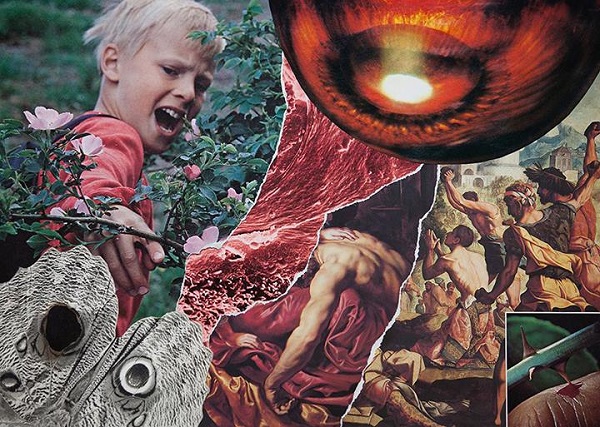 Michael: You have recently started a company, Infinite Land Press, with Karolina Urbaniak. Would you like to tell readers a little bit about the goals of the press and some of the recent publications?
Martin: Me and Karolina Urbaniak started Infinity Land Press back in 2013 as a means to publish our own material without having to deal with any middleman. I still lived in Sweden back then and Karolina was based in London. Our first book To Putrefaction (2013), a romantic ode to death and decay, was strictly limited to 50 copies. We then got the idea to publish books with other artists that we admired, such as Dennis Cooper, Michael Salerno and most recently Philip Best, and collaborations between ourselves and other artists - Karolina did Altared Balance with Jeremy Reed and The Void Ratio with Shane Levene, and in the beginning of 2017 me and Jeremy Reed’s book Darkleaks - The Ripper Genome will be released. We usually deal in strictly limited editions because that’s what we can afford and stock in our office (which is our living room), and we’ll continue to publish as long as we find material that’s interesting enough. Our credo: Infinity Land is a realm deeply steeped in pathological obsessions, extreme desires, and private aesthetic visions. Having disappeared over the horizon from the nurseries stocked with frivolous babblings of apologetic pleasures, Infinity Land is foundationally a geography configured by the compulsive, annihilating search for impossible beauty. In the words of Yukio Mishima, “True beauty is something that attacks, overpowers, robs, and finally destroys.”
Michael: As I've already alluded to, your artistic vision is truly multi-faceted. You have released everything from books, to DVDs, to albums. You have also done some stage shows which combine aspects of all these projects. Can we look at your entire body of work as part of a whole? Is there an over-arching vision which anchors all these ideas into one central theme?
Martin: I like the Wagnerian idea of the Gesamtkunstwerk, where different artistic media bleed together into one synthesis. It might be a weakness, but I’ve never felt satisfied by expressing myself through a single media, and I’ve vivid memories of the suffocating frustration that I went through from the period 1998 - 2003, when sounds and lyrics was my only outlet. The multimedia expression has become an absolute necessity for me, if you read my books DES and The Hurtin’ Club you know what I mean. And yes, every new project I do has a specific content which I try to filter through these various medias.
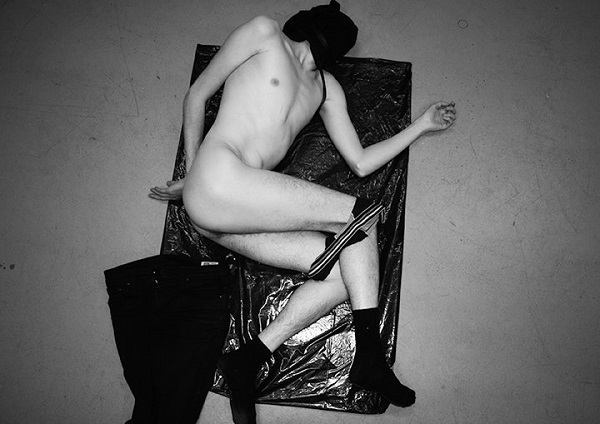 Michael: I had the pleasure of witnessing an IRM performance last year, on the APEX Fest Tour. The performance was magnificent. You had an extremely theatrical stage presence, which seemed almost choreographed, everything from your facial expressions to body positioning, and the handling of the two microphones. Do you put a lot of preparation into your live sets for all your projects or was this a natural presence which just seemed to be calculated?
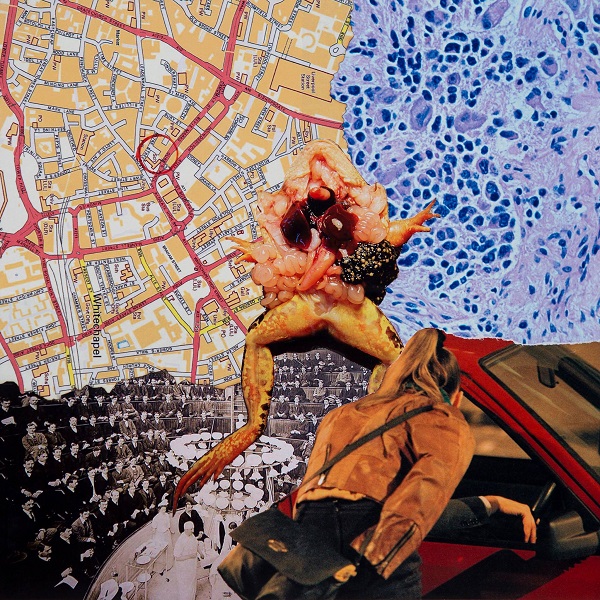 Martin: As a kid I had a very vivid imagination, but I was more keen on drawing than writing. It was back in 1992 that I made my first attempts to write - coloured by the second wave of Black Metal - and from what I remember, they were hideously bad. It was later when I started to nurture a genuine interest in literature that something happened. Oedipus Dethroned (2000) would probably be the first serious example of some kind of craft.
This email address is being protected from spambots. You need JavaScript enabled to view it.


