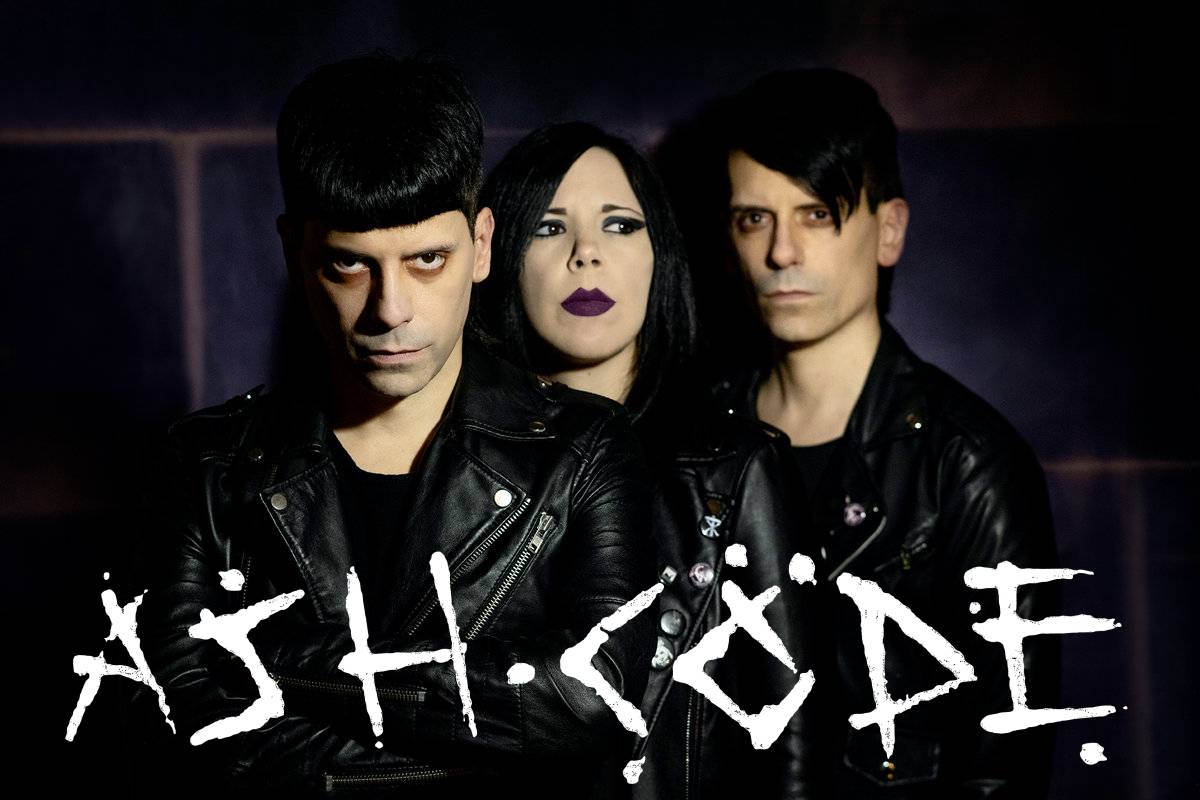
Formed in 2014 in Naples, Ash Code stepped onto the darkwave/post‑punk scene with striking assurance. Their debut album Oblivion opened doors to numerous European stages, and their tracks quickly became staples in DJ sets – both in clubs and across radio playlists. Today, Ash Code stand firmly among Europe's leading darkwave acts. Their music – steeped in melancholic atmosphere, driven by pulsating electronic beats, and shaped by the legacy of 80s dark music (Depeche Mode, The Sisters Of Mercy, The Cure and Clan Of Xymox above all) yet rendered through a distinctly modern lens – positions them as one of the genre's most compelling future‑bearers. Their latest album, Synthome, released last year after a seven‑year gap marked by various unfortunate events and personal upheavals, reveals a band that has survived its own ending. It is their most intimate, human, and arguably deepest work to date – a creation in which Alessandro Belluccio, Claudia Nottebella and Adriano Belluccio reach a new emotional and artistic clarity. We met Ash Code at their recent performance at the Sine Lumine Fest in Castelfranco Veneto, Italy (you can read the concert report HERE), where we spoke with Alessandro and later witnessed a true darkwave revelation during their fantastic live show. And if you're curious to know what we talked about, well — read on.
Interview with: Alessandro Belluccio
Conducted by: Tomaz and Jerneja
Edited by: Jerneja
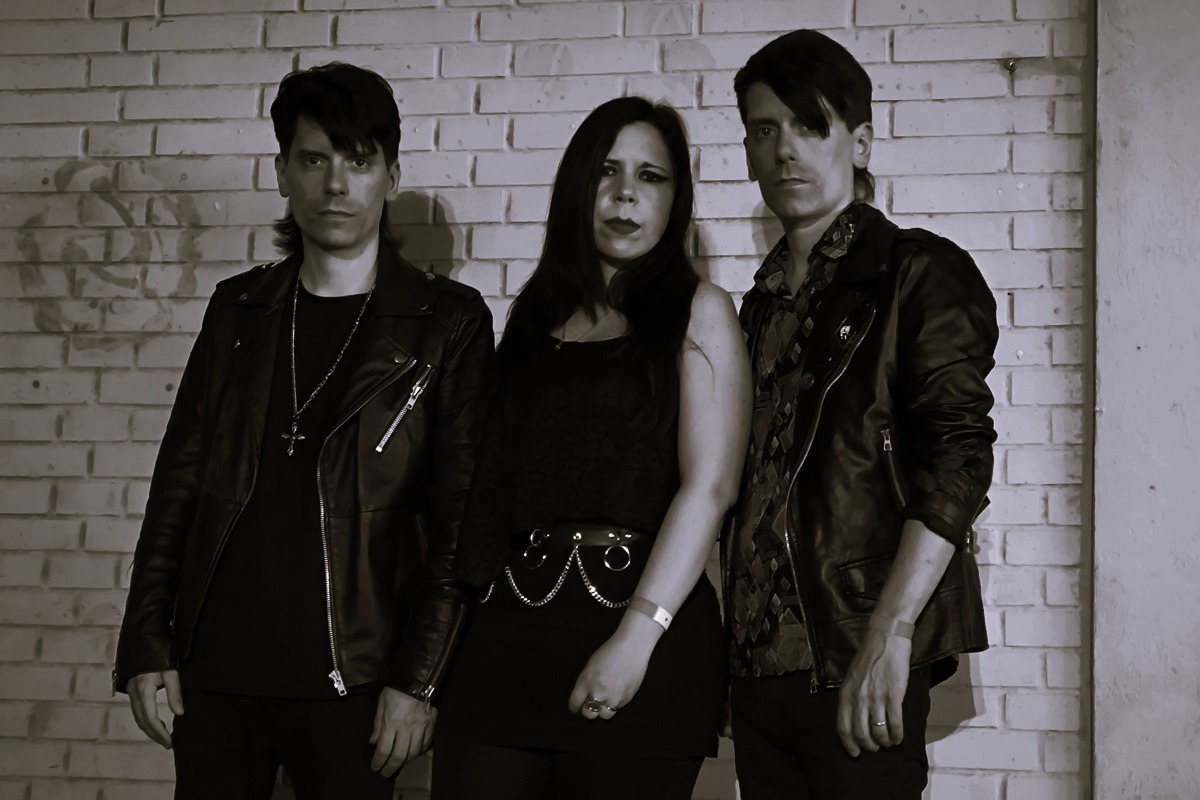
Jerneja: Hello, Alessandro. Let's begin gently, shall we. Since you're from Naples — how's la Camorra getting on these days?
Alessandro: Ah, la Camorra. Right. Ever since the Gomorrah series, everyone asks about it. But it's probably not as visible as it was in the '80s. Naples now seems like a quiet place where there's no mafia — or at least where the legal side appears to have won. But they've most likely changed their business. Naples has become a very touristic city, so the business isn't just drugs or shady affairs anymore. It's more about travel, hospitality, and bed-and-breakfasts. That's very common across Italy now — cities turning flats into holiday rentals. That's where the big money is. So if you arrive in Naples as a tourist, you'll think it's a wonderful place: no problems, no mafia. They've simply changed their business. It's not visible, but they're still there — and they're making a lot of money.
Tomaz: And are they still considered something of a tourist attraction?
Alessandro: Yes — but they're not like they were 40 years ago. No more rude boys. Now they're businessmen.
Tomaz: Ash Code has been shaping the European darkwave and post‑punk scene for over a decade now. How do you feel your sound has evolved since those early days, when you first released Oblivion?
Alessandro: I hope it evolved — I really do. Because, basically, we always made what we wanted without caring about a specific direction, at least for the first three albums. We started in a strange way: I had a few demos and maybe two proper songs, "Dry Your Eyes" and "Unnecessary Song", and Claudia was beside me. I didn't even know she could play an instrument, but she suggested some synth lines — and they were very good. She gave me ideas about the sounds and the direction of those two demos. We uploaded them to SoundCloud and immediately got feedback. From then on, it was much more instinctive. We don't plan our sound; we just work on a song and try to shape it, trying to translate what we have in mind onto the synthesisers. Probably for the first three albums we tried to change the sound each time, just to avoid repeating ourselves. But for the fourth one we said, "Okay, we should simply make what we have in mind without worrying about the past. Let's just do what we feel". And for me, the last one — Synthome — is the best in terms of sound. There's a really good balance between the synthesisers. I'm talking mainly about the synths here. The perfect balance, for me, is on Synthome.
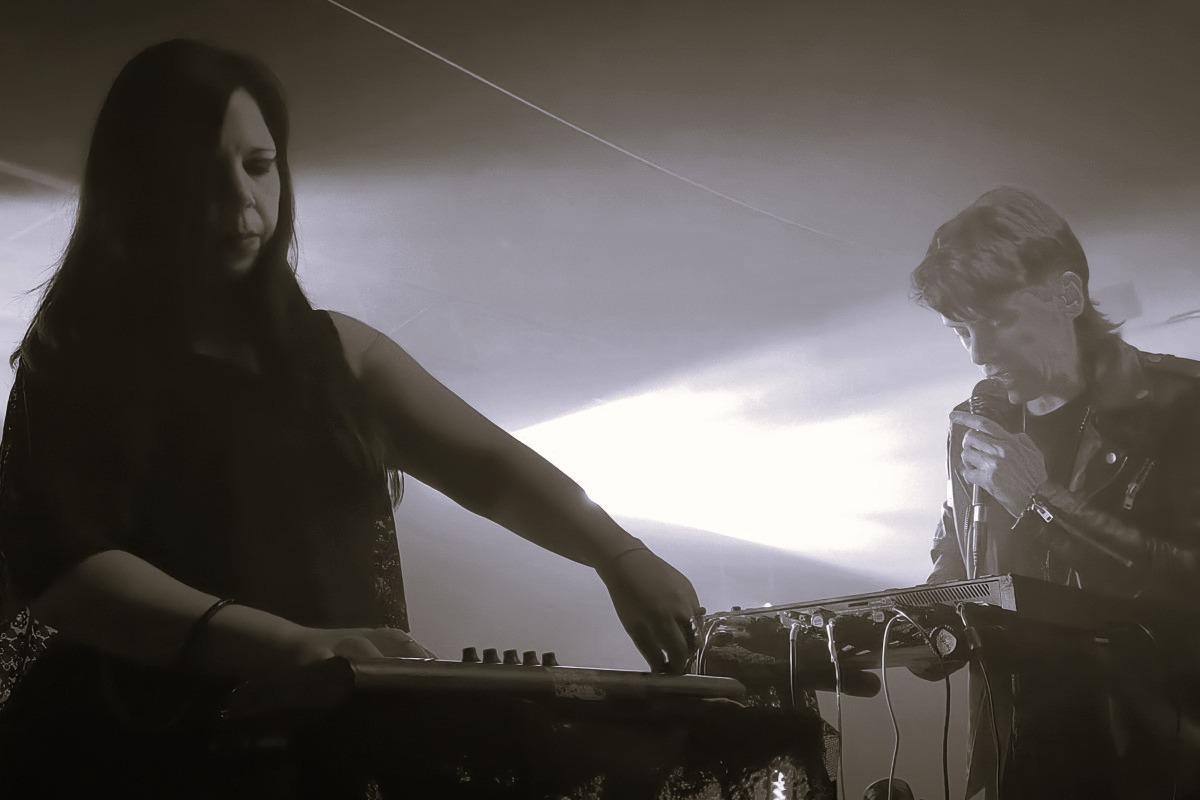
Jerneja: Before you met Claudia and formed Ash Code, you were involved in other bands, weren't you? What kind of projects were you part of back then — did you release any albums or anything of the sort?
Alessandro: I always played with my twin brother, Adriano, and we had another band for about ten years. We actually started as a stoner band, and then we changed a lot. It's the path every musician, I think, has to take — experimenting with different kinds of music. In the last incarnation of that band, we were much more electronic: no real drums, and I was becoming more interested in making electronic music. But I had to study, because I had no idea how to make a song on a laptop. So I had to learn. It was a long road — probably three or four years. At some point I wasn't very satisfied, and I made these demos. But it was just me and the laptop — not my brother, not Claudia. And I couldn't find a way to finish the songs. Claudia happened to be there by chance, and she said, "Why don't you try this melody?" And she made it for "Dry Your Eyes", one of our best songs. She came up with the melody in one second. Then I opened "Unnecessary Song", and in five minutes she made the melody. She's a melody‑maker — a real talent. And she didn't know it. She had no idea. It was incredible.
Jerneja: The process behind Oblivion was incredibly fast. You released the first two tracks in January 2014, and by October the debut album was already out…
Alessandro: It was actually kind of funny, because we made those two songs in January, and then in February a local promoter in Naples said, "I've booked She Past Away and I want you as the opener". We went crazy, because at that time She Past Away were our favourite band. I said to Claudia, "Fuck, we have to make more songs!" The concert with She Past Away was at the end of March, and in two months we made Oblivion. Every week we wrote a new song, immediately. By the end of the process — in April — the album was ready. We said, "We can make an album in two months, it's very easy. We're going to make a lot of songs". But that was just the first album. The second one was different, because you don't want to make the same thing again. You have to compare the new material with the old one. So the process became slower… and slower… and slower.
Jerneja: And did you intentionally release it on Nietzsche's birthday — 15 October — given that the album is conceptually tied to his philosophy?
Alessandro: I didn't know this. Wow — I really didn't know. I must tell Claudia. Claudia is a philosopher; she studied all of this, and she's very good at it. I have to tell her, but I honestly had no idea. Maybe she had some subconscious impulse.
Tomaz: Did you ever expect that your very first album, Oblivion, would propel Ash Code so strongly into the European darkwave and post‑punk scene? It felt as though everyone knew about the band the moment it was released.
Alessandro: We didn't know that in this scene — probably only in this scene — DJs and people are very open to new bands. If you go to a DJ set, the DJ will play a hit, and then he can play a completely new band without caring. People here have an open mind. In my experience, this happens only in this scene. If I go to a hard rock DJ set — well, there aren't many hard rock DJ sets — but they always play the same tracks, without caring about new bands. In this scene it's different. We uploaded those two songs, "Dry Your Eyes" and "Unnecessary Song", to SoundCloud, and within a week we got a request to play live. The band didn't exist. We hadn't even decided on a name. My brother wasn't involved yet. After all that feedback we said, "We probably need to make a real band". I asked my brother to play with us, and Claudia decided to join. She could play a bit of piano, but she had to study to play synthesisers, because none of this was planned. My brother is the best musician in the band — he studied guitar, classical guitar, Neapolitan guitar for four years — so he was ready. But every bit of feedback arrived without pressure. And we got a label in two months. People started writing to us to play abroad immediately. We didn't expect any of this. It wasn't planned, and it was great. The first years were great.
Tomaz: I still remember receiving the promo CD from the label — I listened to it once and liked it straight away. But within just a couple of months, Ash Code seemed to be everywhere…
Alessandro: Yes, it really was. In the first ten months we received invitations for Wave‑Gotik‑Treffen, NCN and Entremuralhas — the best festivals. We didn't have a booker. Everyone simply wrote to us directly, and it still happens every day, even though we now have other people working for us. People contact us with no pressure. That's one of the best things about this scene. If a band is good, you don't need a booker or a promoter, because DJs will start playing your song, and then bookers will write to you to ask for a concert. It's wonderful.
Tomaz: What inspires Ash Code the most at the moment — musically, visually, and emotionally?
Alessandro: I think we're always inspired in the same ways — not only at the moment. Probably books, films, and I really like going to the metro and listening to people, hearing what they say. Sometimes I write down words on my phone, and those words can be a good start for a song. But what inspires me the most when I start a song is listening to other songs — even pop ones. I'm not a very good drummer, but I have to programme drums, so I'm always trying to find different patterns. Everything starts from a bass line or the drums.
Jerneja: So rhythm is the first thing, then?
Alessandro: Most of the time, yes. My main worry is not to repeat the same structure in the drums and the bass. Okay, we mostly make darkwave — we can't escape this kind of music, because we like making it — but every time we try to do something different. If we feel there's something new, and the melodies are good, then it becomes a real song.
Tomaz: Your music often blends melancholy with dance‑floor energy. How intentional is that balance when you're writing the songs?
Alessandro: Yes. We make a lot of demos, and only a few of them turn into real songs. It happens only when there's a very good bass line with the drums, and I feel the excitement of that rhythm. Only then do I turn it into a real song. We don't have many slow or quiet songs. We always start with the excitement of a danceable rhythm. So yes — it's intentional. Very intentional.
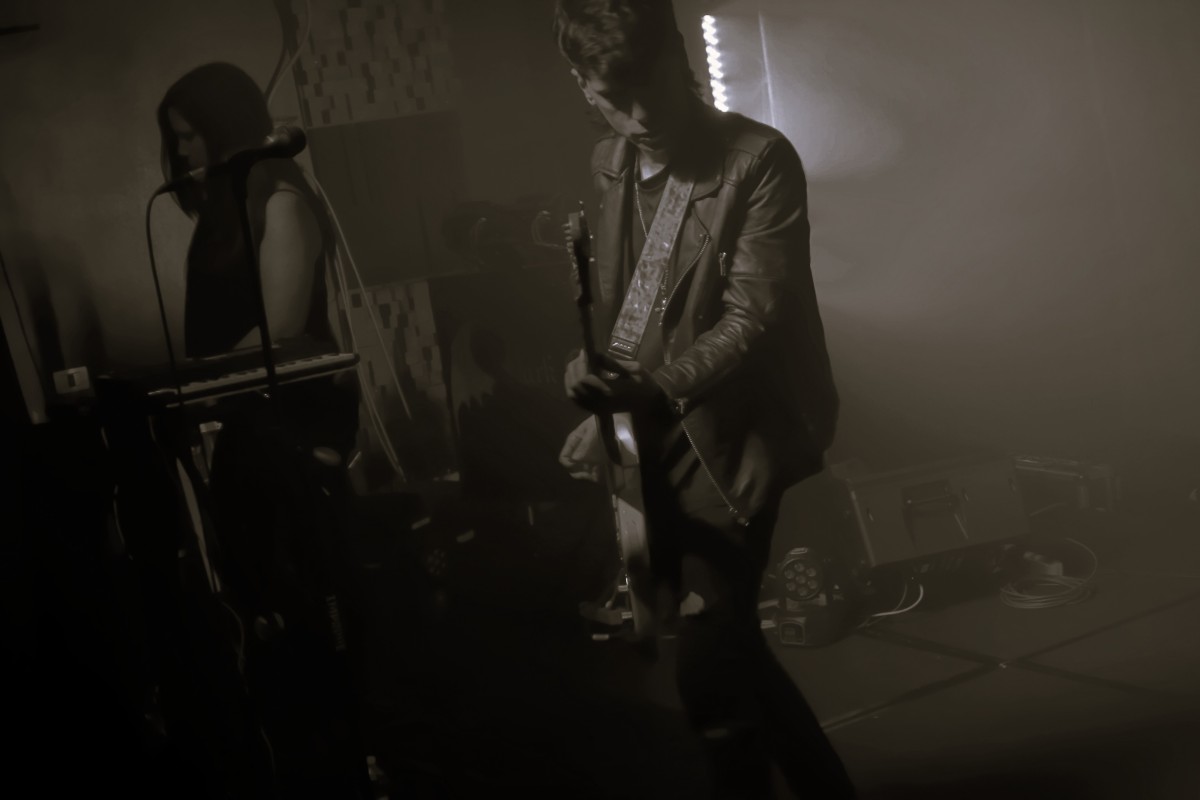
Tomaz: And what about the lyrics — do they come later in the process?
Alessandro: Later, much later. Most of the time it's me. It's not very easy to complete a song. When we make the structure, we sing the melodies in fake English. And sometimes the main words arrive during that process, and then I build the lyrics around those words. It's the last thing. Probably the most important thing is the concept behind the work. Claudia is the philosopher of the band. With every release she tries to find a word that can gather all the songs together.
Tomaz: Another interesting aspect is that your songs often feel very cinematic. Do film, art, and literature influence your work?
Alessandro: We're very interested in films. One of our wishes is to make music for a film — or at least for a short film. We actually made one in the past, and it was very interesting. We really like listening to film soundtracks in particular. There are so many seriously good musicians behind them, and it's a very strong source of inspiration for us.
Tomaz: You and Claudia both handle vocals — how do you decide who sings what?
Alessandro: For every song we try to record it first with my voice and then with Claudia's. Then I cut samples and say, "Okay, probably the best one is yours", and we decide based on the results of that recording process. It's not planned. Sometimes she's very good on the first verse, sometimes on the second. Or I sing something and tell her, "Here you should do this part". It's never planned.
Tomaz: You also have a visual identity of your own. It's not overly distinctive — it still sits firmly within post‑punk and darkwave — but your videos and your visual appearance, including the photos, have a particular tone. It's not that modern darkwave aesthetic centred around half‑naked women in fetish outfits. So how important is the visual work surrounding your music?
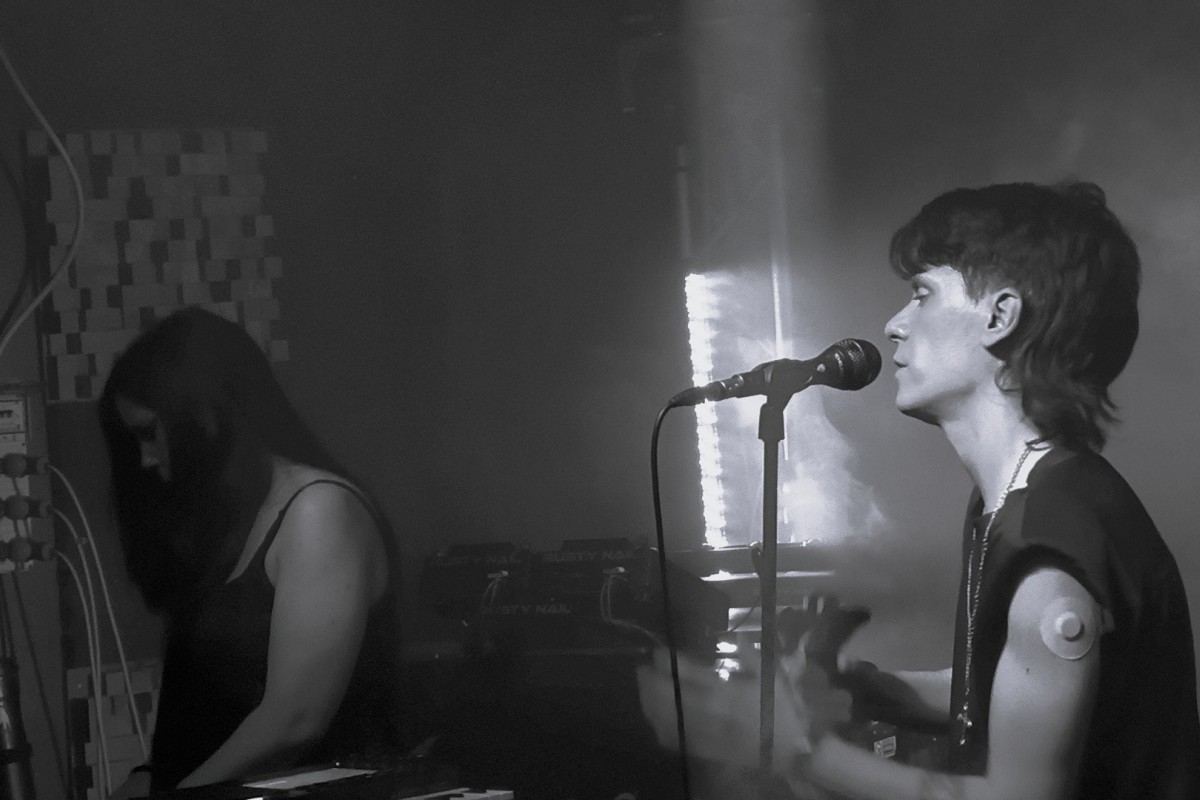
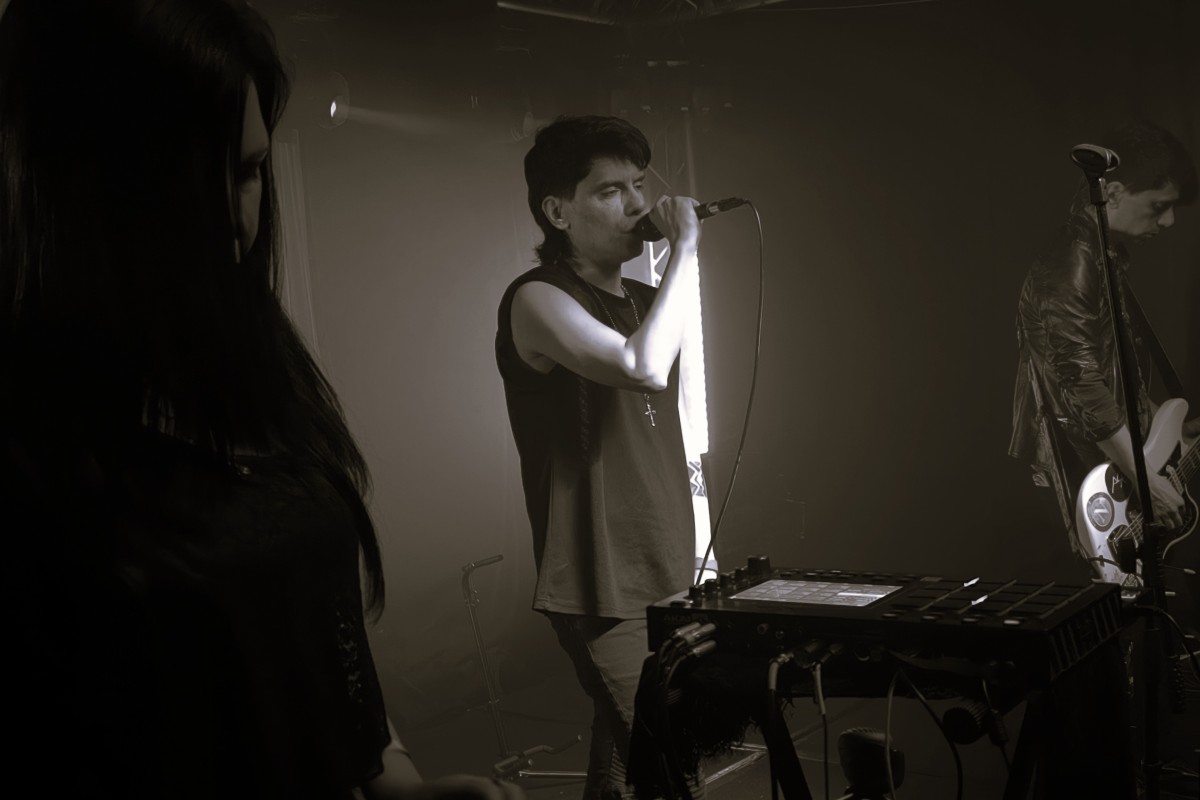
Alessandro: If we talk about the videos, we like to make something not very complicated. We almost always work with the same director, Elio De Filippo, who knows our vision very well. Videos are very important for translating the song into the visual idea we have in mind. On stage we use videos behind us, and they're very important because we don't want to be the main subjects on stage. We hope the concept behind the concert feels like a show where the musicians are there to play, to communicate, but the music is at the centre. The videos are there, the lights are there, and we try to create a show where we are not the main subjects.
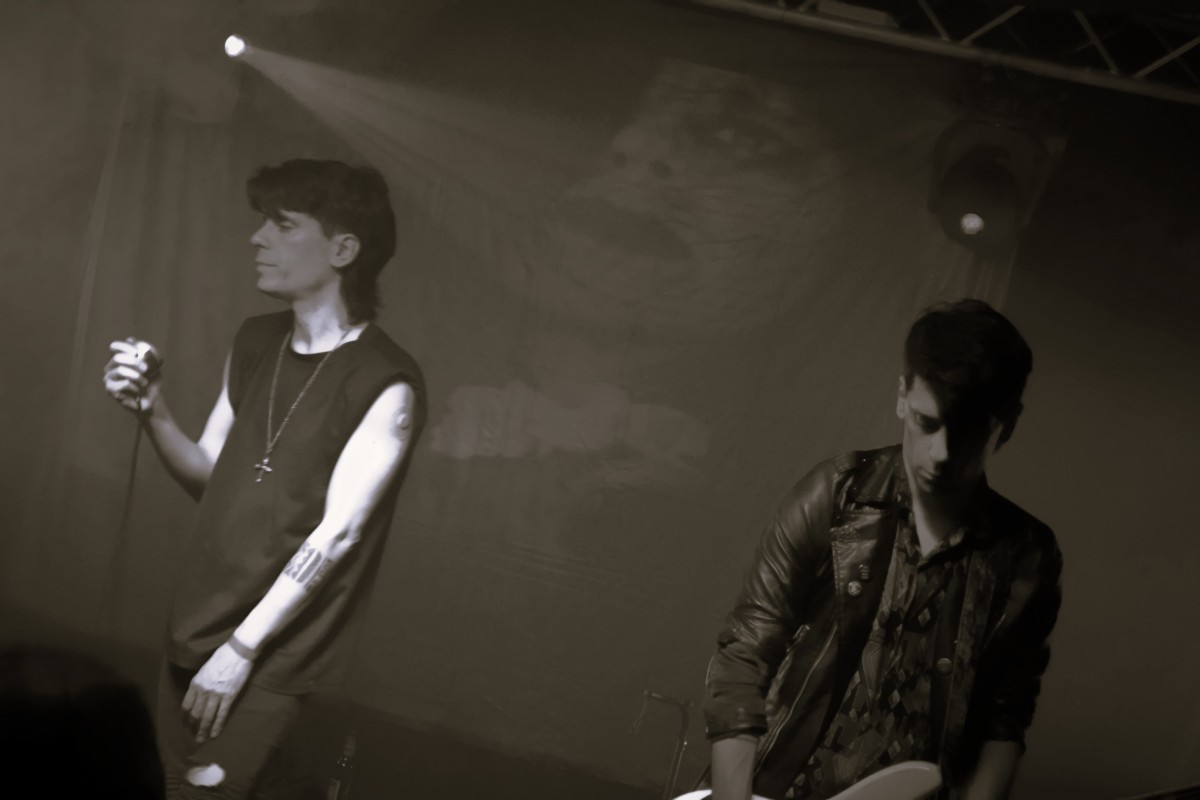
Jerneja: For me, a proper music video is one that tells a story — almost like a short film — rather than relying mainly on shots of the band "in action". I'm aware that this kind of approach isn't exactly cheap, though.
Alessandro: Most of the time it depends on the budget. In the past we made some videos like that, and we decided whether to tell a story or just show us playing — it depends on the song. In some cases, like "Tear You Down", it was very simple — only a few objects and us playing — but it fits the song very well. It's a matter of taste. You probably prefer a different way of expressing things. But these kinds of videos are not easy to make. With a low budget you can end up with a terrible video. The problem is that videos aren't streamed much anymore. YouTube is not like it was ten years ago. If I invested a thousand euros in a video ten years ago, I knew a lot of people would watch it. Now it's very different. Most content has to be a thirty‑second vertical video. Everything has changed. So probably now it's not a good idea to invest too much money in just one very good video.
Tomaz: I see what you mean, because these days most people on YouTube tend to watch either very well‑known bands — the real superstars — or influencers who easily rack up millions of views. But when you look at the comments, whether on YouTube, Bandcamp, or Facebook, it's clear that many listeners connect deeply with the emotional side of your songs. So what kind of emotions do you hope people take away from your music?
Alessandro: On stage we're very cold. When we play, we probably say only a few words. But we have to make a connection with people through the music. I hope they can feel understood. When I go to a concert — when I see other bands, I don't want to name anyone — but in some cases I've felt understood. It's something I can't explain. I hope that through our music and our words, people can feel that connection between us and them, and feel a little bit better — or at least less alone.
Jerneja: It's interesting that all your albums have one‑word titles. The latest one, Synthome, is particularly intriguing: it can be read as a kind of "synth‑home", a home infused with synth music; the term itself was coined by Stephen F. Martin, an organic chemist, while — if I'm not mistaken — you reference sinthome, the concept introduced by Jacques Lacan.
Alessandro: It's a word game. Claudia was behind it, because it's a Lacanian term. In Italian it's sintomo. To put it simply, it's what you create in your life to feel complete and better. In our case, it's the music. Developing this album was very difficult. We had a lot of problems. At one point the band didn't exist at all, for about six months. It was a very long process to understand. We define ourselves only by playing, so we can't remove music from our lives entirely. And now we have a baby, a boy, and a lot of problems, haha.
Jerneja: And what's his name?
Alessandro: His name is Julian. Even though it's hard, we decided at some point that we have to carry on making music.
Jerneja: Yeah, but it actually took you quite a few years — long before Julian came along, as he's only just over a year old.
Alessandro: Okay, we had another album ready for 2020, but then COVID arrived. We decided not to release it. At that point everything was a mess. We focused on other things — some events in streaming. We organised the GothiCat online festivals with other bands. Then, taking a listen, we decided those songs weren't very good. We didn't like them anymore — I don't know why. So we cancelled an almost‑finished album, but we made an EP instead. We released the Fear EP in 2021. Then, after a year and a half, we made another EP, Dance And Kill, with Ellen Allien. She's a very good techno DJ and producer. And making that took a lot of time, and we were very interested in doing it. So it was a long process. Later we decided to stop… It's very important to say that we have regular jobs. Even when it was possible to stop working and focus only on music — I'd say around 2016 — we decided not to. We looked at other bands in this scene. If you don't work, then when a tour stops you need to create a B‑side project, because you have to survive and make money. It's too stressful and too risky. With a regular job, you can play at the weekends, and you can release music only when you have something to say.
Jerneja: It's a bit unusual, though, considering that during the pandemic we witnessed a massive wave of new musical projects emerging.
Alessandro: Yeah, I don't really know why. Honestly, I have no idea. Maybe some of them had access to bigger funds in one way or another. I'm not sure. But during that time, we organised those online charity events with GothiCat, and we raised money which we donated to charities like the Red Cross and others. We decided to focus entirely on that — doing what we could to help fight the virus.
Tomaz: You also mentioned that there was some kind of family tragedy during that time.
Alessandro: We did suffer a loss, yes, but the main issue was that we were already focusing — Claudia especially — on her work. And we had plans to grow our family. So at a certain point, it simply wasn't possible to manage a band anymore. It's crazy: every time you want to focus on the music, you also have to reply to emails. We handle the merchandising and everything else ourselves. So it's like having two jobs. It became overwhelming, and eventually we decided to stop.
Jerneja: And the US tour was cancelled in 2020 as well?
Alessandro: Yes, because of the pandemic crisis. But we also cancelled other gigs in 2023 because we had already decided to stop. And in 2024 we cancelled the DarkForce Fest in Philadelphia as well. At a certain point it all felt strange, and it's not easy to explain in just a few words. But we made the decision to stop. I was really sad about it.
Jerneja: And now you're back on stage a lot — it seems even baby Julian didn't slow you down.
Alessandro: We started touring again when Julian was six months old, last September. At the beginning it was very easy because he was very quiet. Now he's walking, and he's much more active during flights. It's a bit messy, but he's a calm little guy and he actually enjoys touring.
Tomaz: We've already talked about the Synthome album, but how would you compare Synthome with your previous works?
Alessandro: As I probably said earlier, for me it's one of our best albums, because there's a perfect balance between the sounds and the songs. And I really like the lyrics — there are many references to the baby, to the life that was coming, and I have very good memories connected to that. A year ago I would probably have said that I preferred Oblivion, but now I like Synthome more.
Tomaz: One of my favourite songs on the album is "Nostalgia"…
Alessandro: It probably took me a year to finish it. I started working on it alone during the six‑month break the band had. At first it was more guitar‑driven, but Claudia added the synths, and now it's one of the best songs we've ever made. People like it too. The top part of the live set is "Dry Your Eyes", "Drama", and "Nostalgia" — those are the most acclaimed songs. We can really feel it on stage when we start playing "Nostalgia". It's now the final song of the regular live set. In the past it was "Dry Your Eyes", but now it's "Nostalgia".
Tomaz: How do you build your setlist for live shows? Do you think in terms of energy arcs, storytelling, or crowd reaction?
Alessandro: We try to balance the intensity of the songs — the heaviness, the beats, the BPM — and create something dynamic. Not just the fastest tracks at the beginning; we really try to keep it balanced. It's all planned, very carefully planned. It's not something we change every night. We always look for the perfect balance. Sometimes we make small adjustments, but doing it during the concert is difficult because the synthesisers and sequences aren't easy to change on the fly. After a show, or after five or six shows, we can think about it properly. We've made some changes after six months of this tour. We said, "Okay, maybe it's better if we adjust these parts".
Jerneja: And for tonight's show — is there any chance Julian might join you on stage, perhaps as a tiny backing vocalist?
Alessandro: Haha, no, that's not possible — but I hope to bring him on stage for the last song to take a picture with the audience. It will probably be possible, because we have special headphones for him. Let's see.
Tomaz: You've mentioned before that She Past Away is one of your favourite bands, and that Doruk handled the mix and mastering for your last two albums and the EP as well. What was it like working with him, and how did you first get in touch?
Alessandro: As I said, our first concert was with She Past Away, and we became friends straight away. They're very friendly — it felt as if we had always known each other. After two albums, Doruk gave me some feedback on the mixes of those first records, and I asked him why he didn't try mixing one himself. It's very easy to work with him. If I send him the stems, he usually sends back a mix the next day — perfectly balanced, sounding great, with no issues. For me, that's the best way to work. In the past we were in a studio, sitting on a couch, trying to tell a guy what he should do. It felt like a fight. It worked — Oblivion sounds great — but we spent a lot of time arguing with someone who listens to a completely different kind of music. Doruk knows exactly what to do, and he's very fast. We do everything at home, then I send him the songs, and I get back the finished tracks. We're very happy with him. "Nostalgia" and "Tear You Down", by the way, were mixed by other people, and we're also very happy with the results. In the future we'll probably work with others as well, but I can definitely recommend Doruk to other bands. He's very good — actually, he's wonderful.
Tomaz: Ash Code has remixed quite a few songs by other bands — and many bands have remixed yours as well. Have you ever heard a remix of one of your tracks and thought, "Oh shit, this might actually be better than our version"? Or the other way around — has any band ever said that your remix outshines their original?
Alessandro: When we work on other bands' songs, it's not easy, because most of the time we only take the vocals and build a completely different track around them. In some cases it was very difficult. We really liked some of the remixes we received, but it's always a different perspective on the song — very interesting, but different. I don't think I ever said a remix was better than the original. Molchat Doma's remix of "Fear" was very good, but I always prefer the original — only because I have a deep connection with it.
Tomaz: What do you think is behind this obsession with remixes in the darkwave, dark electro, and gothic scene?
Alessandro: It's something connected to the way you have to release music nowadays. You need to put out something every month — at least one song. So in some cases it's easier to take ten remixes and make a remix album than to release completely new material. It's just about staying present. If you have ten tracks for a remix album, you can release four of them as singles — one song every three weeks. Because for the algorithm, you have to be visible all the time.
Jerneja: I don't really like it when algorithms, or the pressure to stay constantly present, start shaping creativity. That's precisely why my weekly radio show DARK Unknown, which focuses on newly released music, doesn't feature remixes.
Alessandro: I understand. A melody is something that already lingers in your ears — it's a second version of a song that, in most cases, feels stronger than a remix. It's simply a different perspective. But sometimes it's interesting to hear a remix and see how another artist interprets the track.
Tomaz: You're already working on new material for the next album — so when can we expect something new from Ash Code?
Alessandro: We don't want to wait another seven years to release a new album — that's important to say. We already have some demos finished. We'd like to release a new single in autumn, and have the album ready for spring. So you can expect some singles before January, and then a new album. But that's my wish — let's see what actually happens…
Jerneja: Are you thinking of revisiting any of your many demos — perhaps polishing one up and releasing it?
Alessandro: I don't know — we'll see. We tried doing that for Synthome, but out of twenty‑five demos we only used one. Sometimes it works, but often it's better to start something new.
Tomaz: How do you feel about the growing darkwave and post‑punk scene? There's quite a revival happening at the moment.
Alessandro: The scene is getting bigger and bigger now, with many young bands as well. Darkwave has almost become fashionable. It's also very easy today to get a good sound without spending too much money or too much time. There are some very good new bands — but there are also others that copy far too much. In some cases it's really ridiculous: they use the same sound, the same structure, the same rhythm, the same key, even the same synthesiser presets. And sometimes they're successful. It's incredible. I'm not giving names, but I think we all know who they are. I can be inspired by a very good, famous song and try to make something in that spirit. You can start from inspiration, but you can't make the same thing: the same rhythm, the same key, the same synth sounds. If it's the same, then you're not creating anything.
Jerneja: There's another striking pattern in the darkwave scene in recent years: many bands are built around a couple — often a male–female duo who are partners in private life as well. It's a charming setup, but also a rather predictable and risky one...
Alessandro: Haha, I know what you mean.
Tomaz: Thank you for your time and for the lovely conversation, Alessandro. What would you like to say at the end of the interview?
Alessandro: I want to thank you very much for what you do for the scene — your work is really important. As I said before, DJs play a crucial role because they spread the music, and webzines and media like yours are just as essential. People don't buy printed magazines anymore, so having projects like yours matters a lot. Thank you!!
Live photos by Tomaz
Ash Code links: Official Website, Facebook, Instagram, Bandcamp, YouTube
 "I always wanted to express my emotions with my music, and this is what I do. And I think true music lovers feel when music is coming from the heart." - Tilo Wolff
 "I find it really bizarre, because right after the concert, you're already on the internet. I mean, come on. It's very different from how it used to be, but it's fine." - Anja Huwe
 "When you feel something you need to share, creating songs is the best way to do it. You can reflect on yourself so that you can relax and be relieved of that emotion." - Çağla Güleray
 "The speech that they hate is my speech, but my speech is not a hate speech. What can you do? You can just mirror/reflect them - hopefully, they will see how grotesque..." - Dero Goi