
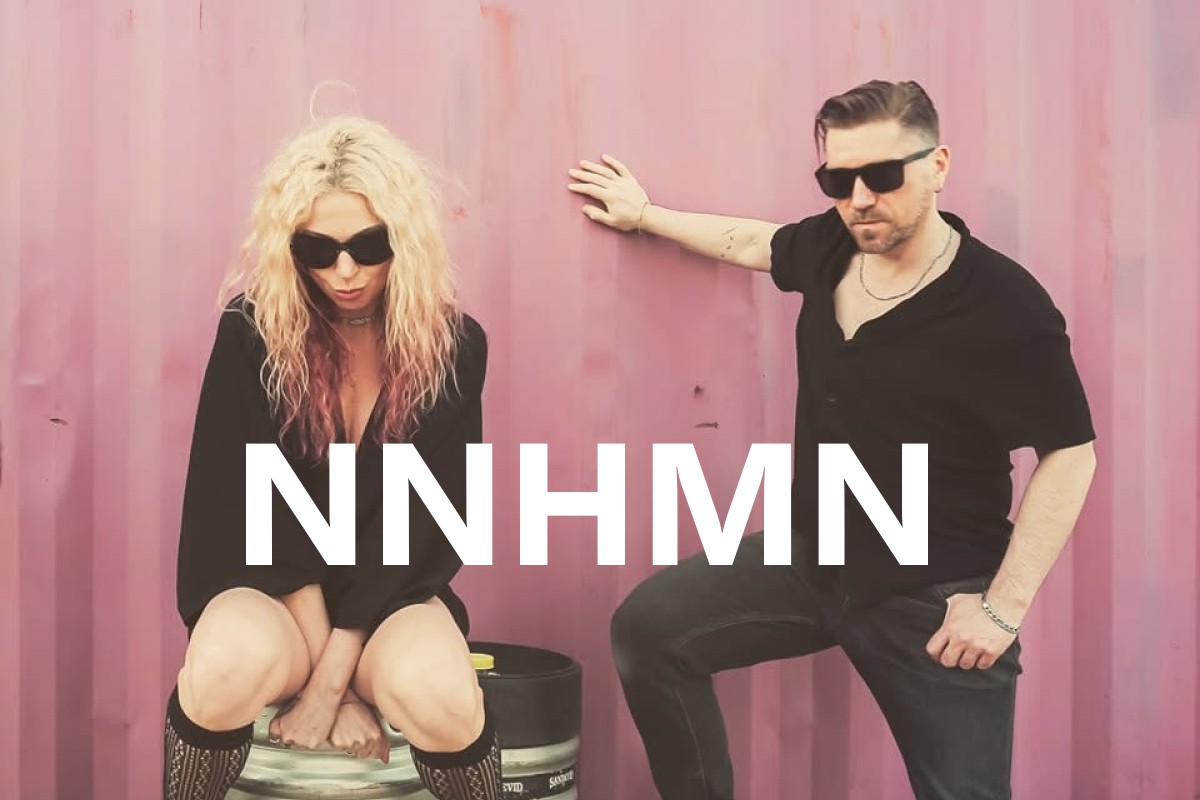
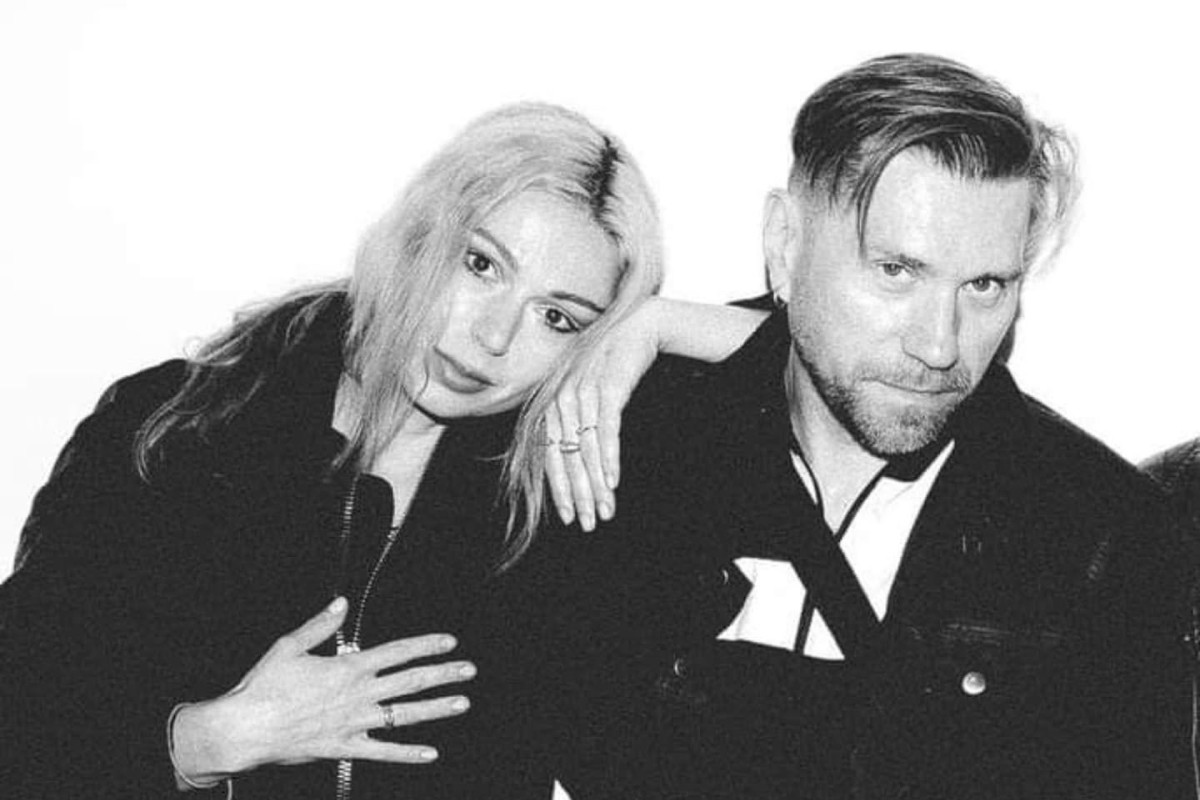
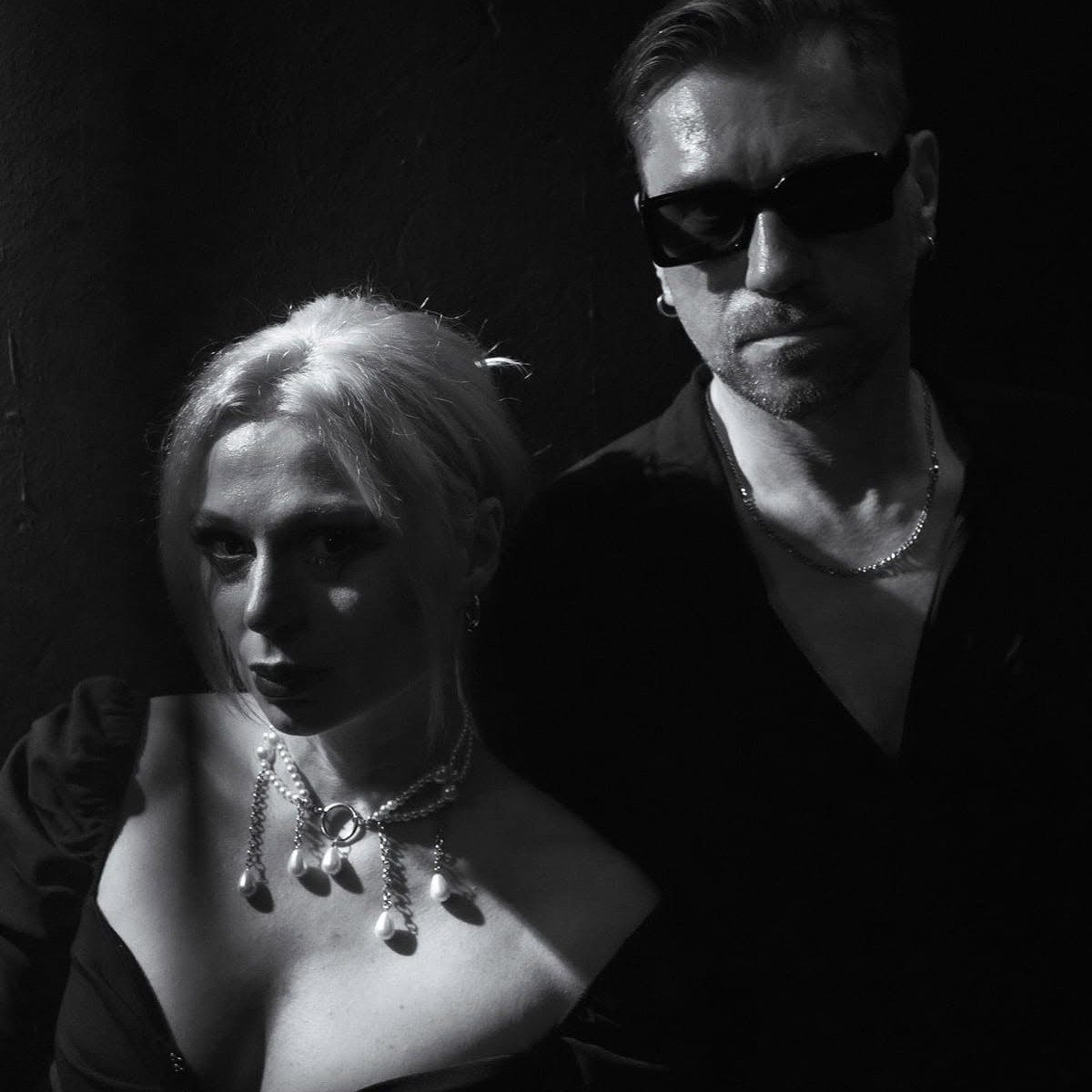
Berlin's revered duo NNHMN (pronounced non‑human) stand as one of the most distinctive forces in today's dark electronic underground. Blending elements of darkwave, coldwave, minimal synth and industrial electronics, their sound is defined by hypnotic rhythms, analogue textures and a strikingly atmospheric vocal presence. Active on the European underground circuit since 2017, they have steadily built a reputation for intense, immersive performances. Their first release under the name NNHMN, Shadow In The Dark, arrived in 2019, though their true beginnings reach back to 2017, when they issued the single "Velvet Daze" under their earlier moniker Non‑Human Persons. Since then, their discography has expanded into an extensive body of work spanning singles, EPs and albums — including conceptual releases such as Opera Of Lust & The Art Of Sorrow I (2025). NNHMN are equally recognised for their meticulously curated aesthetic. From visual identity to stage presence, they craft a self‑contained mythology steeped in erotic tension, introspection and a cool, futuristic sensibility. Their music frequently explores themes of transformation, identity and alienation, placing them firmly among the most compelling contemporary creators in the darker electronic sphere. Mid‑July will see the release of the second chapter, Opera Of Lust & The Art Of Sorrow II, issued through their own label K‑Dreams Records. We met with Lee and Michal at Still We Dark Vol. IV (you can read our live report HERE), catching them in two spontaneous sessions — one just before their performance and one immediately afterwards — to talk about everything from creative process to personal philosophy. If you're curious where the conversation led, read on.
Interview with: Lee Margot and Michal Laudarg
Conducted by: Tomaz and Jerneja
Edited by: Jerneja
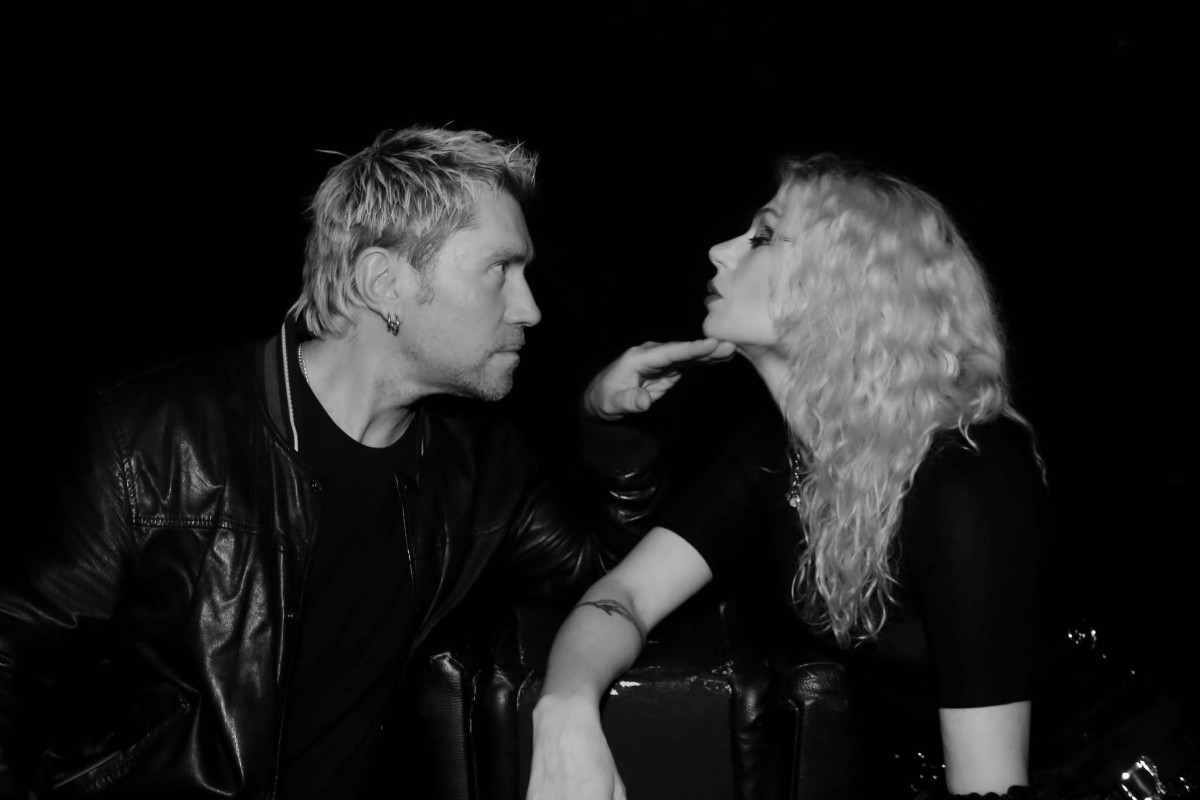
Jerneja: Hello, Lee and Michal — and thank you for taking the time for this interview, even though we expected it to happen a few hours earlier, while we were all still perfectly sober. How are you feeling here in this part of Italy?
Lee: We've never played in Northern Italy before — only in the South; we've been in Sicily twice. There's an amazing club in Messina called Retro Futuro. There's also a goth/darkwave club in Caserta, so we've played in Caserta near Naples as well. But yes, we've never visited the North of Italy until now. It's a very interesting experience — the country feels quite different here.
Tomaz: You've recently released a new single, "Cold Like Steel". Is it a standalone track, or part of the upcoming album?
Michal: "Cold Like Steel" is the first single from the second part of Opera Of Lust & The Art Of Sorrow. So yes, it’s basically the first flag — our way of saying that a new part is coming. And there will be new songs coming very, very soon.
Jerneja: NNHMN stands for "non‑human" with the vowels removed — a name that suggests a step away from the human. Is that an artistic stance, a protective mechanism, or a genuine desire to transcend identity?
Michal: There are a lot of layers to this name. In the very beginning, when we came to Berlin, our project was called Non‑Human Persons. That's where it all started. It comes from this idea — in India, for example, there's a legal category for certain creatures like elephants and dolphins; they're recognised as 'non‑human persons'. That really fascinated us.
Lee: Because they have personality, but they're not human — so they're non‑human persons. We were completely enchanted by that idea. We thought, okay, we're non‑human persons too, because in our own eyes we're very different from other people, you know? But then we shortened the name, and it became simply Non‑Human. And now we feel it's even better this way, because we try to be as good as possible — and humans are not good. Being human always seems to come with a dangerous side. When you look at history and politics, everything humans do ends up in deep shit. So maybe it's better for us to be non‑human than human.
Jerneja: Although… still not robots. Or are you?
Michal: No, no — not robots, haha. Of course we're human, but sometimes we feel bad about the way humanity deals with things in this world. Humanity doesn't learn from the lessons of the past, and that's a very sad truth.
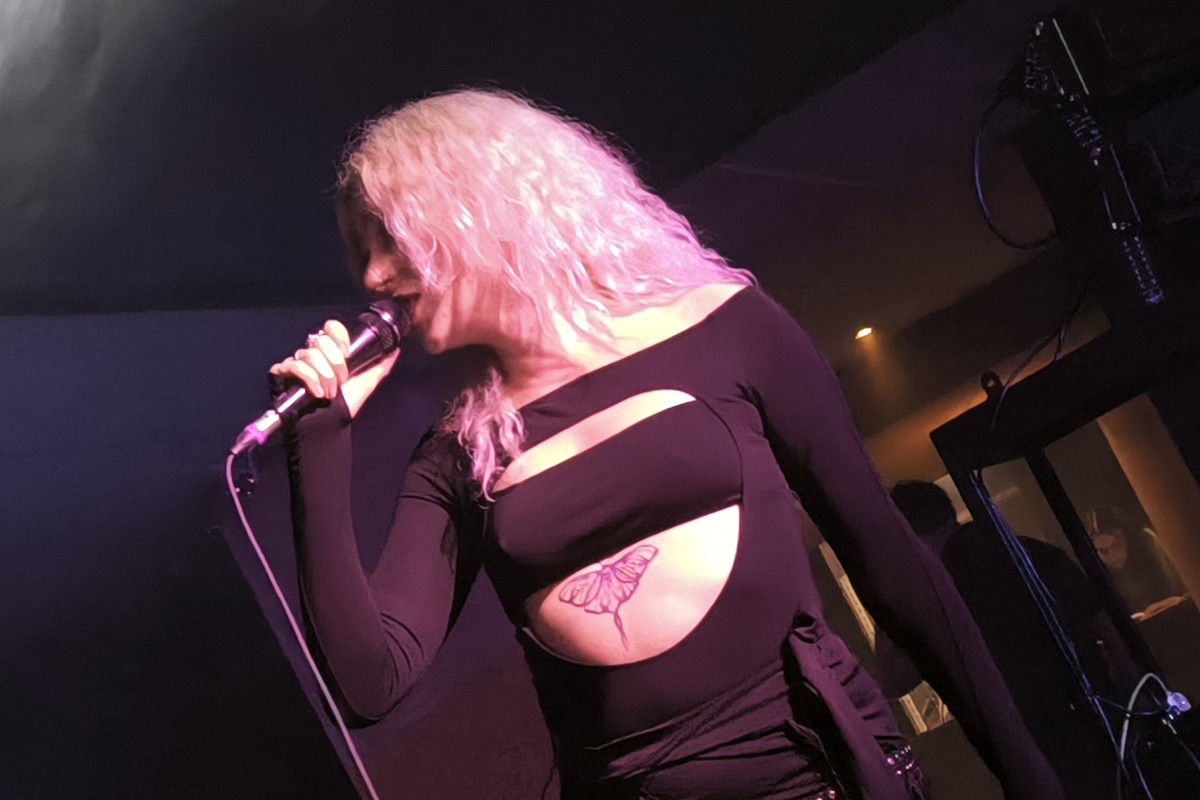
Jerneja: Your sound could almost be divided into BB — before Berlin — and AB — after Berlin. Was it only in Berlin that you found the environment that embraced your dark, analogue, sensual electronics and allowed the project to grow into what it is today?
Lee: Haha, that's a very interesting question. And visually it reminds me of those Depeche Mode "before and after Berlin" pictures, you know?
Michal: At the beginning, of course, we started our musical projects in Warsaw — and I think first in Poznań — and there were many phases to what we were doing back then. But coming to Berlin changed a lot. It's a city like no other in Europe… maybe even in the world. I mean, the alternative electronic music scene is huge.
Lee: It's also incredibly diverse — the variety is massive. You start going to all these different genre concerts, and then you realise you can't just "do alternative music". You need to belong to a specific kind of sound. For example, industrial‑metal fans won't go to dreamy ambient or synthwave concerts.
Michal: Exactly. When you come from somewhere like Warsaw to Berlin, and you're doing alternative electronic music, you immediately see the difference. Warsaw is more rock, jazz, more traditional — you can have a nice show there, but it's different. In Berlin you suddenly see so many directions you could go in. You can love this, love that… but in the end you have to tell your project: okay, you need to focus. You need to realise one vision, not every vision, because you can't put every idea into one project. So that was the transition for us — that was the conclusion.
Jerneja: Isn't it too cold in Berlin?
Michal: Cold? No, it's not cold — it's dark. The winter isn't snowy, but it's very long and very gloomy. Warsaw is colder, yes, but it has more sun.
Tomaz: These days, Poland has a strong gothic and darkwave scene. There are quite a few notable festivals, with the well‑known Castle Party as the biggest one. A lot of fascinating new bands are emerging, and from what I can see, there are plenty of concerts and events happening there…
Lee: I only really know one — Castle Party in Bolków. It's an amazing festival, but it's also the only one I'm familiar with. We haven't lived in Poland for fourteen years, so, you know… a lot has changed. Our experience is different now, and the country has changed completely. The economy has exploded, everything has moved on — it's a new generation. I don't know much about the scene there anymore, but it's great to hear that it's grown.
Jerneja: So what did you find in Berlin that you couldn't find in Poland, where you both come from? Why Berlin of all cities?
Lee: Fourteen years ago, Poland was still developing. There was only reggae, rock, pop, hip‑hop — and we hated it. "Hate" is a strong word, but honestly, we really didn't like those genres.
Michal: We did have some chances in Warsaw to develop our project. We were supported by the cultural office, so you can make something happen in Warsaw. But once you go outside Warsaw, it was like a desert.
Lee: It was crazy — we were going to festivals like Pop Montréal or Primavera Sound with support from the Cultural Bureau, and then we'd come back to Poland and have absolutely nowhere to play. We'd have success abroad — six hundred people screaming and dancing at Primavera Sound — and then back home there was no place for us to perform. Berlin was the closest city, and it was the capital of electronic music worldwide. And we'd met at techno parties many, many years ago, so the connection was already there.
Michal: So the decision was easy. We started visiting Berlin, played some shows there, and we just said: okay. And it's close to everywhere — if we drive to Warsaw from Berlin, it's only five hours.
Jerneja: In Poland, you worked in very different artistic spheres — you, Lee, in theatre, and you, Michal, in the techno scene. So how did NNHMN come into being?
Lee: That was about fifteen years ago, during a huge wave of emigration to the UK and Germany — a big economic emigration. Two million young people left Poland. And now there's another exodus, though this time people are coming back. But back then, suddenly the clubs were empty, you know? So he lost his opportunities, and I was unhappy in theatre because I wanted to create my own world, and it was difficult for me to work under someone else's vision. Then we met. He started doing some professional work to keep the household going, and I started my solo project, which was called LeeDVD. I was releasing music on a very experimental label in Kraków. It was the Myspace era. I think I released four albums or something. Then we slowly started working together, forming several projects — and that's how it all began.
Jerneja: At a time when so much electronic music sounds digital and sterile, you've remained committed to an analogue, almost tactile sound. Is that a form of resistance to contemporary production culture, or simply a love for analogue tools?
Michal: You know, it's simple. Just listen to a digital bass and then to an analogue bass — listen to digital stuff and analogue stuff — the difference is fucking huge. Analogue sounds soft, rich… alive. And I'm not saying digital is wrong or bad. I mix both: I use analogue gear and I use digital. It's a mixed domain. There are good things on one side and good things on the other, but you can't skip analogue. It's just… it's so rich, so beautiful. You can't ignore it.
Lee: We really love wave music. In our sound, the electronic domain is mixed with the wave domain. I think everyone can hear that we're not a classical coldwave band like Lebanon Hanover or something like that. We're a mixture — somewhere between dance‑electronic and analogue wave music.
Jerneja: The darkwave/coldwave scene is hugely popular at the moment, but also rather uniform. Do you ever feel constrained by the expectations of a scene you're simultaneously helping to shape?
Lee: Yes, I think everything evolves, and progress is necessary. We can't pretend to be a band from the '80s — because we're not. Development is needed.
Michal: We also don't think about the expectations of the scene. Once you start thinking about that, you end up in a dead corner. The best things we do come from wanting to create something with a special character — something we genuinely feel. Something natural. We work mostly through improvisation. We start with an improvisation, and when it begins, you're like a kid — you just do what you feel. Then you have a piece, the first shape. After that, you start shaping it into something more consistent, more structured. This is how we work — only this way. What you feel in your heart, you put into the machines, into the vocals, and that's it. And we're so happy with what we're doing. It reaches people, and they have fun with it, just like we do when we're creating it. That's amazing.
Tomaz: You release your albums through your own label, KDreams Records. Why did you choose that path — and have you received offers from other labels?
Lee: We've had many proposals from labels, and we also work with some of them — and we've never complained.
Michal: Yes, we worked with Oraculo, and with Young & Cold Records. It was always good. But we wanted to have everything under control. Sometimes a label pushes you to release something before you're actually ready, and you don't feel it that way, because your life is going in a different direction.
Lee: And you're not happy with the sound, but you say, "okay, let's release it", and then you're not happy — and it stays with you for life.
Michal: When you work on your own agenda, with your own timing, life is unpredictable. Sometimes you want something finished in January, but you actually finish it in September — and you have to accept that. Once you're ready, you can release it, and that's it. There's much more work, of course, but on the other hand you have comfort and control over everything.
Jerneja: Returning to the music itself — your work often explores the tension between desire and alienation. Where does this fascination stem from?
Lee: Well, as I said, we're non‑humans — so alienation is a normal state of mind. And desire… I mean, that's the passion of life. We're fucking vampires, you know? The desire to stay young forever is always there. So that's the desire, maybe. But alienation — that definitely comes from being a non‑human person.
Michal: Maybe it's because we're northern people, you know. We're just alienated from the very beginning.
Lee: And when it comes to the lyrics — I'm a kind of meditative person. And yes… I'm from the very north of Poland.
Jerneja: Your visual identity is also highly distinctive. How important is the visual layer in your creative process?
Michal: It's totally important. I'm very keen on video and filmmaking. The vision is something… I don't know, maybe a bit like Nicolas Winding Refn, or those neo‑noir films. That's the kind of world we want to create.
Lee: A neo‑noir dystopia — a big metropolis landscape, something like that. Something with cold tones, but very gloomy. Yet still shining.
Michal: Yes — cold shining. A kind of modern Lynch. Or, you know, Refn — Nicolas Winding Refn — that kind of director.
Lee: Right now I'm writing short notes for the artists we curate. Before each announcement I listen to their music and I write a kind of poem. The poem becomes part of the announcement for our festival, Untavelt Berlin. I have these visions — little films — that I write as poems. It's a different way of announcing artists than other festivals use. I write a visual story around each artist who's going to perform. I just close my eyes and write the poem very quickly. So that's also part of my process — the vision. When I write lyrics, I close my eyes and I see something. I see a world.
Jerneja: When you create, does the music still come first, or does the visual concept lead the way — and do you ever feel confined by your own aesthetics?
Lee: The music always comes first, and then I start to weave the text — the lyrics — around it. So yes, music comes first. And we're not trapped by our aesthetics, because we're too eclectic.
Michal: Yes. I make the music, she comes in and sings, and of course there are directions we'd love to explore. Music comes first, and once we have the music, the vision is already there. With the videos it's the same — we always share the same vision. Even if it's not obvious, it's somewhere deep in our bodies. It's connected.
Tomaz: I have to say, I was rather surprised that for your latest EP, Opera Of Lust And The Art Of Sorrow, you didn't release any videos at all…
Lee: No — our life exploded in completely unpredictable ways. We're going through a big family trauma, and that's why we can't work the way we used to. We're not as efficient or as productive as we normally are.
Michal: I can say that we have a lot of material for it, but we simply haven't had the time to make it. Sometimes, you know… we call the band "non‑human", but of course we're extremely human, and we're going through all the shit humans go through. We can't escape that.
Tomaz: Your videos are usually so intriguing — symbolic, minimalistic, yet undeniably sensual.
Lee: Thank you. We always try to keep the tension. So if new videos come — and I hope they will — they'll be full of all of that.
Tomaz: When can we expect the second part of Opera Of Lust & The Art Of Sorrow?
Michal: We've already started the pre‑sale, and it'll be released on 15 July. Every three weeks we'll put out another single. Six, seven — maybe even eight — tracks are ready to go.
Tomaz: Judging by "Cold Like Steel", it seems you're continuing in the same direction as the first part of Opera Of Lust & The Art Of Sorrow. Or should we be prepared for a few surprises?
Lee: I think the sound is always changing. You'll hear some of the songs from the second part of Opera Of Lust & The Art Of Sorrow tonight — they're still unreleased, but we've been playing them for at least a year. So for many people they're already familiar. You'll hear the direction.
Tomaz: Do you perhaps have a new full‑length in the works as well?
Lee: We always work like this when we're going through difficulties in life — and we're going through difficulties all the time. That was also the case with Deception Island 1 and Deception Island 2, and later we connected those two into one album. So this is our normal practice. There will be a CD album, and it will be on the DSPs, but it won't be released on vinyl.
...
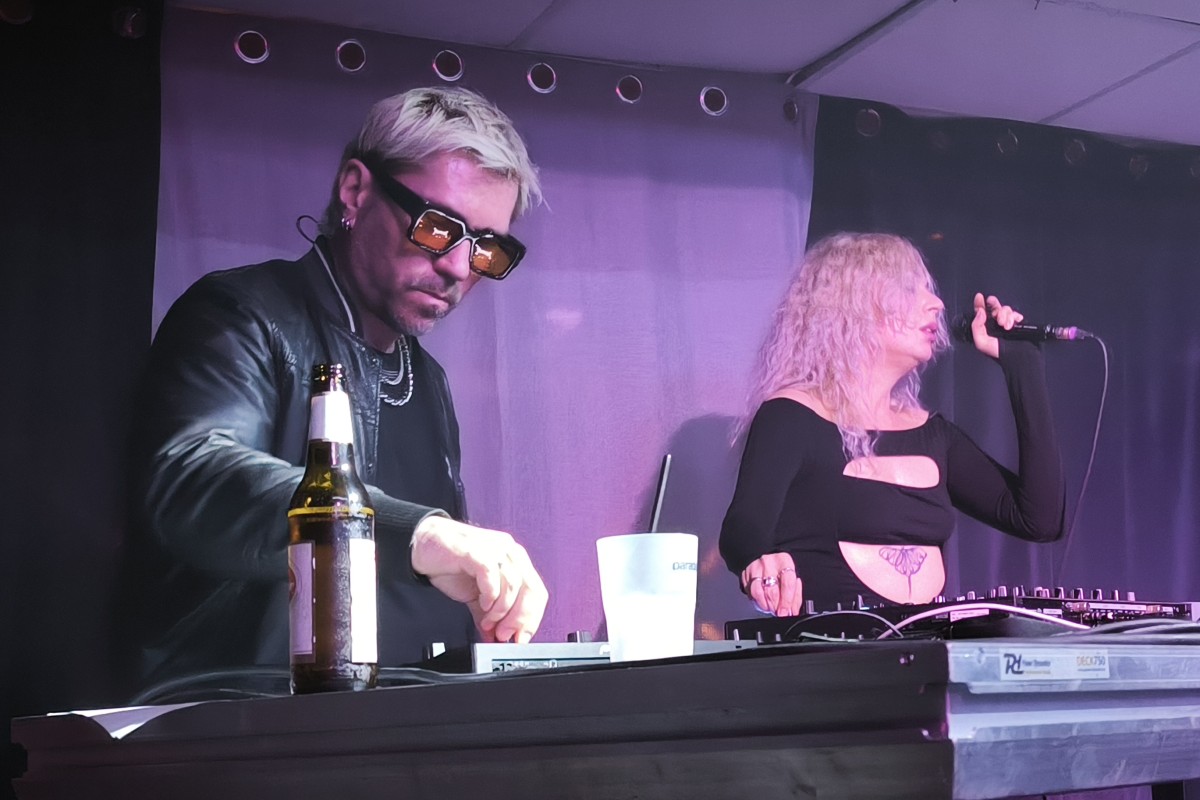
Tomaz: Okay, here we are again for the second part of the interview. How satisfied were you with your performance?
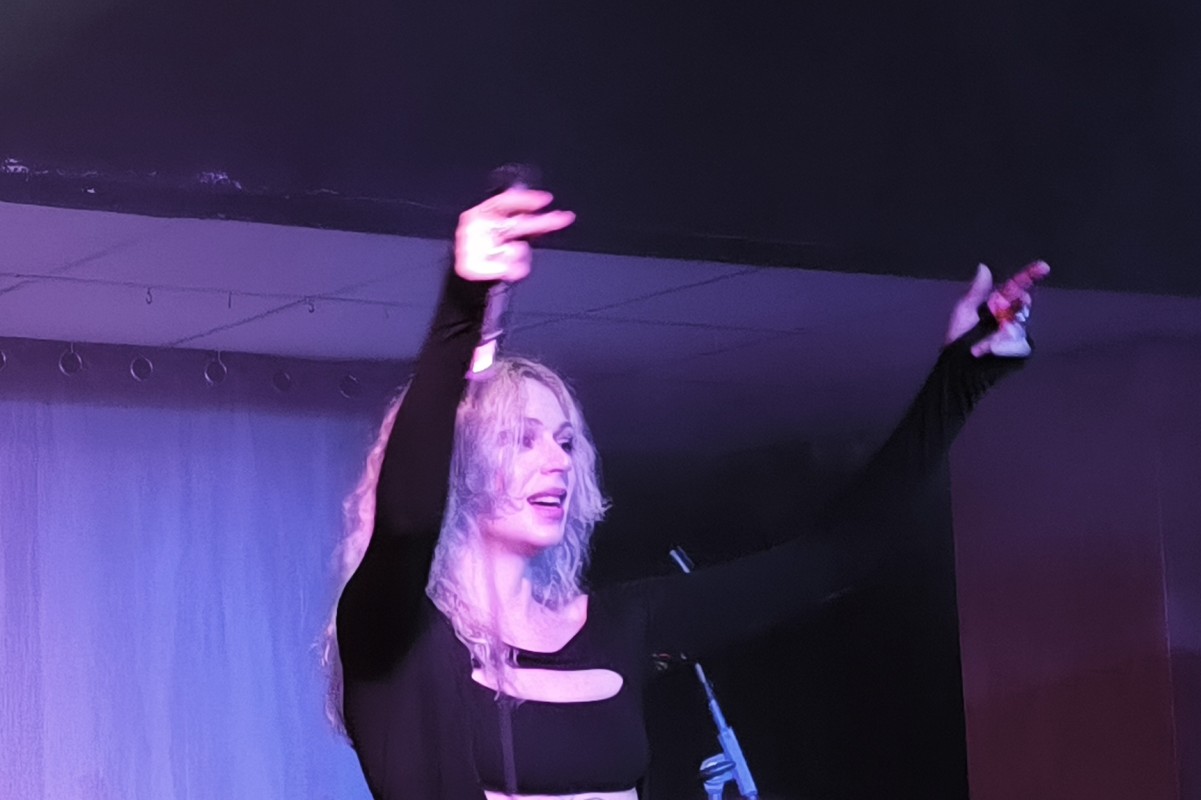
Lee: At the very beginning we had technical difficulties. It's always hard — for the audience and for us — to adapt, because when something goes wrong technically, the audience feels it and we're frustrated as well. But then we adapted, the room adapted, and the audience went, I think, a bit crazy. It was nice.
Michal: It was like magic — it stopped working for two songs. I'll need a few days to understand what actually happened. It just wasn't working. But anyway, we found a way to start it again with a bit of a bump, and it was amazing. People started to dance, and they went crazy. It was nice. When you see people dancing, reacting to the music we play… of course sometimes they're in their own bubble, but it's still good. You feel it — you feel that the music works for them, for their souls. And that was great.
Tomaz: I noticed you asked for more fog a couple of times…
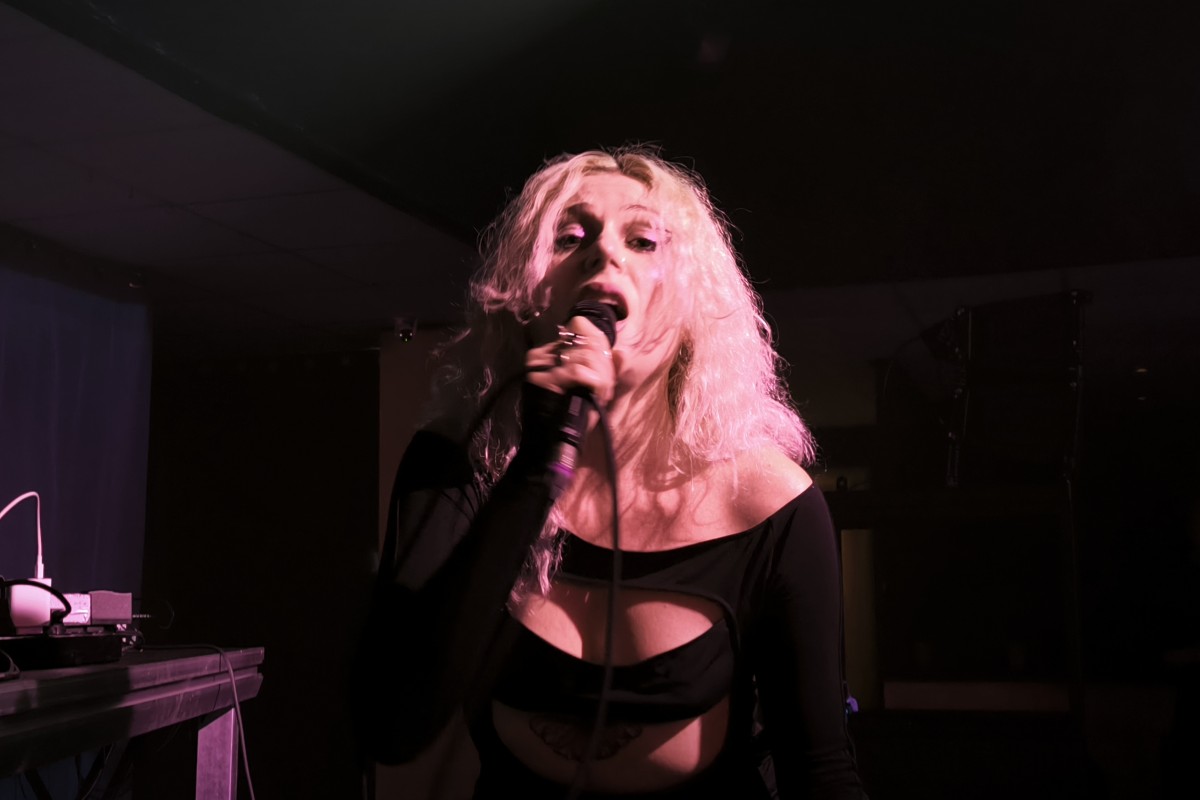
Lee: Yes — because this hall isn't adapted for a live show. They built the stage specially for tonight. I actually thought we'd be playing at the DJ booth, which is adapted for performance in terms of lighting — but the stage isn't.
Michal: You know, when there's more fog, people go deeper into intimate feelings. They can lose themselves in this unreal situation — and that's what we're trying to create. We don't want to be constantly in the light or in the spotlight, because we're not a hip‑hop act.
Jerneja: I have to say, I was a bit surprised to see so many people in fetish/BDSM outfits. For a second I thought I'd missed a dress code…
Lee: For us this is quite normal. We often play at sex parties, so it's a very usual situation for us. People wear what they want — and that's nice, because they feel free. And if that's how they want to express themselves, it's completely okay.
Michal: It's like in Berlin, where the way of thinking is totally free. I don't really see the outfit — I feel the energy. If people are flowing with us, that's what matters. If not, then that's a problem. It doesn't matter whether they're in casual sportswear or a BDSM outfit.
Tomaz: How do you view the increasingly widespread use of artificial intelligence in music and art in general? At Terra Relicta, we've been encountering more and more bands — especially darkwave bands — that are entirely AI‑generated.
Lee: I feel totally shitty, because two days ago we released our new single "Cold Like Steel", and YouTube suggested only AI‑made tracks as "similar songs". I'm curious to see what will happen when we release the next single. All the songs that were queued after ours were AI — I took screenshots and checked everything. They were absolutely and completely AI‑generated, like from Suno or something. The pictures, the music, everything. All the vocals were female, and all the profiles led to dead ends — no real people, nothing on the internet. So I was pretty shocked. It's a very important question. I'm shocked, because we're losing our audience. The comments under those artificially created songs were things like: "Oh my God, I love your vibe, I love your voice…" and so on. Only positive comments. People don't distinguish whether they're listening to a legitimate artist or artificial intelligence.
Michal: It'll sound strange, but there was a time — maybe twenty years ago — when musicians started sampling other artists' work to create something new. There were no legal boundaries then; you could sample whatever you wanted and make another song. It was a kind of freedom, and many great projects started that way. Now, twenty or thirty years later, we're in a similar territory, but in a different form — because now we have AI. AI is sampling, tracking, thinking, copying, and creating new songs that resemble something else. I think that in a few years it will become very limited, maybe even not allowed, except as a hobby at home. And it's horrible to see that some labels are already signing people who make AI‑generated music.
Jerneja: When I heard the first AI‑generated song, I didn't even realise it was AI — I actually liked it. But once you hear several of them, especially within similar genres, you start noticing certain patterns. Even the lyrics begin to sound alike, as if they all share the same songwriter. It's similar to reading poetry: when you read a particular poet, you quickly recognise their work because they have a distinct voice. Recently, Terra Relicta Radio removed all AI‑generated tracks from its rotation — or at least all those we could reliably identify. My view is that AI can be very useful in many areas, but it doesn't belong in art — I see art as something deeply personal.
Michal: It's like in Blade Runner: you look into someone's eyes and you can tell they're not really human. It's the same with this music — it's so smooth, so proper. We, as people, aren't perfect. We make mistakes, especially with timing, and you can hear that in the music. And of course the emotions are completely different — they're not controlled, they're out of control. When a real artist wants to put something intense into the music, sometimes you lose control — and that's good, that's something special. No computer can do that, because it's outside the machine's control, but it's natural for humans.
Lee: There was a big scandal four or five months ago on BBC 6, if I remember correctly. A song won a contest and was played a lot on the radio. Then they connected live with the "artist" who created it, and he admitted on air that the song was entirely made by AI from the prompts he wrote. It was a huge scandal in the UK — you can Google it, it's incredible. The song was very popular, it won the contest, and he admitted it live. Well, the question was what we think of AI‑generated music — and I think it's awful.
Tomaz: When we spoke earlier about your upcoming EP, Opera Of Lust & The Art Of Sorrow II, I realised I forgot to ask whether you could share a few more details about it.
Lee: Because we have our own imprint now, K‑Dreams Records, we're completely free to release things whenever we choose. Life has become very difficult for us for family reasons — we're working intensively on those issues — so there's no precise release date for anything. When we're ready, we do it. This is what's called the waterfall strategy. It's not a very precise strategy, but when we're ready, we release a single. And right now we're in the process of releasing singles; later we'll bring everything together. Since life is unpredictable, you don't have total freedom of time or total freedom of mind to do whatever you want. So we're working slowly, but precisely.
Tomaz: And what about the upcoming shows? Are there any touring plans on the horizon?
Lee: Over the last three or four years we toured extensively: Latin America, Canada, all across Europe. Everything used to be planned out. Now it's more chaotic. This is still an ongoing tour, but we're not planning a full tour in the traditional sense. We're doing "frog jumps" — just selected shows here and there.
Tomaz: Any festival appearances coming up in the near future?
Lee: We'll have our own festival in Berlin for Halloween — the Unterwelt Darkwave Festival — where we'll also perform. Then there's the Grey Scale Festival in Munich this June. We'll play at Madrid Goth Day, and at the Subkult Festival in Sweden. And I don't remember what else we're supposed to play next.
Tomaz: Where do you see yourselves in about five years' time?
Lee: That's an interesting question.
Michal: In a swimming pool, with dogs, good drinks and a lot of sun, haha.
Lee: No, no — that's bullshit. I don't know. Apart from producing music — because we won't stop, this is our passion — I think we'd like to produce more shows for other bands in the scene. We really believe in the scene, in progress, in alternative music. That's why we started this festival in Berlin for many niche bands. And if it's successful this Halloween, we'd like to continue supporting the scene in that way. So besides releasing our own music, we want to support the scene, because we believe in alternative music. We're not going to stop creating. But five years… that feels like a whole galaxy away. I can plan one or two years ahead, but five years? Impossible. It's a tricky question.
Jerneja: Do you perhaps intend to venture into more entrepreneurial territory as well — for example, opening your label to other artists?
Lee: Maybe it will happen, but not yet. Right now we're focused on ourselves, because it's so much work you can't even imagine. If you're not connected to major labels or major distribution, it's very difficult to manage everything for yourself — and doing it for others would be even harder. From our experience, we've noticed that many popular bands — the "stars" of the scene — pretend to be independent, but in reality they're connected to major channels, distribution, and promotion. A lot of them only present themselves as independent, but they absolutely aren't. They're just using that niche and that way of communicating with people. It's a complex thing.
Tomaz: How do you view the revival of the darkwave scene? All of a sudden there's so much happening again — concerts, festivals… What do you think has contributed to this resurgence?
Michal: The wave is growing — that's the tendency. An artistic vibe can start with one project and then spread across the whole scene. And the scene is democratic, it's open. It's a bit like the punk scene — actually, it's post‑punk. Let's say you want to start a musical project tomorrow. You work on it, you create something, and probably in six months or a year you'll get the opportunity to be on stage. If you work hard, you'll get there. This is the opposite of the major world. In the major world you're in a queue, you're begging, you're trying to get in — and if you're refused or cancelled, that's it, you're out. Here it's the opposite. This is a democratic scene. Anyone can come in, show themselves, show what they can offer. Show your show, show your performance — and that's nice. That's amazing. No one is, let's say, cancelled.
Lee: If you have an artistic personality and you work hard, you’ll be there. But unfortunately the majors are also using this tendency. And the tendency you mentioned — darkwave growing — is happening because we’re living in a fin‑de‑siècle moment now, the end of an era. I’d say the scene is blooming with real artists. But everything that grows underground eventually gets used by the major companies. For example, when I looked at the last album and aesthetic of Lady Gaga — the absolute major act of the majors — she was using Mayhem's, darkwave, dark‑metal aesthetics. What the hell is that? So the tendency is being used, and the majors are swallowing everything. The same happened with the metal scene when it was growing — suddenly they were playing huge stadiums and flying in jets. Major companies swallow the tendencies that are born in the underground.
Michal: But our scene is a bit tricky, because there are a lot of promoters and artists who, from what I know, are independent. Most of them are independent — for now. Which means we're still free. Those big companies that could put a heavy hand on us and say they own us… fortunately we're not in that position yet.
Jerneja: And what, besides music, brings you joy?
Lee: Dogs. We have two — Bomba and Rosita — and they're so lovely. They give us so much joy every day. Dogs are the best. They're complete opposites. In the morning they come to our bed to tell us it's time to wake up. One of them is like, "Hey, it's 5:30", and starts licking me. The other one just bites. They're like two little vampires — one licking, one biting. I give one hand to be licked and the other to be bitten. It's amazing… a kind of ritualistic joy.
Tomaz: Once again, thank you for the interview — and of course for the fantastic show. Is there anything you'd like to add before we wrap up?
Lee: Be a fucking good non‑human person.
Live photos by Tomaz
NNHMN links: Official Website, Facebook, Instagram, Bandcamp, YouTube
 "We were kind of exploring dark subject matters and darker sounds. I really like that, and this is the direction we are going right now." - Larissa Vale
 "Sometimes an album just falls into place, and Rapture is one of those albums. From the beginning, I felt that things were lining up and everything was flowing." - Ashley Dayour
 "The speech that they hate is my speech, but my speech is not a hate speech. What can you do? You can just mirror/reflect them - hopefully, they will see how grotesque..." - Dero Goi