

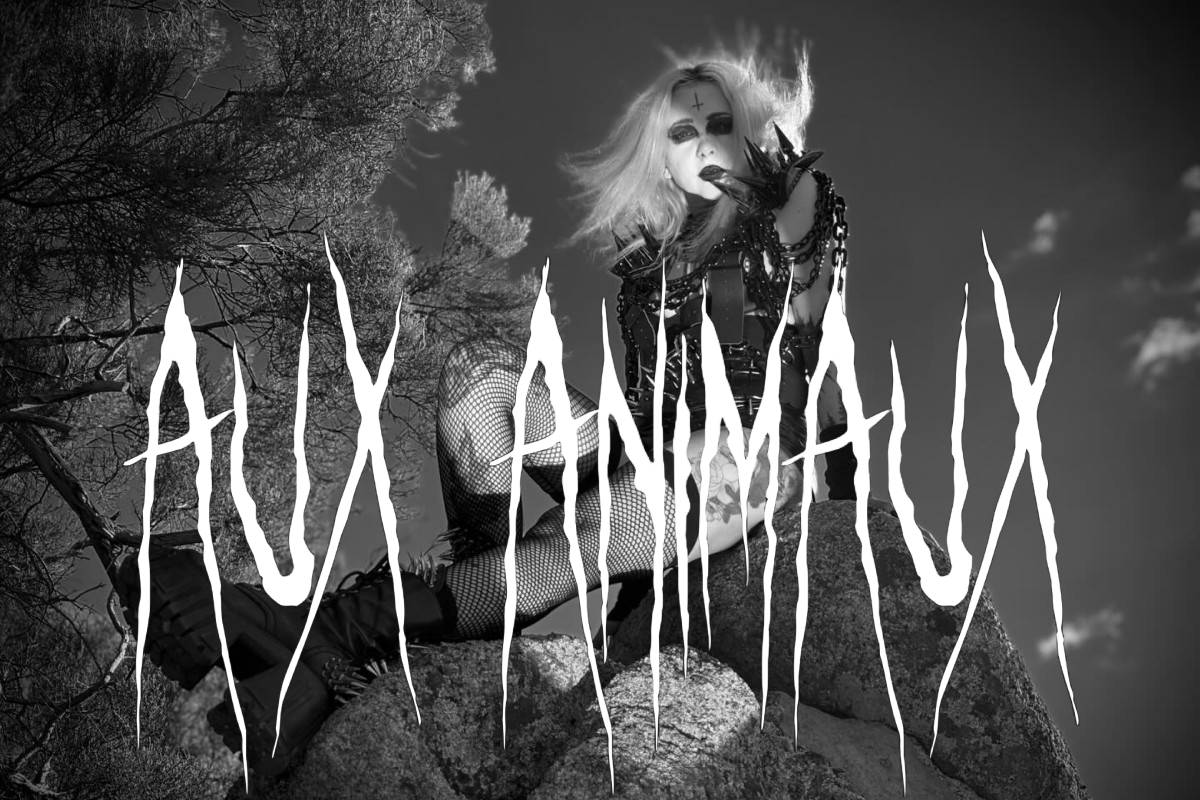
Aux Animaux is the solo project of Turkish‑born artist Gözde Duzer, now based in Stockholm. A self‑taught musician, she spent several years working professionally as a bass guitarist before relocating to Sweden. With Aux Animaux, she writes, produces, and mixes all her music herself. On stage, she sings while moving between the theremin and bass guitar. The theremin — which she describes as her personal source of sorcery — is famously the only instrument played without physical contact. She defines her sound as hauntwave: a spectral blend of darkwave, dark synth, horror‑soundtrack atmospheres, post‑punk, coldwave, and dark electro. Aux Animaux released her first songs in 2017. Her debut EP Black Holes explored politically charged themes centred on animal rights, feminism, and social critique, while the follow‑up EP Stockholm Synthrome wove these concerns together with a more personal narrative, including reflections on her decade‑long struggle with misophonia. In early 2022, she unveiled The Hydesville Episode, a conceptual EP steeped in horror‑score aesthetics. Later that year came Hauntology, featuring four original tracks alongside four remixes by Tobias Bernstrup, Priest, Majestoluxe, and Aux Animaux herself. At the end of 2023, she released her debut full‑length album Body Horror via Manic Depression Records. Last year, she followed it with three new singles, all intended for her highly anticipated next album. Beyond her solo work, Aux Animaux contributed vocals to "Beelzebub Unchained", featured on Occult Pleasures, the album by The Devil & The Universe. She captivates not only through her music but also through her striking visual aesthetic and commanding live presence. We had the opportunity to see her twice: first at Castle Party 2025 in Poland, and most recently as the support act for IAMX in Ljubljana. Earlier this year, Gözde also joined IAMX as their bass player. If you're curious about everything she shared with us, read on.
Interview with: Gözde Duzer
Conducted by: Tomaz and Jerneja
Edited by: Jerneja
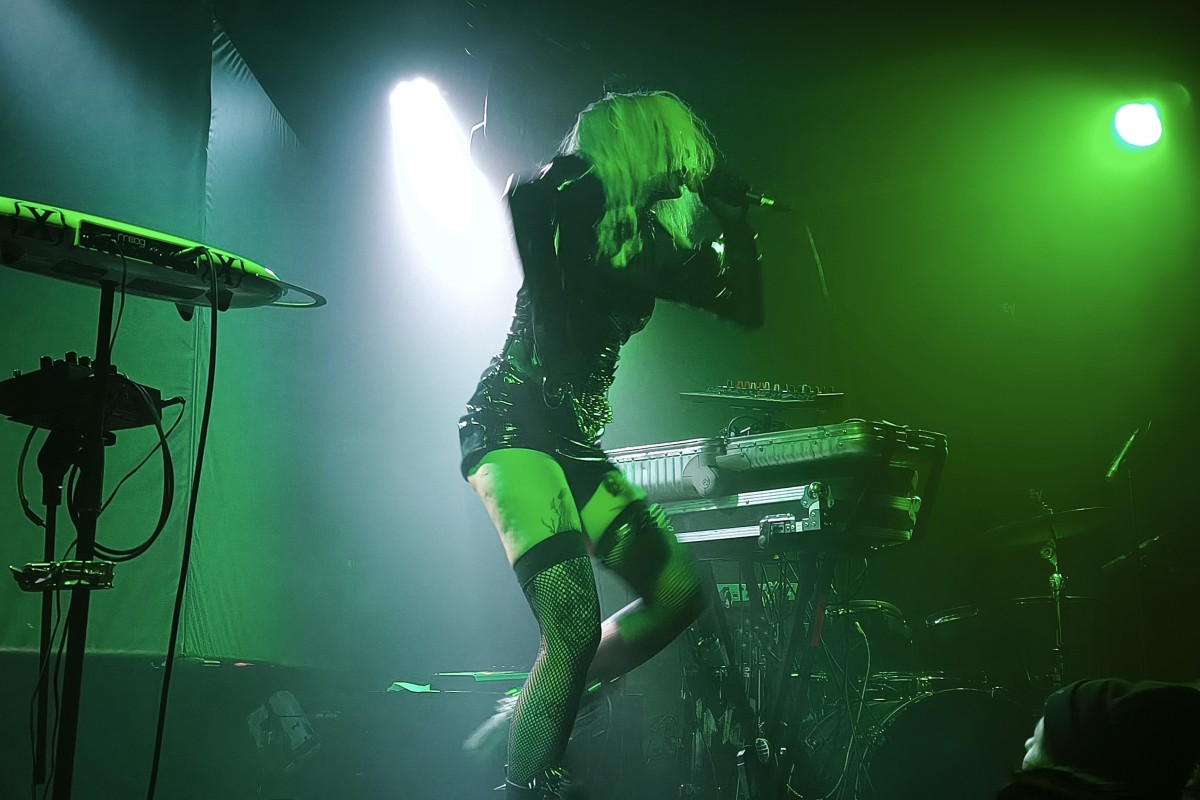
Jerneja: Hello, Gözde. After a good three weeks, we're finally back in touch. The IAMX tour is now behind you, and as you know, I wrote a report on the Ljubljana show in which the Aux Animaux set didn't receive a favourable review. I would have mentioned this to you in person, but our encounter was extremely brief, as you were clearly in a hurry. So—how would you assess that performance yourself?
Gözde: I mean, I can't really assess it, because I didn't see it — I was living it. So I don't know. But the thing is, it was a 30‑minute set. That wasn't my choice; that's what they told me to do, and I do what I'm told. And not being able to play the bass guitar wasn't my choice either — again, that's what they told me to do. Other than that, I don't remember if that was when I was really ill. I was on antibiotics on this tour — doing double soundchecks, double shows, double costume changes every night. It's been intense. And I don't know… I suppose some shows have been better than others, as is always the case. We're not robots; we're human beings. So yes, I mean… I don't know. It depends a bit on how the audience is, and also on everything happening around us — whether we can hear ourselves on stage or not, you know? There are different factors involved. It's also been a little strange for me on this tour because I play with IAMX, too, and the songs I play there are new to me. I decided to go on stage pretty much completely sober, which is fine for IAMX, but for my own performance, it felt a bit weird, you know? Everyone is looking only at me all the time, and it's a strange feeling not to have something that helps you relax a little before going on stage. And like I said, sometimes the stage sound hasn't been very good — you don't hear things, or it's very low, so you hear everything else too much. Honestly, we did so many shows that I don't remember what my vibe was on that one. Maybe those were the factors that contributed to you preferring the Castle Party show over this one.
Jerneja: Yes, I had that comparison in mind, so perhaps I expected more because of the show in Poland. Since this is your first interview for Terra Relicta, let's begin with a few standard questions. While reading up on Aux Animaux, I noticed that the project began on Christmas Day 2015. That struck me as rather unusual, as bands typically mention only the year of formation. So—was there some sort of revelation involved, or perhaps a Christmas miracle?
Gözde: I only remember it because it was Christmas — nothing special. I think I wouldn't have remembered it if it had been, like, 17 March or something, you know.
Jerneja: Aux Animaux is a French name, so do you speak French? Translated from French, it means "for the animals". At first, I assumed you were referring to the more animalistic side of human nature, but you're also a committed animal‑rights supporter and a vegan.
Gözde: I do. I lived in Strasbourg — that's how and where I came up with the name, which is why it's in French. And yes, the name is connected to the fact that I've been vegan for a long time. I've lost count of how many years it's been now — maybe 14, 15 years. So definitely, that's part of it. I think the name came about in a strange way, though. It was my ex-boyfriend and me at the time, right at the beginning, and we were kind of bouncing ideas around. We vetoed everything the other suggested, or it was already taken — and we didn't want a name that was already in use. So when I came up with Aux Animaux, it was the only thing that wasn't taken, probably because it was in French, and no one vetoed it. So that's why it stuck. In retrospect, I sometimes regret it, because no one can pronounce it properly except French‑speaking people. But yes, it definitely has to do with my animal‑rights activism, to go back to your question — and it's an important question. I have several songs and music videos about it. Among others, "The War" from the first EP. You can't find that EP online anymore because I deleted it — that was the one we did together with my ex. Maybe the video is still on YouTube, I'm not sure. I worked with an animal‑rights organisation in Sweden, Djurrättsalliansen, for that — activists who were emptying cages in animal factories and taking the animals, but leaving money behind to make a point, basically. And I made another song called "Lost Souls", which is on the last album, Body Horror. That's also about animals living in captivity on farms, and the video again uses footage from another Swedish animal‑rights organisation. I basically asked them if I could borrow their footage for my video and edit it.
Jerneja: That was actually my next question. I really love "Lost Souls", both musically and visually. It's one of your songs that most directly addresses the issue of animal rights, and, as you mentioned, the video uses footage from Djurrättsalliansen. When you look into those devastated, pleading eyes, it's impossible not to feel your heart break. Do you believe that animals — especially those bred for human use — have any genuine hope of a brighter future?
Gözde: Yeah… thank you for acknowledging it. Yes — if we, as humans, actually do something about it. And some of us are doing something, and some of us aren't. Some people simply don't want to see the footage we were looking at. I have friends who refuse to watch it. Usually, it's the people who should watch it the most who don't want to. So yes — as a collective, as humans, if we act against it, I'm sure we can make a difference. Everyone just needs to be willing to do their part. And, for example, with IAMX — the whole band is vegan. So it was really nice to go on a long tour like that, because I've toured with a lot of bands as support, and, you know, they all want to eat meat and so on. No one ever criticised me for doing my part, but it was really liberating to tour with a band who share my ethical beliefs — who also do their part. So… yeah. Let's hope for something better — and actually do something.
Tomaz: You announced a new album last year. What's the current status of the upcoming material?
Gözde: I'm wondering about that too. I'm trying to write it right now. I'm in my little studio here, working on new music since I came back from the tour — but it's going really slowly. My goal from the beginning was to release a new album this autumn, but I'm not sure I can make it in time. The thing with the creative process is that you can't really force it. It has to come out of you, in a way. And I've been trying to force it since I got back from the tour, and… in the end, I decided to take a little break and work on some other things. No matter how much I push myself, it doesn't work — and then it's pointless to keep trying when it's like that. That's my experience, at least.
Tomaz: After Body Horror, you released three singles — "Thrill Kill", "Void Moon", and "Demonizer". Will these tracks be included on the new album?
Gözde: I think they're going to be — unless I make something that sounds different and they don't fit. That's my assumption. I believe they'll be part of the album, yes.
Tomaz: All right — can you share a few more details? Perhaps some working titles or anything you can reveal about the upcoming album.
Gözde: I'm not going to reveal anything right now, because the thing is, I'm launching a new Patreon next week. We're going to tease it on Instagram, so I don't want to reveal anything yet — I'm saving it for that.
Tomaz: Understood. But is there a conceptual thread that connects the songs?
Gözde: I think it's going to be really personal, and it's going to reflect a lot of what's been happening in my life over the last two years. I've been through a divorce during this time, and, you know, it hasn't been a very smooth divorce. So there's been a lot of frustration, and I'm just trying to be free from it all. "Demonizer" is about that. But I also lost a dear friend, and that really impacted my life. So yes, there's a lot about simply being human — anxiety, emotions, all of that. I think it's going to be a personal one… except for "Thrill Kill", I guess. That's a song I made because I love horror and I love true crime and all that. That one is just me having fun with it, basically. But I think the rest follows a thread.
Tomaz: How would you compare your new songs with the older ones — for instance, with the material on your latest album, Body Horror?
Gözde: I think it's going to sound more like Body Horror than the earlier stuff, because that was the first album where I felt I had finally found my sound. It's going to be kind of like that — but I don't want it to sound the same either. So it has to be, I hope, a level up from that one. You always want to make your best one yet, right? That's what I'm going to strive for.
Jerneja: You've lived in Istanbul, Strasbourg, and Stockholm. Do those places also echo in your sound?
Gözde: Oh, that's a good question. I don't know — you tell me. What does it sound like to you? I have no idea. I don't hear much of Istanbul in my music, I guess, unless I'm doing it subconsciously. I think I sometimes add certain vocals in the background that can sound a little more Turkish, but in general, I've never found any inspiration in Turkish music. Honestly, I never belonged there. I always felt like I was born in exile. So I don't feel that it inspires me in any way — but there might be some subconscious little things here and there that I do without realising it.
Jerneja: I've never been to any of those places, but I hope to someday — Istanbul is especially high on my list. How do you cope with the colder weather in Sweden?
Gözde: I hate it. I go to Los Angeles quite often — a couple of times a year — and I really love being there, so that kind of helps me keep going with life, basically. It's really cold here in Stockholm, and the winters are very long. It's like nine months of the year or something, you know? And in winter it's really, really dark, because it gets dark around 2:30 in the afternoon, and then it's light again maybe at 9:30 in the morning. That completely messes up my sleep cycle, because I don't have an office job to go to. So I end up sleeping really late, waking up when the sun is already down, and then I don't see the sun at all — and, you know, that's not good for your mental health.
Jerneja: Chris told us something similar about Berlin.
Gözde: I know he didn't like the weather — and the cold — so he moved to California. That's what I want to do as well. But he has a big heart there, so yeah. He told me I can come and stay anytime, which is really nice — it's great to have that opportunity, of course. He has all that space, and, you know, several trailers and everything. It's really nice to have that option. But it would also be nice to just be able to stay freely, as long as I want, wherever I want. And I really love being in the city. I'm a city girl — I love Los Angeles, and there's a big goth scene there. I know a lot of people, so I enjoy being there a lot.
Jerneja: And what about the goth/wave scene in Stockholm — what's it like there?
Gözde: The goth scene in Stockholm is all right. At least there is a goth scene, unlike in most other Scandinavian cities, so that's nice. But honestly, I'm on the road most of the time, so I don't get to experience it that much anymore. There are a lot of events, and we have some clubs — but I think it's more synth than truly goth. And when I look at the audience, we don't have that many people who dress up as goths, unlike at shows in Germany, for example.
Tomaz: Earlier, we mentioned Chris from IAMX, and of course, we're curious — how did you end up joining the band? What was the initial spark that set everything in motion?
Gözde: I think it started with Janine leaving the band. She left, and then Chris wanted a new bass player, so he asked John — the drummer — because John knows everyone. And I think he and I had talked on and off before about how it would be nice to have me as support for IAMX, back when IAMX didn't usually have support acts at all. When they got Ductape last year, I talked to John again, like, "Hey, you know, I'm interested if you ever want me as support". And then I think I was doing a US tour at the same time IAMX were touring last autumn, and Chris asked John, "Hey, I want someone else as a bass player — do you know anyone?" And then, I think, John recommended me… or Chris specifically asked for me. I don't really remember because I heard the story from both of them, and their versions are slightly different, so I don't know. Anyway, John didn't want to ask me at first because he thought I would say no — since I'm doing my own thing and all that. But then he did ask, and I was quite surprised because I wasn't expecting it. I was like, "Okay… I'm so used to doing my own thing, I don't know if I want to be in someone else's band again". But then I thought about it and realised I'd be a fool to say no. Obviously, I was surprised — I used to be a Sneaker Pimps fan back in the day, and I'd seen IAMX several times, so of course I'm into everything Chris does. So I said yes, and then Chris and I started talking. We got along really well — it was almost like we’d already known each other forever.
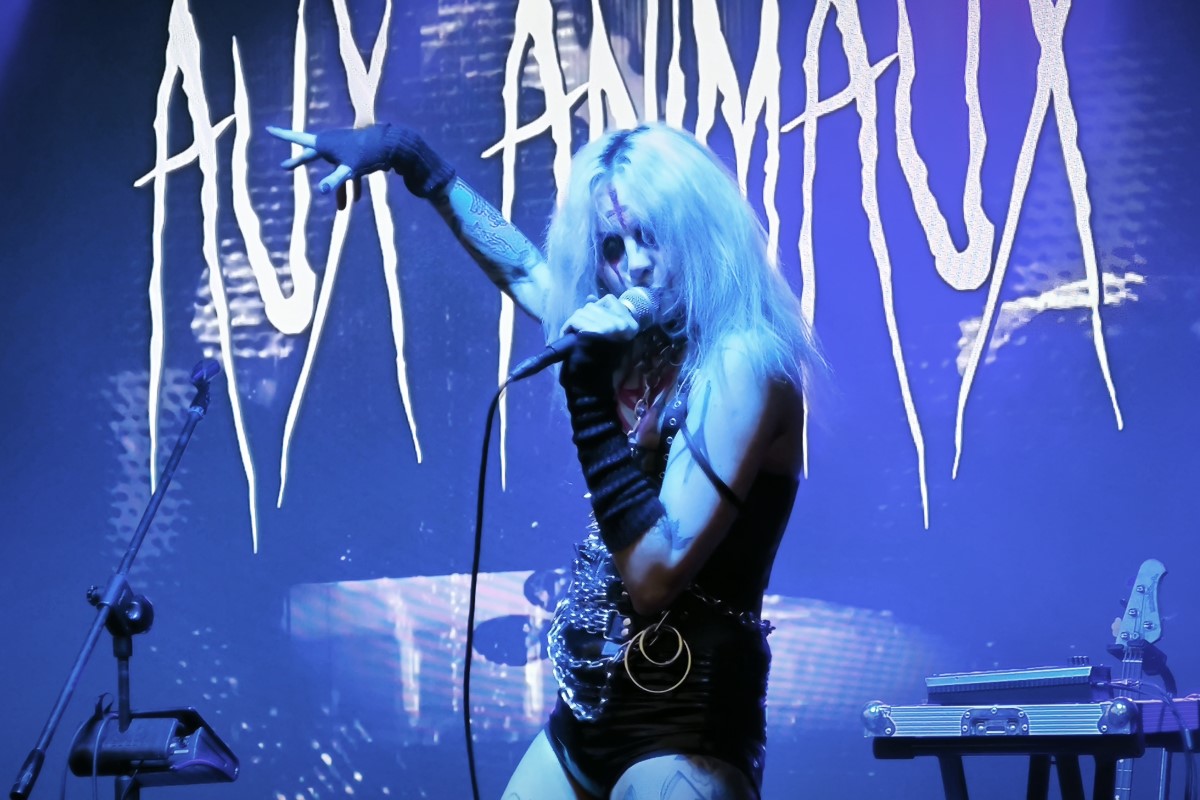
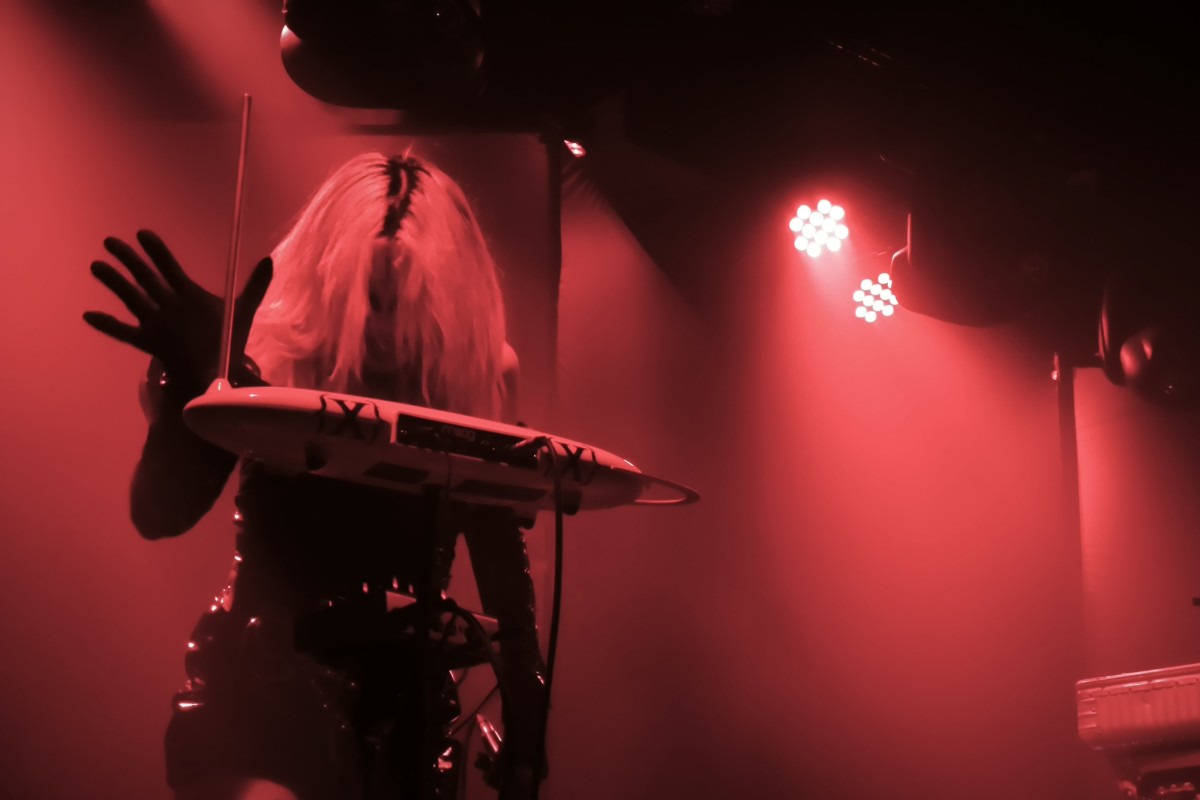
Jerneja: Aux Animaux is distinctive also because of the theremin, which you use as one of your main instruments — it's become a real part of your signature. What first drew you to it?
Gözde: I worked as a bass player for years before I started Aux Animaux, and when I began the project, I didn't even know what a synthesiser was. But I wanted to make music like John Carpenter, because I'm a huge horror fan. In the beginning, I was doing a kind of softer synthwave, and I sang differently, too. While I was doing that, I was trying to understand what synthesisers are and how they work, and I came across a YouTube video of a woman playing the theremin in Lucerne, Switzerland. Her name is Dorit Chrysler — she's a thereminist. I remember she was doing a sort of one‑off video for Moog, using lots of Moog instruments — the Taurus, the foot‑pedal bass synth you can play, and so on — and then she played the theremin. And that's how I fell down the rabbit hole of theremins, basically. I found out everything I could about it. I read books, watched documentaries, and watched YouTube videos of people teaching how to play the theremin. I got my own, and then I started practising. I practised for at least a year before I brought it on stage.
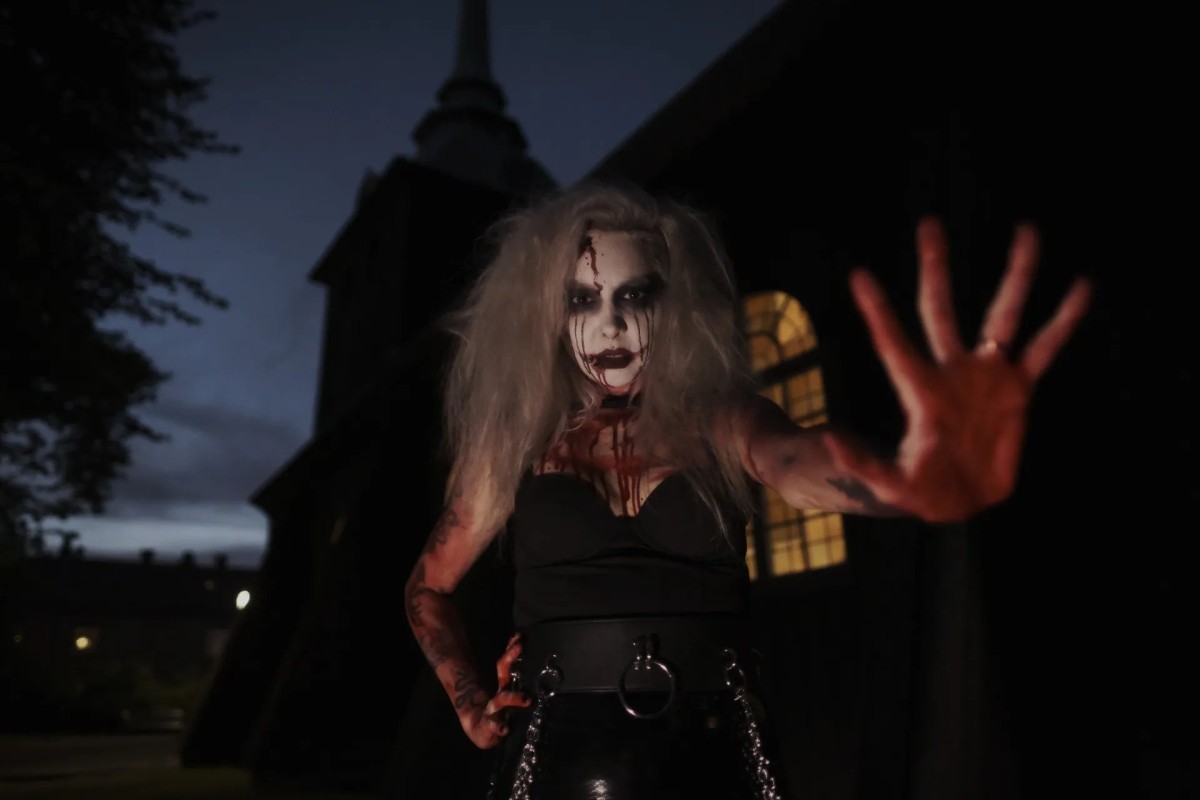
Tomaz: Your appearance has evolved quite a bit from the early days to now. These days it leans more towards a fetish‑, BDSM‑ and kink‑inspired aesthetic, mixed with gothic and black‑metal elements. What does this visual identity represent for you?
Gözde: It's just me, really. It's me putting myself out there. Obviously, I don't walk down the street like that, haha. But I found myself during this journey, and, you know, sometimes when you grow up, you lose a little part of yourself. When I found the goth scene and the music and everything around it, I slowly started to find my true self again. I'm fascinated by Satanism — not because I worship Satan, but because I like it as a symbol. Lucifer means "light‑bearer", and if you look at the Satanic Temple and so on, their whole philosophy is about living life, enjoying it as much as you can, not hurting anyone in the process, and finding the kind of knowledge that works for you. That's what I take from it, and that's why I like using it as a symbol for myself too — because I believe in that. The rest — the clothes — I don't know. I just like them. I like dressing that way. And it doesn't necessarily mean I'm into BDSM or anything like that; I just like the aesthetics of it.
Jerneja: Do you make the clothes — or the pieces you use in your performances — yourself, the way Chris does with his "crowns"?
Gözde: No, no, I don't. It's funny you mention that, because every day Chris was sewing something in the green room, or adding things to that hat, trying to create something different. I did a little bit — I bought some stockings and messed them up for this tour — but usually I buy different pieces. Some are from designers, some aren't. And, you know, I really like Tommy Wolves, so I like supporting his art. I guess I like combining different things — that's what I do. I put on a lot of different pieces. It takes me about an hour to get ready for the stage, because the make‑up takes time, and I'm not just putting on one costume. I'm putting on several layers of everything, all the time. I like changing it up a bit. Especially on this tour, I didn't want to wear the same thing every night. I was always trying to come up with something different — and my suitcase was super heavy, which was a pain in the ass for our tour manager, Mark, who had to lift it on and off the bus all the time, haha. It was way too heavy for me to carry on my own. But yeah — I'm just trying to create something different for the audience every night. Especially because on this tour, we had some IAMX fans with us the whole way, always in the front row. I thought it was only fair to give those guys something different each night.
Jerneja: And what kind of feelings would you primarily like to evoke in people through your music — and perhaps especially through your live performances?
Gözde: I guess I like to give them the chills at the beginning, and then I want them to feel energised and ecstatic — if that's the right word. Yeah. And I just want to hypnotise them a little bit. We can say it like that.
Jerneja: You certainly achieved that at Castle Party. In your opinion, what has been the highlight of your career so far? Is there a particular event or moment that stands out as more special than anything else that has happened to you up to now?
Gözde: Yes. I really loved playing a headliner slot at Wave‑Gotik‑Treffen. That was amazing — even if it was the smallest venue they have.
Tomaz: Since you mentioned Wave‑Gotik‑Treffen — where can we expect to see Aux Animaux live this year? I see you have some upcoming shows scheduled, though not many in Europe. Will there be any festival appearances as well?
Gözde: Yes. I'll be playing at the Extramuralhas festival in Portugal — IAMX are playing there as well. I think that's the only one that's been announced so far. And then I'm doing Infest in Manchester, and I have a show in Copenhagen next week. Let me think… what else do I have? Oh — I've got some shows in Germany, including one with Clan Of Xymox. I'm also playing BIM Fest in Belgium in December. And I have a few more, but I don't really remember them off the top of my head.
Tomaz: The past two years, you've had an incredibly busy schedule — you've played so many shows all over. Do you intend to keep up this pace?
Gözde: Yes, I hope so — but I also don't want to tour the way I used to anymore. That was killing me, because I was going back and forth between places every week. I'd play a few shows, go back home, then a few days later play more shows, and so on and on. It's not a good way to do it, because you can burn out really easily. I was close to burnout at the end of last year. I was talking to my friend Tina from Night In Athens, and she told me the same thing — she said, "I'm not even going to say yes to shows for a while because I'm burned out". So the way I want to do it now is to have longer tours, like what we just did with IAMX, instead of constantly going back and forth. That's also expensive, because I have to fly from Stockholm everywhere, and often it's really far away. And it's exhausting to fly all the time.
Tomaz: Do you prefer playing festivals or club shows?
Gözde: I don't have a preference. I like both. They each have their own pros and cons, I guess. There can be different emotions at a festival compared to a club show, and the whole concept is different, too. I know Chris doesn't like festivals — they're stressful for him — but I don't mind. I enjoy both. Playing festivals is a great way to be discovered by more people, by those who might not come to your show otherwise, but happen to be there, and see you and like it, you know? And club shows are really nice as well, because you know the people there came specifically to see you. So I like both.
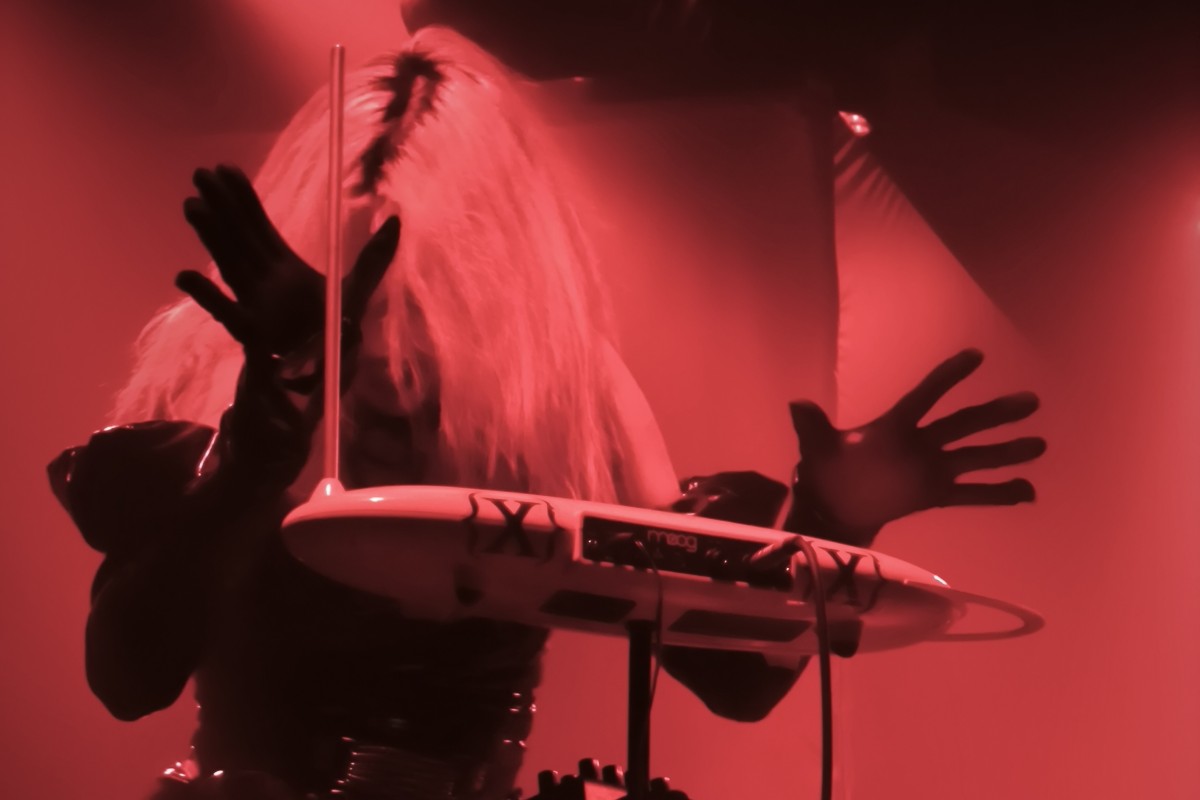
Jerneja: You originally started making music as a duo, if I understood correctly. But now it seems you're doing everything on your own — or do you still have someone you collaborate with?
Gözde: Yeah, we were a duo. Now — no help. I've been doing everything by myself for the last eight years. I have a label, Manic Depression Records, at least for the Body Horror album, but they only print the vinyl and CDs; they don't do anything else. The earlier releases were digital‑only, so I still release those myself. For the next album, I don't know — I might continue with them, or I might go to a label that can offer me something more. We'll see.
Jerneja: You describe your style as "hauntwave". How did you come up with that term, and what does it mean to you?
Gözde: I came up with it in the beginning, especially because until I made Body Horror, my music didn't really fit into any of the specific genres in the goth scene. It wasn't exactly darkwave, or coldwave, or minimal synth, or EBM — so I came up with an umbrella term instead. And a lot of my songs were about spooky stuff, especially before Body Horror, so it made sense. And with the theremin added — you know, the spooky instrument — that's how I came up with the name. And then it just stuck. People and the media started using it, so I thought, "Okay, if you want to keep calling me that, then let's roll with it".
Tomaz: Earlier, you mentioned John Carpenter as one of your inspirations. Who else influenced you when you first started creating music?
Gözde: When I started, I was inspired by a lot of horror movie soundtracks. Some were more current — like the soundtrack from It Follows — and some were from the era when John Carpenter was doing his thing. But in the beginning, I also really loved Portishead. I'll always love them; they're my favourite band. So, I was very inspired by Beth Gibbons' voice at first, until I found my own voice, I guess. I really loved Chromatics at the time, too — a band that doesn't exist anymore. I think they were on some soundtracks… the Drive movie, yes. That soundtrack really inspired me. I really like that 80s synth sound. So things like that were my main inspirations. Now it's many different things, but that's what it was in the very beginning.
Jerneja: Do you share your home with any animals?
Gözde: Yes. I have a cat called Elsa. She must be somewhere around here now.
Jerneja: Thank you for taking the time for this interview. Is there anything you'd like to add at the end?
Gözde: Well, I just want to thank everyone who supports artists like me. We're kind of somewhere in between — neither big nor small — and it can be a struggle to fit anywhere. I really appreciate all the support. I hope people keep listening to the tunes and coming to the shows, because I truly love doing this, and I wouldn't be able to do it without them. I appreciate everyone who comes to the shows and listens to the music. And thank you for interviewing me.
Live photos by Tomaz
Photos by: Jonas Fransson, Mattias Nilsson, Chris Corner
Aux Animaux links: Facebook, Instagram, Bandcamp, YouTube
 "You can see it in social media, in the world, with the wars going on, and I think it's an appropriate title for an album." - Skinny Disco
 "With this approach, we're in the minority nowadays, but it's precisely this niche and the emotions that were..." - Arkadiusz Wachowicz
 "I think it's basically a mutation of a lot of different things — like a hybrid creature nobody quite knows how to categorise. A heretic, I guess." - Håvard Ellefsen (Mortiis)
 "When you feel something you need to share, creating songs is the best way to do it. You can reflect on yourself so that you can relax and be relieved of that emotion." - Çağla Güleray