

You can support Terra Relicta by donating! Please, do so, and thank you!



Interview with: Randal Collier-Ford
Conducted by: Michael
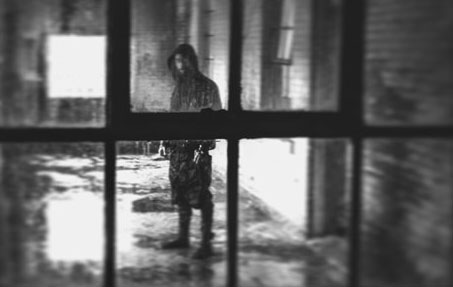 Randal Collier-Ford should, at this point, be a known name in the genre of dark ambient. He's been making quite an impact over the last few years with his albums The Architects and Remnants, as well as contributing to the massive Azathoth collaboration last year. Now he's back again this summer, releasing a collaboration named Locus Arcadia with fellow Cryo Chamber artists: Flowers For Bodysnatchers, Council Of Nine, and God Body Disconnect. Add to this a healthy schedule of live performances over the last few months, and it seemed high time that I get in contact with Randal for an in depth interview to look at some of the driving forces behind his music, and to find out what the future will hold for him.
Michael: You have just recently released a collaboration/compilation with Flowers For Bodysnatchers, Council Of Nine and God Body Disconnect, entitled Locus Arcadia. Congratulations on the great feedback the album has been receiving. I can't really say I know of any other albums which fit within this frame-work of four separate musicians telling a tale through an album. What led the four of you to decide to take this direction with the album?
Randal: It was a bit of a spur of the moment thing, after releasing Remnants. I read a couple of reviews from different media sites stating my obvious turn to a more "spacey" feeling with the music, and yes, I do admit it, releasing that I had an itch to do a more literal album concept based in a sci-fi theme. But when I thought of moving forward with it, I also knew that I wanted to finally work with other individuals on the album, people who at one point or another, have stated they would like to collaborate on a track or two, maybe even an album. So I reached out to the others with this idea, since we've all said to each other that it had to happen eventually, that I wanted to work with them on something different. And immediately, I had repsonses from all of them just stating "yes". And they all seemed enthusiastic about it, which made me very happy.  Michael: This particular direction taken on Locus Arcadia seems very similar, in its style at least, to the Sabled Sun 21xx series. There is the same focus on a protagonist, and we (the listeners) are placed directly inside his mind, hearing and feeling everything just as he does. Obviously, we have a totally different story and each of your tracks hold the distinct characteristics of each artist, but was the idea of creating a sort of stylistic connection to 21xx done consciously?
Randal: As far as style goes, not exactly. We all wanted to bring in our distinct styles of music to the album, to give each "chapter" a musical theme, but we did want each experience to be very personal. So the similarities are there, but it was not intentional to make them. I suppose great minds think alike?
Michael: Was there a strong line of communication between everyone involved as you constructed your tracks for Locus Arcadia, or did you each take a base concept and come up with your own track privately?
Randal: Oh yes, we spoke nearly every day during the initial phases and leading up to post edits. Most of the communications consisted of jokes, though. And most of those jokes were my terrible dad jokes. I was booed quite often. Haha...
Michael: Bruce from God Body Disconnect came up with an awesome prologue text, which accompanies Locus Arcadia. This really gives the listener a lot to think about and brings us even further into the story. There is really nothing to give us a sense of when in history this happens. Do you consider it to be a "long time ago in a galaxy far far away" type concept, or is Locus Arcadia a near future, near Earth, scenario?
Randal: The story takes place in the future, but we would rather not discuss how far into the future it is. As far as it's location, we're not telling either. Not yet, at least. There's been some talks behind the scenes lately, and some of these questions will be answered in a hint in the near(ish) future. But I'd rather not spoil anything.
Michael: In my opinion much of "Into The Maw Where All Men Die" seems to take place in the mind of the protagonist, yet there are certainly bits of the real world coming through. Did you construct the track to move in real-time or to focus more on the emotional state of the protagonist?
Randal: Good ear! It's a mix of both, actually. The music is definitely meant to give a sense of what's going on in the mind of our protagonist while he moves through the first sections of the station in real-time. Some of the sounds used we're meant to be a middle ground of field recordings turned into musical notes, to give a continuous feeling blending our character's mind, emotions, and environment into one thing. Michael: You seem to have quite a wide range of interests, which of these would you say are the most important to you, as a dark ambient musician and how do you see them affecting your musical output?
Randal: Too many to count, really. Growing up listening to electronic dance music, spending my later teenage and adult life listening to black metal, with jazz and classical music infused through out all of this, covers the musical side of things. As for other media, I think it goes without saying for anyone who has seen me on social media, I'm very interested in cyberpunk, space themes, futurism, and a slew of other nerdy things. Haha. But before this past year, I was just known for my interest in the occult. Which was also what I mostly focused on in my music, and to a degree, still do. Picking just one would be impossible for me, because I try to find a way to use as much of my influence as possible.
Michael: I know you have worked on some previous albums under different monickers, one of which, The Temple Of Algolagnia/Funeral Mantra split, was recently re-released in cassette format. Were there any other previous projects that you would like to mention?
Randal: Hmm, I do have a list. Mors Universa, The Temple Of Algolagnia, Black Sun, Singularity (O), Grey Light Shade, as well as some time in production with The Seven=Crowned.
Michael: Which of these projects were the most important to you, as a growing musician?
Randal: I would have to say that The Temple Of Algolagnia would have been, because it was my first step into making dark ambient/drone music. And with the great reception it got, it kept me motivated to show the music to the world in my first years and try to grow in production methods.
Michael: Will any of these see a possible future release, or are you solely focused on Randall Collier-Ford albums?
Randal: Currently, I am focused on my named work, as it has taken up all my studio time. But I do have a desire to see Black Sun and The Temple Of Algolagnia release a new record, when time and inspiration permits.
Michael: You have a playlist on Soundcloud, "Random Piano Debauchery", do you have plans on incorporating this material into an album one day, or is this just a lighter musical outlet for you, through Soundcloud?
Randal: I do have some hopes for it, and I had a plan to move one or two tracks into Remnants or the new, but when I created that public playlist, I thought I'd just wait for responses from others to see if they would enjoy hearing such a thing in a more dark ambient album. But it's starting taking its own turn into a general outlet for that style of music and other demos.
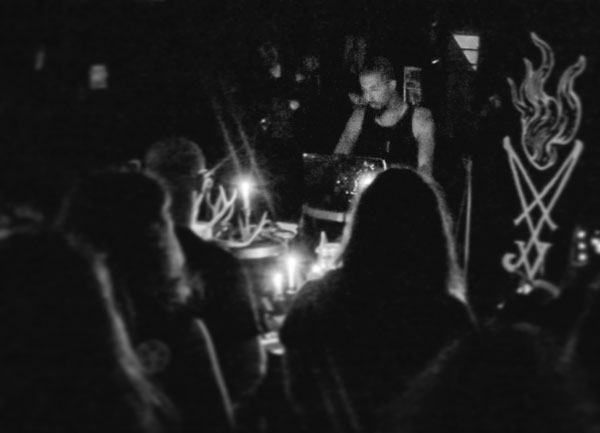 remember a child once, who was at an all age metal show that I opened for in this tiny coffee shop that was packed front to back, and outside, with people here to see the bands perform. During my opening set, the child was running in and out of the front door, which was to my left, and she was always staring at me. I thought it was adorable that she was so playful and happy. People would come up to the stage and take a bone, sit down and listen, chat among each other, and so on. And after my set, the mother of the child came to me with the child and told the child to take one of the bones as well. She giggled and ran between her mom's legs to hide, so I handed the mother a large rib bone for the child. The child smiled and the mother told her to say thank you, and she did, which was the cuteist thing I had ever seen. Moments like these, the interactions with people after my sets and during, seeing people on the floor meditating, even on their knees (that one was weird to see), make what I do feel all the more worth it. To truly give with my music, a feeling that can last years for individuals, to inspire and mold minds to reach for something new or something strange. To not follow the flock and find wonder on their own terms. To me, that's the greatest feeling in the world to hear someone say that I've done that for them. And that feeling never gets old for me, just makes me want to keep trying harder and harder to move forward.
 Michael: Do you have any more shows coming up in the near future?
 Randal: Usually I start off with a bottle of sake, or a nice stout, then curl into a ball and begin to cry. After about 2 hours of this, I'll start messing with new sounds until I've destroyed them enough to see what new and interesting ways I might be able to use them. Then I cry again when I can't think of anything to do with them, and suddenly an idea would hit me and I will sit behind my computer for roughly 14 hours until the track is completed. Then repeat the process until I have a coherent album. Sad thing is, this is mostly true. I'll leave it to you to figure out which parts are true and which are not.
This email address is being protected from spambots. You need JavaScript enabled to view it.


