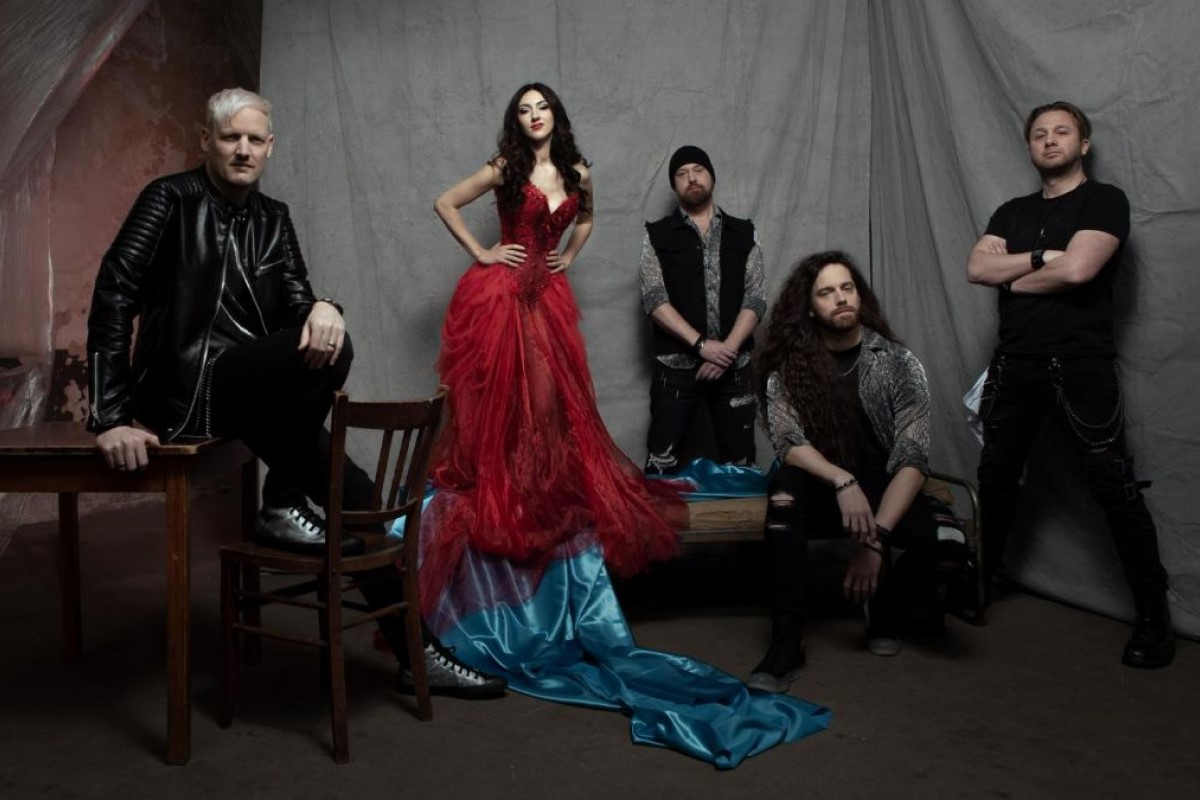
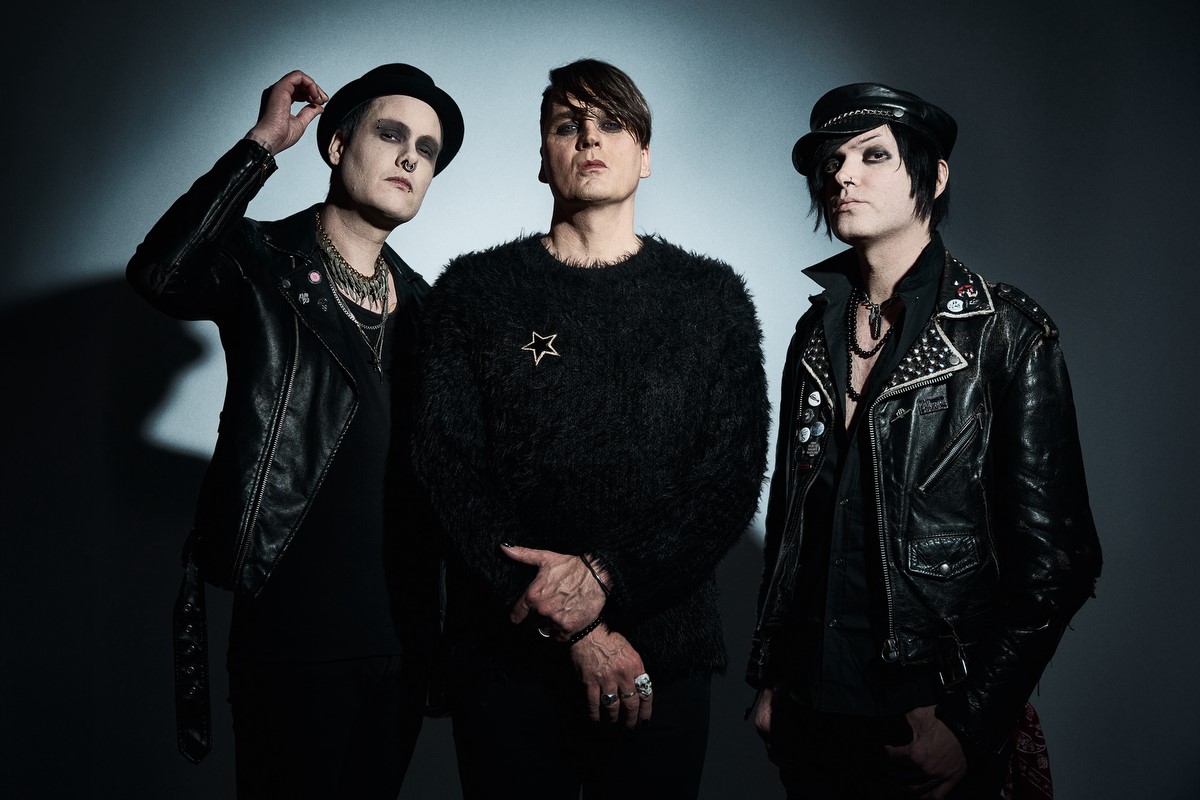
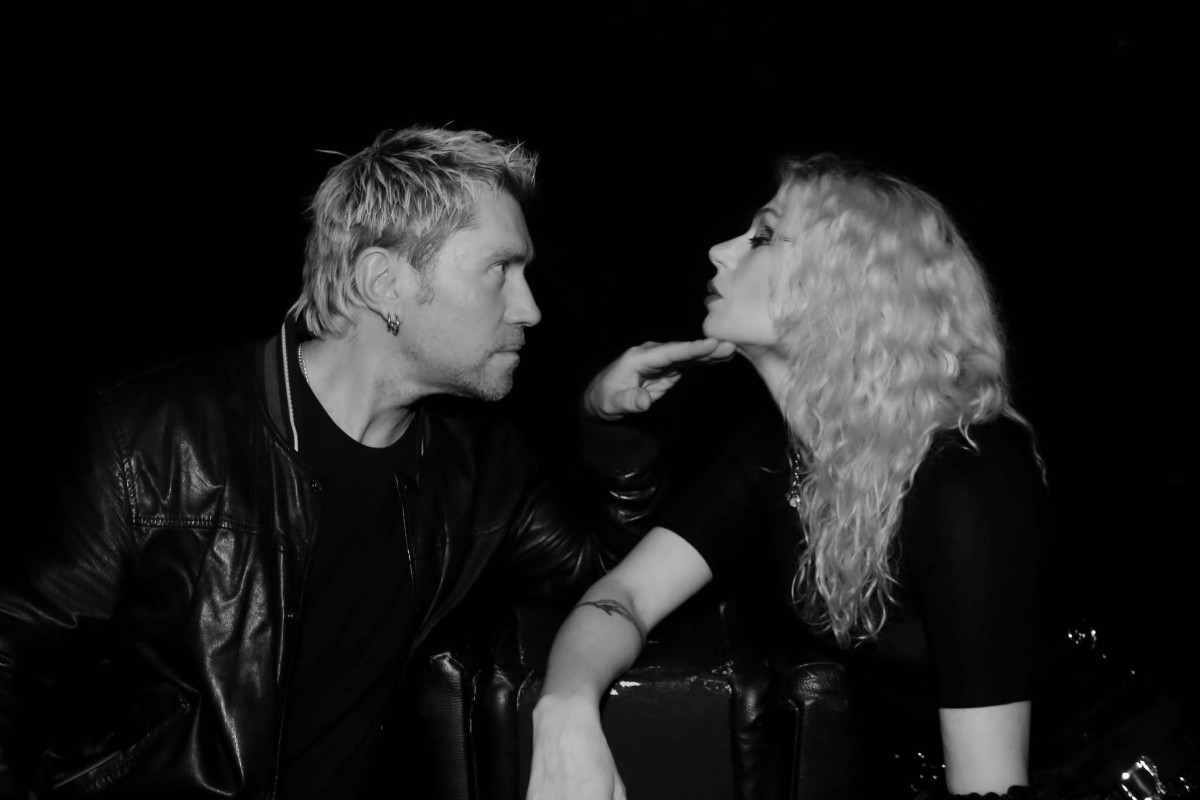
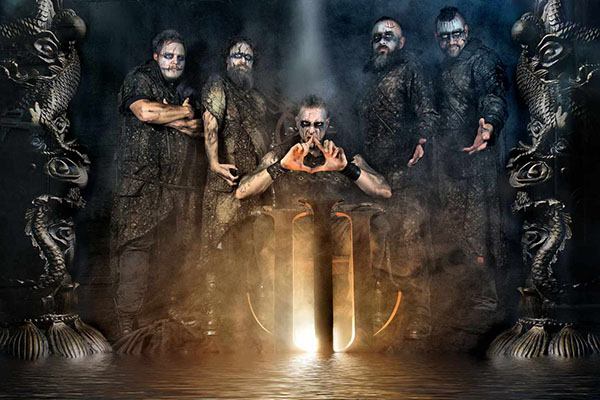
Rain Diary have shared the final advance single, "Fire", from their impending third full-length, Night Church, scheduled for release on 27 March through Inverse Records.
The track showcases the softer side of this electronic rock band's longing sound and has long been a favourite among audiences at their live performances.
Alongside the single, the band have also released an acoustic live video of "Fire", recorded at Huxleys Neue Welt in Berlin on 24 April 2022, marking the final show of Lord Of The Lost's Acoustic Ensemble Tour 2022.
The previously released single "Naive", together with additional information, can be found HERE. Link

RAIN DIARY - Shares Final Advance Single From Night Church
- Details
- Written by: Jerneja
Related articles
-
THE LEAVING - Sets Release Date For Debut Mini-Album And Reveals First Track
On 6 March internationally, Personal Records is proud to present The Leaving's striking debut mini-album, The Leaving, on CD format. The Leaving are a pan-international team-up of... -
TERRA RELICTA - Dark Music Awards 2025
The twelfth chapter of the Terra Relicta DARK MUSIC AWARDS has begun. We unveil our curated selection of the 50 finest albums of the past year — and you can cast your vote HERE from... -
OPETH - Celebrates The Last Will And Testament's First Anniversary With Animated Video For "§3"
In celebration of the first anniversary of The Last Will And Testament, Opeth is proud to unveil an animated video crafted to bring the album's intricate story to life. Created by... -
MASSIVE EGO - Unveils “Broken Tomorrow” Featuring Boy George, Announce New Album Symphony Of Flies
UK dark synth icons Massive Ego have returned with a striking new single, "Broken Tomorrow", featuring none other than Boy George. The brooding yet richly textured piece arrives hand...
-
BOSCO SACRO
"I can say that when I play with Bosco Sacro, I'm in total trans. When I play on a stage, I go into another world." - Luca Scotti -
MARTIN SAINT
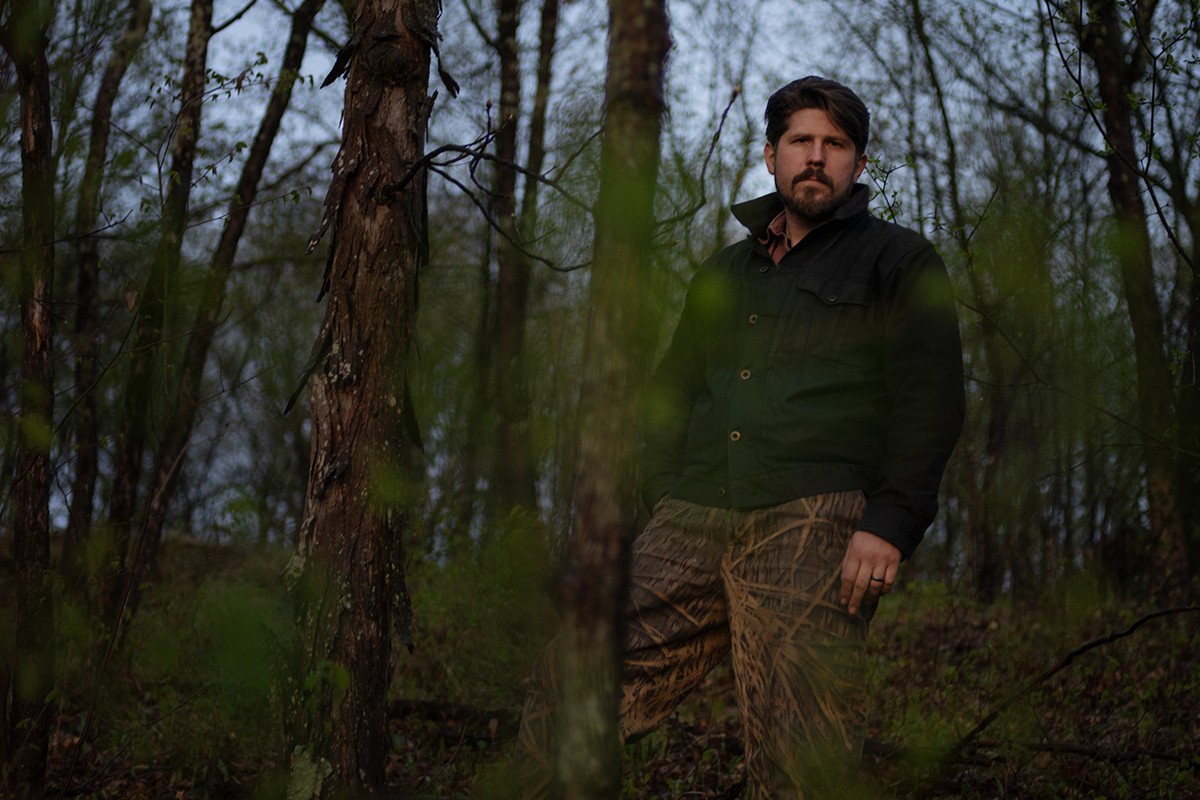
Canadian singer‑songwriter and guitarist Martin Saint has long been a familiar presence in Montréal's alternative scene, yet his creative path in recent years has taken a marked turn. After years spent contributing to other projects, he stepped into his own artistic space, carving out a distinctive solo identity. His music moves through dark indie rock with post‑punk undertones, carried by introspective, quietly cinematic songwriting. With several albums and EPs now behind him, Saint continues to evolve — restless, reflective, and always in search of the next idea worth exploring. In this conversation, he speaks about the creative drive that leads him across multiple artistic fields, the importance of lyrics in his songwriting, his recently published poetry collection, and more. Do read on.Interview with: Martin Saint
Conducted and edited by Jerneja
Jerneja: Hello Martin — you're the one opening this year's Terra Relicta interview season. How has the year started for you?
Martin: Hi Jerneja, thanks for having me. So far, 2026 is off to a busy start. I'm adding the finishing touches to my upcoming single, due out sometime in the next few months. It's called "Endless Bridge", a revamped version of one of my very old songs that came out in 2017 with Citylake, one of my former bands. I felt it deserved a rework and a new release — under my own name this time around. I've also just put out a book, Under The Full Angry Moon, a collection of song lyrics spanning a few years. It comes with QR codes leading to the recordings, as well as some of my drawings to illustrate a few of the songs. On top of that, I'm in the middle of production for a side-project I'm quite excited about — an electronica‑driven album scheduled for release sometime this year, too. It will be called Life And Death On The Dance Floor, you know... keeping things light. And beyond all that, I have enough songs ready for a new album and keep busy with collaborations and live performances.Jerneja: When I first encountered your music and began reading your lyrics, it occurred to me that they could quite easily exist as a standalone collection of poetry. And now here it is — Under The Full Angry Moon, a substantial songbook comprising ten sections and fifty-one pieces. You shared the digital version with me, but there is also a physical edition. Where can interested readers purchase or order a copy?
Martin: I'm glad you felt that way upon reading my work. This book is the culmination of a lifelong ambition of mine. I'd always dreamed of publishing a volume of song lyrics, poetry, etc... My goal has always been — and remains to this day — to write songs where the words stand strong enough on their own, independently from the music. I discovered something very interesting as I was proofreading the final manuscript for the book: even though I wrote all these words, heard and sang them countless times, the act of reading them without the support of the music felt completely different. A very humbling feeling. It's a lot more intimate, a much more raw and vulnerable experience. I would hope that readers can gain an extra level of connection with the words in a way they wouldn't necessarily while listening to them within a song context. That being said, each song comes with a QR code leading to the recordings. It's only available as physical merch as we speak; I haven't set up a digital store so far. But orders can be made on my Bandcamp: martinsaint.bandcamp.comJerneja: Alongside the lyrics from your last three albums, the collection also includes lyrics from The Ember Glows' EPs Where Spirits Play and Passerby, as well as various singles. We already know that the single "Endless Bridge" is due for release in the next few months, and there is one unfamiliar lyric — "Wink Of An Eye"...
Martin: "Wink Of An Eye" is a brand new song set to appear on an electronica‑tinged new release sometime in 2026. I wanted to include it to give a taste of where I'm at these days. The rest of the songs in the book have all come out in one project or another as part of albums or EPs. This includes my solo output, The Ember Glows, my old band Citylake, and a pandemic DJ‑rock side‑project called Portmanteau. I had to make a selection and only include songs I still like to this day. One thing worse than hearing a bad song is having written one or more. As far as "Endless Bridge" goes, it's a new updated version of an old song I released back in the Citylake days in 2017. I'm very pleased with this revamped version. I felt this song deserved a new start, since it's a natural single and one of the best songs I've ever written. I'm not sure about a release date yet; we're still in the mixing stage.Jerneja: You've also illustrated the songbook yourself. Is drawing/painting another one of your creative passions? Which came first for you — the love of music or of visual art — and where do you feel you express yourself more fully?
Martin: Drawing was my very first artistic love. It goes as far back as I can remember. I then gave it up for many years, devoting myself to writing and music instead. I'd lost all inspiration and confidence, so I let it go. I started drawing again during the pandemic by pure chance, and that eventually led to the idea of illustrating some of my songs. Since then, I've begun taking it more seriously and now do the occasional art show or illustration contract. Performing music is a very exuberant and extroverted form of expression, whereas drawing is very solitary and introverted. Two sides of my personality. These days, I'd love to try my hand at acting and attend some workshops. I'm actually going to play a singing cameo part in an underground film directed by a good friend. Not quite an Elvis movie, but you get the idea.
Jerneja: Is "Martin Saint" the name you were given at birth? If not, what are you hinting at with "Saint"?
Martin: Let's just say it's a pun, a play on my full name. I like the irony in it, considering that I don't consider myself saintly or holy in any way at all. I find it appropriate, since there tends to be a recurring idea of quest, a swinging pendulum between the sacred and the profane in my songs. Blame it all on having had Roman Catholicism rammed down my throat as a child!Jerneja: After years of playing in other bands, what made you decide—almost at the same moment—to start your solo project and help form The Ember Glows (which is no longer active)?
Martin: I always wrote a lot of songs and hate wasting material I believe in. So what happened was that I had already accumulated a considerable amount of music I wanted out at some point. Within the democratic confines of a band, it's normal that some songs were rejected, whether I had them kicking around or new ones I was writing at the moment. Rather than having them gather more dust, I decided to put them out under my name without much ambition at first. Then, as the band ended, my solo project became my priority. With time, you learn to know yourself better. I'm not fit for band democracy. I'm at times a hired player for other projects and love being in the shadows, doing as I'm told. I take it as a challenge to deliver. I also do lots of 50‑50 collaborations, which I enjoy very much, but when it comes to my main project, I like being in charge. That being said, solo doesn't mean alone. I'm very well‑surrounded and owe a lot to the musician friends around me who push me to reach a higher level. I value these relationships very much.Jerneja: If we pause on your lyricism for a moment — your songs often sound as though they were written by someone who is hopelessly romantic, though not in a naive or sentimental way. Rather, they feel like the work of someone who carries old emotions like artefacts, treats memory as a living place, sees beauty in melancholy, believes feelings are worth examining rather than hiding, and allows longing to become a creative force. Would you agree with that, or how would you describe it yourself?
Martin: Romantic me? I thought I'd fooled everyone into thinking I was a cold pragmatist. There are certainly multiple degrees of solitude throughout most of my songs. For real, I love the way you put it. It's hard for me to analyse this since it's so close to the bone. But I can tell you that I never, ever dump lyrics on a song because I have to have words. Even if they're nonsensical or the result of a stream‑of‑consciousness flow, they always come from a genuinely heartfelt place. I like to think I never fake it, neither on record nor live. Art isn't meant to always be pretty and make us feel comfortable and good about ourselves at all times. I'm not afraid to broach difficult emotions and to express the beautiful ones too. I do have a big soft spot for romantic crooners after all, so there you go.Jerneja: Your songs often feel like vignettes. Do you think in short stories when you write, or is that sense of fragmentation a deliberate artistic choice?
Martin: I tend to go for a "show, don't tell" approach, call it cinematic if you like. I look for images that clearly evoke certain feelings rather than just making a blanket statement. For example, in my song "Look At Me That Way", which is a song about desire, rather than just saying "I want you so much tonight", I say "we could make love in a car too small". I felt that drawing a picture like this made it visual and relatable. Forgive me for the 18+ "vignette". The best instance of a vignette in my work is "Scenes From Cars", off my album Radio Murmurs. From my balcony, I see a bridge in the distance. Cars are minuscule dots, and they obviously can't see me, but I see them. I imagined what was going on in these cars. A car is like a mini‑theatre where lots can happen, and you're trapped in there to some extent. I found that idea fascinating.Jerneja: Do you usually write from lived experience, or do you tend to adopt a character or persona? And when it comes to more personal truths, do you prefer to conceal them within metaphor, or do you lean towards a more direct approach?
Martin: I like to diversify so I don't repeat myself too much, though it's inevitable that certain ideas, words, turns of phrase are likely to recur here and there. That's the definition of having your own signature, and I'm OK with that. But I don't want to become predictable and catch myself taking the easy way out and resorting to a formula that worked before. When I started out, I was trying too hard to be clever and oblique, to the point of really bad writing. I have since discarded and flushed all those songs — at least lyrically. With time, I've learned to be more direct and in your face. I do use metaphors, but I'd rather call them universal images that anyone can relate to and apply to themselves. I'm a bit of a sponge; I find inspiration anywhere. A conversation I overhear, current events, a word I like, a strong emotion I feel in my life, a memory, a dream, a movie, a book, an incident I witnessed, etc, the list goes on and on. You talk of character — on my last album, Seekers, the song "Lucky 7" is sung from the point of view of a character, not me. Not something I do often, but I like that approach very much too.
Jerneja: Is there a writer — musical or literary — who has shaped your approach to lyricism?
Martin: I'm used to certain comparisons I keep getting, and they are totally fair. David Bowie (Berlin period), Iggy Pop's The Idiot, Leonard Cohen, The Doors, old U2, The Mission, The Verve, Patti Smith, Nick Cave, etc. I'm very aware of the lineage that has formed me over the years, the various influences I carry with me. I think that in the end, I take fragments of all of those and blend them so much and in such a way that the end result isn't derivative. It's all of that, yet none of it. Lots of other art forms continue to impact my music, too. For example, Beatnik poetry (as mentioned above, in my book, I tried my hand at haikus I intend to record), I borrowed and developed some ideas from Milan Kundera, Charles Bukowski, some coffee table photography books with inspiring visuals, Film Noir, and many more. There are several songwriters whose impact doesn't quite show in my work, but whose different writing styles from mine I admire very much and would like to get inspired by in the future. Jarvis Cocker's journalistic observations come to mind, PJ Harvey's mix of lyricism and raw urgency, and Alex Turner's witty storytelling delivered with impeccable timing.Jerneja: How do you know when a lyric is "done"? Is it a matter of instinct, structure, or something else entirely?
Martin: I think it's all of that at once. With experience comes a certain instinct of knowing when to let go. It's also a matter of structure, like you said, as in I can have a good idea that just doesn't feel quite right when it comes to singing it. Something feels off. It can literally be just a question of syllables or a rhyme that feels too contrived, for example. One valuable piece of advice a very wise musician friend gave me one day was never to fall in love with your own work. So if I like my guitar part, let's say, it doesn't mean I should hear it all the time, throughout the song, at a deafening volume. Same with words. I may like a line originally, but in the end, does it serve the song or just my ego to show how clever I am? All's not lost — it can always be used somewhere else or altered at a later time. That's why I don't throw my sketches away, no matter how terrible they are. The line between brilliant and ridiculous can be awfully thin.Jerneja: I have the impression — though I may be mistaken — that you tend to write the lyrics first and don't allow the music to dictate the emotional vocabulary. Is that the case?
Martin: Yes and no. If I hadn't been a musician, I probably would've ended up a writer anyway. You're right in the sense that I keep writing lyrics whether or not I have some music ready for them. I don't wait to have a full song on the ready. You're also right when you mention structure, as I tend to shape words in a way that will be singable later on. I pay extra attention to metre, the visual impact of words. I take into consideration the pacing and phrasing once I get around to singing them. Some words sound great in prose or spoken language, but lack the musicality and rhythm I'm looking for in a song. But on the flip side, I also keep writing music in parallel. Sometimes there are obvious pairings — I write words and music with the specific intent of making a song out of it — but other times it's a question of deciding which go well together.Jerneja: Have you ever abandoned a lyric you were fond of because the music required something different?
Martin: I have a huge backlog of "orphan lyrics", that is, words or ideas I like but haven't yet found the right musical fit for. Meanwhile, I have many instrumentals I haven't got the right song for yet. Sometimes it's a matter of finding the right match, cutting and pasting. I never give up on an idea my instinct tells me is good, be it a piece of music or a lyric. Many years ago, I'd written this music and melody I really liked, but felt the lyrics were garbage. I couldn't stand behind them, so that's the reason that song remained in my vault for so long — up until the point where, in 2025, I finally wrote new words I liked that would fit that vibe perfectly. It was well worth the wait, because that song is well advanced in the pre‑production phase of another album to come out within a year or so.Jerneja: Your debut album, Fly Tales, released in August 2019, is essentially spoken word accompanied by music. As we wrap up our conversation about lyrics, I’d like to ask one more thing: Do you consider lyrics more important than the music?
Martin: I put them on equal footing. It's crucial to me that the words are strong enough to stand on their own, even without musical support. Fly Tales was something else entirely, a complete experiment. I blush ever so slightly when I reflect back on it. You either love it or hate it; there's no middle ground. I wanted to do something a little out there, avant‑garde for a while — having spoken vignettes on top of a largely improvised musical background. I had several friends collaborating on this, as in all my projects. I'm planning another spoken‑word album at some point, as sparse as Fly Tales is wordy. Complete opposite. Instead of my endless ramblings, it will be haikus with musical interludes. This is inspired by Jack Kerouac's haiku recordings.
Jerneja: In January 2020, you released your sophomore album One Word Away, followed by the Last New Year's Eve EP in 2021, Radio Murmurs in March 2023, and Seekers last April. What changed in the way you approached these releases—from the initial concept to the finished record?
Martin: They haven't changed all that much, because I tend to hear it all in my head before I get started on production. Having a clear vision is the most crucial part. Issues arise in situations where I meander and struggle to make decisions about the direction I want to take. Once I know how I want to sound, both in terms of songwriting and recording, the rest goes smoothly for the most part. At the same time, it's important to keep an open mind, since songs tend to have a mind of their own and dictate where they want to go as you move along. I'm not rigid or set in my ways to the point of insisting things must be a certain way just because. And the minute you have collaborators, they will inject their own touch into your work and enrich it. I'm not a control freak at all — I have a clear idea of where I want to go, but I'm flexible enough to roll with the unforeseen. That's the beauty of the journey. Otherwise, I'd get bored so fast. One thing that has changed with Seekers is the sound quality. That was a serious upgrade, thanks to my friend Frank Bones at the helm once I took my recordings to the studio.Jerneja: Regarding your DIY approach — which stages of making an album do you enjoy the most, and which parts feel more like a chore?
Martin: I enjoy everything about writing and recording, no kidding. I embrace the journey. I still feel the same spark when I start a song from scratch — writing longhand in an exercise book, the trial and error, the corrections, the rough demos, the pre‑production, all the way to the final master. When I'm done with a final version, I like to go back and listen to my very first original demo to see how far I've come. It's always a moment I savour. It serves as motivation in times of self‑doubt. The part that feels more like a chore is what comes around the release time and after it. I've learned a lot of valuable skills because I had to, but doing all the promo by yourself as a solo artist can become heavy at times. But I'm in no position to complain — it's part of the game, and I accept it.Jerneja: How satisfied are you with the response so far — both from the media and from listeners? I'm asking mainly because it seems your albums haven't been promoted particularly well (there's very little about them online). Does that mean you don't really mind how far your music reaches, or do you believe that good work promotes itself?
Martin: I don't agree that they haven't been promoted well. There has been positive media coverage, reviews, interviews, and airplay — just like there had been with The Ember Glows. But yes, there's always room for improvement. This ties in a bit with what I mentioned above: there's only so much I can do by myself at the moment. I am on Apple Music, Bandcamp and the other platforms. This is still very much DIY for now. I'm also not one to post on social media every day and saturate cyberspace. I'm very happy that a lot of people identify different songs as their favourite — it means the music has a multi‑layered appeal.Jerneja: What's next on your musical agenda — a follow‑up to Seekers, the debut album of the electro project you mentioned, or something else entirely? Whatever it may be, are you able to share any details yet?
Martin: Finishing my next single, "Endless Bridge", is the priority, while also taking that electronica album to the next stage. It's already quite advanced — it's getting exciting. This project will likely be a one‑off, but it's still under my name, not a new alias. That's another advantage of working solo: I can take whatever left turn I like and be as adventurous as I want. I also have some work to finish for Portmanteau — I did mention that DJ‑rock project earlier. As for a rock follow‑up to Seekers, I've got a good 15–20 songs ready, and I still need to make a final selection and decide whether I want to put out an album or a few EPs. But don't expect a mere repetition of the same formula — I'm not interested in that. It'll have a different tone, different emotional content, and I'm looking at an overall different production approach. I could stop writing songs for two years and still have plenty of material on the go.Jerneja: And what about live performances — do you play many shows, do you perform outside Montreal where you're based, and are you perhaps planning a tour in the near future (maybe even a European one)?
Martin: I do perform regularly, both in full‑band format and solo acoustic for stripped‑down versions. I sometimes play guitar for other bands too — that's what took me all across Europe a few years back, including driving across Slovenia. Speaking of Europe, I am working on touring under my own solo project in the relatively near future. I can't discuss much right now, but it's definitely in the cards.
Jerneja: What is the alternative music scene like in Montreal and in Canada more broadly — which genres are thriving the most, and how do you feel within that landscape?
Martin: I can mostly speak about Montreal. There are a lot of positive aspects and a lot of negative ones — just like anywhere else, I suppose. There are many good artists, and there's real musical and cultural pluralism, which is great. There's still a certain DIY punk attitude that survives, and I like that very much, especially in an era where venues are closing down left, right and centre because you get cultural‑tourist yuppies settling in once‑thriving neighbourhoods so they can brag to their other yuppie friends that they're part of something cool — but then they don't want their precious lifestyle disturbed, so they complain about noise until the venues get shut down. And the city bends to their will. Places to host artistic events have been getting more and more scarce. My point is that this is a time when there should be more unity among artists of all kinds, and I'm not sure that's always the case. Musically, I particularly dislike this affected sense of irony — a complete cop‑out devoid of any emotional content. So many try so hard to be different that they all end up looking and sounding alike. I find this approach rampant wherever I go. As for where I fit in the musical landscape? Nowhere, really. I'm too underground for the mainstream and too mainstream for the underground. I don't try to please anyone, hang out with the "right" crowd, or go where the wind blows. One thing, though: when I perform, I leave it all out there. It's raw and open for all to see. That makes me hopelessly unfashionable — and I own it.Jerneja: What made you decide not to shoot any full music videos? So far, you've only put out performance‑based videos, even though your songs are already stories that would almost write their own scripts.
Martin: There was a video shoot scheduled for "Look At Me That Way", the single off Seekers, but unfortunately, I had to postpone indefinitely at the time due to circumstances out of my control. But that doesn't mean that I've given up. If anything, it could breathe some new life into the song. And if not that one, next maybe for "Endless Bridge", my next single. I'm looking forward to doing it, but it's not something I'd want to oversee too much. The idea is to always surround myself with talented people I like and ask them to be creative. I'd find it very exciting to have someone else turn my music into a visual expression of their own.Jerneja: You've labelled yourself a "professional butler for cats" on Facebook. Should we take that literally, or is there a story behind it?
Martin: I just happen to love and admire cats so much. I grew up with them, and I had two who sadly passed away from old age a couple of years back. I cat‑sit for friends, and I befriend random felines on the street. I consider myself somewhat of a cat in temperament. If I got along as naturally with people as I do with cats, my social life would probably be much simpler. And since you don't really adopt cats — it's more like they hire you as staff — I feel like a cat‑butler. Years ago, the one who would become my cat simply showed up at my door. I let her in, she strolled around, inspected the place, and decided it would be a suitable spot to give birth. I went from zero cats to five very quickly (but that's another story). She never left. I was hired as a butler. I'm a real soft touch with them; they run circles around me. Incidentally, there are so many cat references in my lyrics, old and new.Jerneja: What's the craziest thing you've ever done — or would you be willing to share a particularly fascinating adventure?
Martin: It could be things I've done or things that have been done to me. I'm afraid I've forgotten at least half my life, which is probably for the best. Put on the spot like this, I can't think of anything particularly riveting or suitable to recall publicly. I shouldn't let the truth ruin a good story, but I'm being truthful here — it's not exactly rock‑bio material. I can tell you that I was once a karaoke host in my dark past. It was in a particularly sketchy part of town, with an equally sketchy cast of characters. I discovered very quickly that the ego trip of being on stage for five minutes, combined with severe intoxication, can do crazy things to the human spirit and lead to grotesque situations. And I was the worst possible person for that job, which didn't help. I felt like a stand‑up comedian, a nanny and a wedding singer all at once. Vaudeville and tragedy rolled into one. There was always a sense of potential confrontation, but also some surprisingly genuine emotional moments, full of pathos. For those familiar with British comedy, I was a sort of Basil Fawlty‑type host. On a lighter note, years ago, I hitchhiked in the scorching July heat to see The Mission, only to find out at the venue that the show had been cancelled at the last minute. That resulted in two days I barely remember. What's interesting is that years later, I tried to see The Mission again — and it was cancelled once more, this time because of Covid. Then, a few years later, I got tickets again. On the night of the show, that old friend — whom I'd hardly seen in years — got in touch out of the blue to ask if I was going. We met up and finally had our moment, entering the venue together and closing that cycle. Funny how the universe works sometimes. I've just come to think of another story; in 2018, I was touring overseas as a guitar player and had a couple of nights off in Budapest. One evening, I went wandering on my own, not knowing where the night would lead me. I accidentally stumbled upon one of those beautiful European beer gardens, and as luck would have it, there was an open‑mic night. Gorgeous stage, great sound, big crowd, fantastic vibe. I introduced myself to the host — he was very friendly — and I got the chance to perform. It was a hot night, so I went on stage barefoot, something I like to do in summer. The fact that it was so unexpected and that I was completely on my own made it magical. No one knew who I was, they would only judge me on my performance and nothing else. I hit it off the host who then offered to take me to another open-mic, this time in a rowdy and smoky after-hours basement. When my time came to play I did my thing, completely different vibe. The people were very warm and receptive. In the middle of my set, I gambled a little. I asked for their silence for a very quiet Leonard Cohen, since I'm from Montreal too and leaving the next day. Their reaction exceeded my expectations. They went quiet and gave me their undivided attention. To this day, this remains one of my best ever moments in music. I'll remember it for as long as I live. In case you're curious, the song I picked is the relatively obscure "You Know Who I Am", one of my favourites of his.
Jerneja: What's something you've recently discovered — music, art, a place, a book, a hobby — that has stayed with you?
Martin: To be very mindful of my inner dialogue with myself. The words I use to describe myself and what I do are crucial. They shape my emotional responses to everything and everyone — my focus, my outlook. If I have to spend all that time with myself, I might as well be kind and take things in stride. This, in turn, helps me stay more grounded in life, more grounded with others, and not take things — or myself — too seriously.Jerneja: As we come to the end, is there anything you feel is still worth mentioning that hasn't come up yet?
Martin: I find it very important to cultivate that inner sense of wonder and curiosity we possess as children, but which unfortunately tends to erode with time, adversity, and the way we're groomed to fit into the so‑called real world. Despite the challenges, the hits I've taken and the mistakes I've made, I wouldn't have it any other way than where I'm at now. I feel privileged to do what I do. I try not to analyse too much — there's an inherent beauty in the mystery of creation. I don't mean me necessarily; I mean art, music, science in general. It keeps us humble. I'm aware there's a sense of introspection and pondering in my work, but that's because I believe our shadows and darker sides need to be owned, voiced and channelled. Repression and denial never bring anything good. I don't walk around wearing a dark cape, gazing at my shoes all day — least of all on stage. It's not all dark; there's actually a lot of peace, love and light in my songs, at least to me. This form of self‑expression allows me to release feelings that would otherwise be harder to bear. With the book, I realised that with each song there was a story, a memory, an image I could trace back to a time and place in my life. There's no greater reward than learning that my work resonates with others on an emotional level. That's worth far more than any accolade I might receive for technique or prowess of any kind. Balance is key — I'm never as good or as bad as I might be tempted to think I am.Links: Facebook, Instagram, Bandcamp

-
DYMNA LOTVA
"I can call our show an emotional exhibitionism. If you want to drink beer and cry, please come to our show, haha." - Nokt Aeon -
DUCTAPE
"When you feel something you need to share, creating songs is the best way to do it. You can reflect on yourself so that you can relax and be relieved of that emotion." - Çağla Güleray
Copyright © All Rights Reserved. Powered by Terra Relicta